The PML-N led coalition government presented the annual budget for fiscal year 2026-27 in the National Assembly on Friday amidst strong protests and sloganeering by the opposition. The total outlay of the budget is Rs18.77 trillion, with a deficit of Rs5.2 trillion. The government set an economic growth rate target of four percent, increased salaries and pensions by seven percent, provided tax relief to the salaried class, construction, and IT sectors, and reduced super tax.
Opposition Protests Disrupt Proceedings
As the session began, opposition members from the Pakistan Tehreek-e-Insaf (PTI) raised anti-government slogans and gathered at the Speaker's podium. Holding placards against the government's policies, they chanted slogans such as 'IMF-Budget Na Manzoor' and 'Imran Khan Ko Raha Karo'. The noise made it difficult for lawmakers, journalists, and guests in the chambers to hear the speech, prompting many treasury bench members to use headphones. To protect Prime Minister Shahbaz Sharif, some government members gathered around his chair. The opposition repeatedly threw torn pieces of budget papers toward the government benches and into the air. Minister for Railways Hanif Abbasi and other party members intercepted the papers mid-air before they could reach the Prime Minister. The heated exchanges led to repeated calls for order from the Chair. At one point, young members from both sides nearly engaged in a physical brawl, but senior members intervened to cool the situation. The opposition ended its protest at the conclusion of the proceedings when opposition member Mehmood Khan Achakzai intercepted the Finance Minister, shook his hand, and left the house with opposition members in protest.
Earlier, before the session started, PPP lawmakers unexpectedly chanted slogans, holding placards inscribed 'Sindh facing 48 per cent water shortage' and raising the slogan 'Paani Do-Panni Do'. The PPP's MPs peacefully ended their protest at the start of the session.

Key Budget Figures
Finance Minister Muhammad Aurangzeb unveiled the budgetary proposals for the next financial year. Out of the total outlay, Rs8,054 billion will be earmarked for markup payments. The gross revenue of the Federal Government for the next fiscal year is estimated at Rs20,600 billion, with FBR revenue collection estimated at Rs15,264 billion, which is Rs17.6 billion higher than the current fiscal year. The share of provinces in federal receipts is Rs8,848 billion, and the non-tax revenue target is Rs5,336 billion.
The GDP growth rate for the next fiscal year is expected to be four percent, while the average inflation rate is expected to be 8.2 percent. The budget deficit will be 3.6 percent of GDP, with a primary surplus of two percent of GDP.
Rs1,000 billion has been allocated for the federal PSDP. Defence remains the government's foremost priority, with Rs3,000 billion provided. Rs1,169 billion has been earmarked for pension expenditures, Rs1,091 billion for subsidies on electricity and other sectors, and Rs2,680 billion for grants under the Benazir Income Support Programme, Azad Jammu and Kashmir, Gilgit-Baltistan, and newly merged districts of Khyber Pakhtunkhwa.
Relief Measures for Salaried Class and Businesses
The Finance Minister announced a seven percent increase in salaries for government employees and pensioners, and a ten percent increase in the minimum wage. Income tax rates for the salaried class have been reduced across all four tax slabs:
- For individuals earning between Rs2.2 million and Rs3.2 million annually: reduced from 23% to 20%.
- For those earning between Rs3.2 million and Rs4.1 million: reduced from 30% to 25%.
- For those earning between Rs4.1 million and Rs5.6 million: reduced from 35% to 29%.
- For those earning between Rs5.6 million and Rs7 million: reduced from 35% to 32%.
The surcharge on the salaried class has been abolished. The super tax on businesses earning between Rs150 million and Rs500 million has been withdrawn, and the rate on income exceeding Rs500 million has been reduced from ten percent to eight percent.

Construction and IT Sector Boost
To boost the construction sector, withholding tax on property transfer has been made reasonable. For filers, the withholding tax on purchase has been reduced from 2.5% to 1.25%, and on sales from 5.5% to 2.75%. The government also extended the FTR concession of 0.25% on IT exports for another three years until June 30, 2029. The combined tax on exports under advance income tax and minimum tax has been reduced from 2% to 1.25%.
Other Tax Measures
Capital Value Tax on foreign assets, taxes on contraceptives, sanitary pads, and related items have been withdrawn. The withholding tax on international transactions through credit or debit cards has been reduced from five percent to 0.5% to discourage informal money transfer channels. A Federal Excise Duty (FED) of Rs80 per litre has been imposed on petroleum-based solvents, and FED has been proposed on imported vehicles with engine capacities from 2,000cc to 3,000cc, with increased duty on vehicles above 3,000cc. Luxury electric vehicles valued over Rs20 million are also taxed, but FED on business-class foreign travel has been withdrawn.
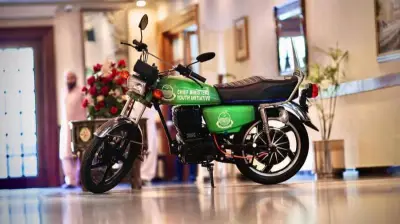
Concessions on electric motorcycles, rickshaws, vehicles, and buses will continue for the next year, and the one percent sales tax facility has been extended to imported electric trucks. Customs Duty on raw materials used in local production of medicines for cancer and other diseases has been withdrawn.
Allocations for Social Sectors and Development
Rs1,071 billion has been allocated for civil administration expenditures. Rs71 billion has been set aside for the Prime Minister Apna Ghar scheme, and Rs88 billion for the expansion of the Export Refinance Scheme. The Benazir Income Support Programme (BISP) will be expanded: the Kafaalat programme will cover 12 million families, and the Taleemi Wazaif programme will benefit 9.2 million children. Rs838 billion has been earmarked for BISP.
Rs146 billion has been allocated for Azad Jammu and Kashmir, Rs88 billion for Gilgit-Baltistan, and Rs95 billion for newly merged districts of Khyber Pakhtunkhwa from current expenditures.
The National Development Programme for the next financial year is worth Rs3,675 billion, including Rs1,000 billion for Federal PSDP, Rs2,224 billion for provincial development programmes, and Rs451 billion for development spending by State-Owned Enterprises (SOEs). Over sixty percent of the Federal PSDP has been allocated to transport and communications, water resources, and energy sectors.
Infrastructure and Energy Projects
Rs365 billion has been allocated for transport infrastructure, including Rs100 billion for upgrading the N-25 Pakistan Highway into a dual carriageway, Rs30 billion for the M-6 Sukkur-Hyderabad Motorway, and Rs25 billion for the Karachi-Rohri section. Rs2 billion has been earmarked for the Thar Coal Connectivity Project, and Rs93 billion for basic infrastructure of Gwadar Port, railways, and transport projects across provinces.
For the power sector, Rs116.2 billion has been allocated in the federal development programme. Key hydropower initiatives include expansion of Diamer-Bhasha Dam, fifth expansion of Tarbela Dam, and Mohmand hydropower project. Rs10.2 billion and Rs3 billion have been allocated for STATCOM and battery storage systems. For clean and renewable energy, Rs50.2 billion will be given to WAPDA for nine projects, and Rs13.1 billion for eight hydropower projects in Azad Kashmir and Gilgit-Baltistan. WAPDA and National Grid Company will invest Rs158 billion from their own resources.
For water projects, Rs103.1 billion has been allocated, including Rs14 billion for Diamer-Bhasha Dam, Rs22 billion for Mohmand Dam, Rs15 billion for Dasu Hydropower Project, and Rs10 billion for Karachi's water supply project K-4.
Urban Development, Industry, and Education
Rs54.6 billion has been allocated for sustainable urban development and housing, with 150,000 affordable and climate-resistant residential units to be constructed. Digital master plans will be prepared for ten major cities. Rs6.6 billion has been earmarked for industry and trade, with the largest portion for Block-A of Karachi Industrial Park. Industrial designing and automation centers are being established in Karachi, Lahore, and Sialkot.
Rs25.1 billion has been allocated for health projects, including expansion of tertiary healthcare, emergency and critical care, cancer treatment facilities, and an integrated disease surveillance system. Rs46 billion has been allocated for higher education, including scholarships, research capabilities, digital learning, and AI-based education. Rs22 billion has been allocated for Daanish schools, and Rs26.3 billion for school and college education. Rs7.9 billion has been set aside for technical training under the Prime Minister Youth Skills Development Programme through NAVTTC.
Tax Administration Reforms
A Fixed Tax System for small retailers with annual sales of Rs200 million or less has been introduced. They will pay one percent tax on annual sales and can adjust their withholding tax, but must deposit at least Rs25,000 at the time of submitting returns. Retailers opting for this system will receive a green plaque with a verified QR code. A simple one-page tax return will be available in Urdu and major local languages.
The FBR's new Tax Operating Model includes a National Faceless Centre that separates discretionary and non-discretionary functions. The faceless wing will hold discretionary powers such as audit, assessment, and quality control, while the field operation wing will handle verification, registration, and recovery without discretionary powers. All correspondence will be conducted through FBR's IRIS portal.
The National Assembly will meet tomorrow morning at 11 am. Finance Minister Muhammad Aurangzeb also laid a copy of the Finance Bill, 2026 in the Senate today. The Upper House will meet on Monday at 12:30 pm.