Every year, Pakistan’s Economic Survey serves as an important mirror reflecting the overall performance of the national economy. It not only reviews economic activities during the outgoing fiscal year but also provides insight into the future direction of economic policy. The Economic Survey 2025-26 has been released at a time when Pakistan is striving to recover from years of severe economic challenges, including high inflation, mounting external debt, foreign exchange shortages, political uncertainty, and global economic disruptions. While the survey presents several encouraging indicators that point towards economic stabilisation, it also highlights the government's inability to achieve many of its key economic targets, reminding policymakers that significant challenges still lie ahead.
Finance Minister Highlights Stability and Growth
Presenting the Economic Survey, Finance Minister Senator Muhammad Aurangzeb stated that Pakistan has achieved economic stability despite facing extraordinary economic difficulties and has now laid the foundation for entering a new phase of growth. According to him, had it not been for geopolitical tensions in the Middle East, global trade barriers, and other external factors, the country’s economic growth rate could have exceeded 4 per cent. While this assessment carries weight, the survey’s statistics also reveal a noticeable gap between policy aspirations and actual economic outcomes.
GDP Growth and Economic Size
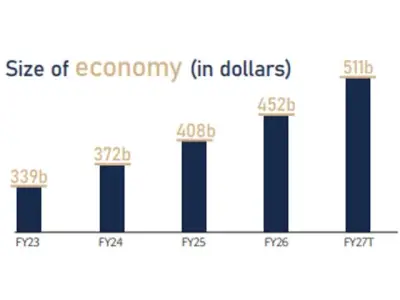
During the fiscal year 2025-26, Pakistan recorded an economic growth rate of 3.7 per cent, the highest in the past four years. This achievement is significant considering that the economy had remained largely stagnant in recent years, with growth rates falling to very low levels. However, the government’s original growth target was higher and remained unmet. Nevertheless, the 3.7 per cent growth rate can be viewed as a positive sign of economic recovery, indicating improvements in business activity, production, and investment. According to the survey, the size of Pakistan’s economy has increased to $452.1 billion, while per capita income has risen from $1,751 to $1,901 over the past two years.

Poverty and Inequality Concerns
On the surface, these figures paint an encouraging picture of economic progress. However, an important question remains: Are the benefits of this growth reaching ordinary citizens? With the poverty rate rising to 28.9 per cent and nearly one out of every three Pakistanis living at or below the poverty line, concerns regarding the equitable distribution of economic gains are both valid and pressing.
Agriculture Sector Performance
Agriculture continues to be the backbone of Pakistan’s economy, providing livelihoods to a substantial portion of the population. According to the Economic Survey, the agricultural sector recorded an overall growth rate of 2.8 per cent, while crop production grew by only 1.4 per cent. Although these figures remain positive, they fall short of the government's targets. Experts attribute this underperformance to climate change, water shortages, extreme temperatures, irregular rainfall patterns, and flooding in various regions. However, the livestock and dairy sectors performed relatively better and now account for nearly 60 per cent of the agricultural economy. This trend underscores the growing importance of livestock and dairy farming as drivers of rural economic growth.
Industrial Sector and Investment
The industrial sector delivered comparatively encouraging results. Large-Scale Manufacturing (LSM) recorded a growth rate of 6 per cent, the highest in the last four years. This increase in industrial output is a positive signal for the economy because industrial expansion generates employment opportunities, strengthens domestic production, and enhances export potential. Similarly, the petroleum sector registered a growth rate of 5 per cent. An increase of Rs. 934 billion in private-sector credit indicates renewed confidence among businesses and investors, suggesting improved expectations regarding future economic prospects.

Remittances and External Sector
One of the most notable achievements of the fiscal year was the performance of overseas Pakistanis in supporting the economy through remittances. According to the survey, workers’ remittances increased by 8.2 per cent to reach $30.3 billion. These inflows not only helped strengthen Pakistan’s foreign exchange reserves but also provided vital financial support to millions of households. Surprisingly, however, despite record remittances, the current account surplus narrowed sharply to only $72 million. This indicates that the pressure of imports, debt servicing, and other external obligations continues to weigh heavily on the economy.
Export Sector and Foreign Investment
The export sector presented a mixed picture. Despite the global economic slowdown, changing tariff regimes, and international trade barriers, Pakistan’s textile exports remained stable at approximately $13.5 billion. This resilience reflects the strength and adaptability of the country’s largest export industry. However, foreign direct investment declined during the year, which should be a matter of concern for policymakers. Sustainable long-term economic growth depends heavily on both domestic and foreign investment. Therefore, improving the business environment, ensuring policy consistency, and facilitating investment remain critical priorities.
Public Debt and Fiscal Sustainability
Despite signs of stabilisation, the growing burden of public debt remains one of Pakistan’s most significant economic challenges. By March 2026, the country’s total public debt had reached Rs. 833 trillion. Although the government maintains that 30 to 40 per cent of these loans have been obtained on concessional terms, the continuous rise in debt raises concerns about future fiscal sustainability. This is why economists consistently emphasise the need to expand exports, broaden the tax base, improve productivity, and reduce unnecessary government expenditure.
Inflation and Living Standards
The inflation outlook, however, was relatively positive. Average inflation was recorded at 6.2 per cent, representing a significant decline compared to previous years. Greater price stability has provided some relief to consumers. Nevertheless, poverty and unemployment continue to affect millions of households across the country. Lower inflation alone is not sufficient; sustainable improvements in living standards require job creation, industrial expansion, and rising incomes.
Ultimately, the true measure of economic success is not merely what the statistics reveal, but how much the lives of ordinary citizens improve. Economic growth becomes meaningful only when it translates into better living standards, greater opportunities, and a more prosperous future for all Pakistanis.