KARACHI: The government has unveiled an expansive Blue Economy agenda for FY2026-27, including plans to more than double Pakistan's national shipping fleet, invest heavily in maritime infrastructure, expand fisheries development, and continue offshore energy exploration. This comes even as key indicators from the outgoing fiscal year point to modest growth across the sector.
Strategic Pillars of the Blue Economy
According to the Annual Plan 2026-27, released alongside the budget, shipping, fisheries, port infrastructure, and offshore energy have been identified as central pillars of the government's strategy to increase the economic contribution of Pakistan's coastal and marine resources. The roadmap arrives as the maritime sector undergoes a transitional phase, with cargo handling receiving support from shifting regional trade routes amid the Iran conflict, which has diverted additional shipping activity towards Pakistani ports.
This development has somewhat masked the sector's relatively small contribution to economic activity, despite Pakistan's strategic location and coastline stretching over 1,000 kilometers along the Arabian Sea.

Cargo Handling Performance
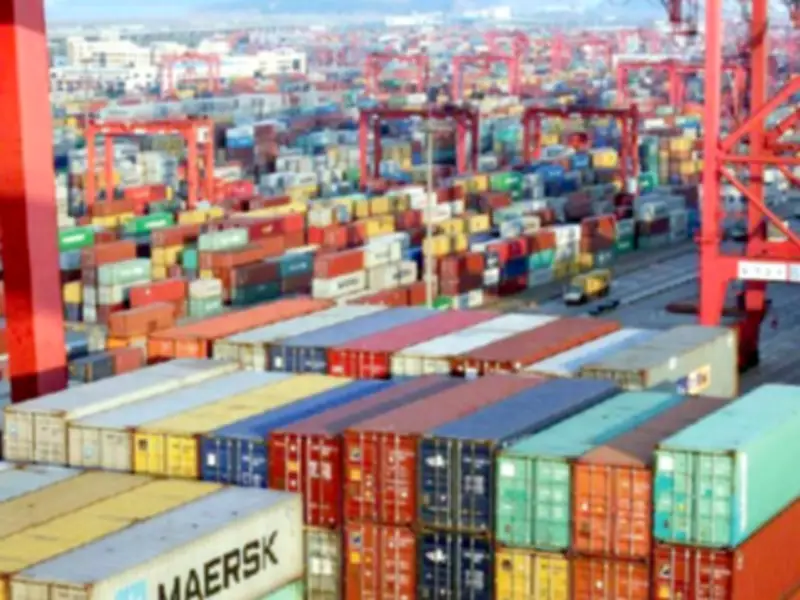
During July-March FY2025-26, total cargo handled at the country's three major ports – Karachi Port, Port Qasim, and Gwadar Port – reached 79 million metric tonnes, reflecting a 5% increase over the corresponding period of the previous year, according to official documents. While this indicates some improvement in port activity, overall cargo volumes remained closely tied to broader trade and economic trends that have been subdued in recent years.
Expansion of National Shipping Fleet
The Pakistan National Shipping Corporation (PNSC), the state-owned shipping company, added three vessels during the outgoing fiscal year, increasing its operational fleet to 14 ships. The government now plans to significantly expand this capacity through the PNSC Fleet Development Plan, aiming to grow the national fleet from 14 to 30 vessels over the coming years. This expansion is expected to increase Pakistan's share in transporting its own imports and exports, much of which is currently handled by foreign shipping companies.
Fisheries Sector Growth
The fisheries sector, another key component of the Blue Economy strategy, recorded seafood exports worth $405 million during July-March FY2025-26. The government expects exports to reach $500 million by the close of the fiscal year. Pakistan's seafood exports continue to rely largely on markets in the European Union and Gulf Cooperation Council (GCC) countries. However, industry stakeholders have repeatedly highlighted infrastructure constraints, including inadequate cold storage facilities, limited processing capacity, and deficiencies in fish handling systems, as factors restricting export growth and value addition.
Maritime Infrastructure Investments
The government has also earmarked substantial resources for upgrading maritime infrastructure under the Public Sector Development Programme (PSDP). Key projects include:
- Korangi Fish Harbour (KoFHA) Export Infrastructure Project – costing Rs1.048 billion
- Karachi Shipyard & Engineering Works (KSEW) Infrastructure Upgradation – worth Rs10.69 billion
- Gadani Shipbreaking Modernisation – estimated at Rs12.9 billion
Questions were sent to relevant authorities; however, responses could not be obtained as officials were not reachable outside working hours. The Gadani shipbreaking yard remains one of the largest ship recycling centers globally and is an important source of scrap metal for domestic industries. Authorities expect the planned investment to improve infrastructure and operational standards within the sector.
Offshore Energy Exploration
The government's maritime strategy also places renewed emphasis on offshore energy exploration. Official documents show that 23 offshore oil and gas blocks, covering a combined area of 53,510 square kilometers, have been awarded for exploration activities. Planned investment in these blocks stands at approximately $80 million over a three-year licensing period. Exploration activities in the awarded blocks are expected to continue during FY2026-27 as authorities seek to assess the commercial potential of offshore hydrocarbon resources.

Alongside oil and gas exploration, the government plans to undertake technical and feasibility studies for offshore wind energy projects in the Sindh Wind Corridor and the Hingol National Park Corridor. These studies form part of broader efforts to evaluate the potential of marine-based renewable energy resources as Pakistan looks to diversify its energy mix.
Regulatory Initiatives and Policy Framework
In addition to infrastructure projects and resource exploration, policymakers are preparing a series of regulatory initiatives aimed at providing a long-term framework for maritime development. The government plans to secure approval of the National Maritime Policy, National Shipping Policy, and National Fisheries and Aquaculture Policy during the next fiscal year. These proposed policies are expected to address issues related to governance, investment, sectoral development, and resource management across different segments of the maritime economy.
Aquaculture and Tourism Expansion
Plans have also been outlined to expand inland and coastal aquaculture projects in Sindh, Balochistan, and Punjab to increase fish production and support employment opportunities in rural communities. Another initiative included in the annual plan is the issuance of the country's first ferry service license, which authorities hope will support marine tourism and improve maritime connectivity.
Outlook and Challenges
The government's targets for FY2026-27 represent one of the most comprehensive attempts in recent years to position the maritime sector as a driver of economic activity. However, the scale of the planned expansion contrasts with the pace of growth recorded during the outgoing fiscal year. Cargo volumes, fisheries exports, and fleet additions all registered incremental gains, while several long-standing challenges related to infrastructure, investment, and competitiveness remain unresolved.
With major spending commitments now planned across shipping, fisheries, shipbuilding, shipbreaking, and energy exploration, attention is likely to shift towards implementation and the extent to which the proposed investments translate into higher trade volumes, stronger exports, and greater economic activity. The annual plan suggests that the government sees considerable untapped potential in Pakistan's coastal economy. Whether that potential can be converted into measurable economic gains will depend on the execution of projects, the effectiveness of new policies, and the ability of public institutions to deliver on the targets set for the coming years.