ISLAMABAD: Information Minister Attaullah Tarar on Wednesday described the upcoming fiscal year’s budget as “relief-oriented”, saying the country had moved from the risk of economic default towards stabilisation following structural reforms in taxation, governance and enforcement.
On June 12, Finance Minister Muhammad Aurangzeb presented the federal budget for FY2026–27 in the National Assembly, proposing total federal expenditure of around Rs18 trillion and setting an economic growth target of 4%. He described the budget as being anchored in “stabilisation, reform and growth”.
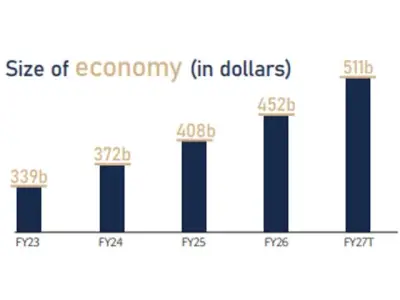
Aurangzeb said the economy had grown by 3.7% in FY2025–26 despite floods and regional tensions, reaching a size of $452 billion. Per capita income rose to $1,901, while large-scale manufacturing recorded its strongest performance in four years.

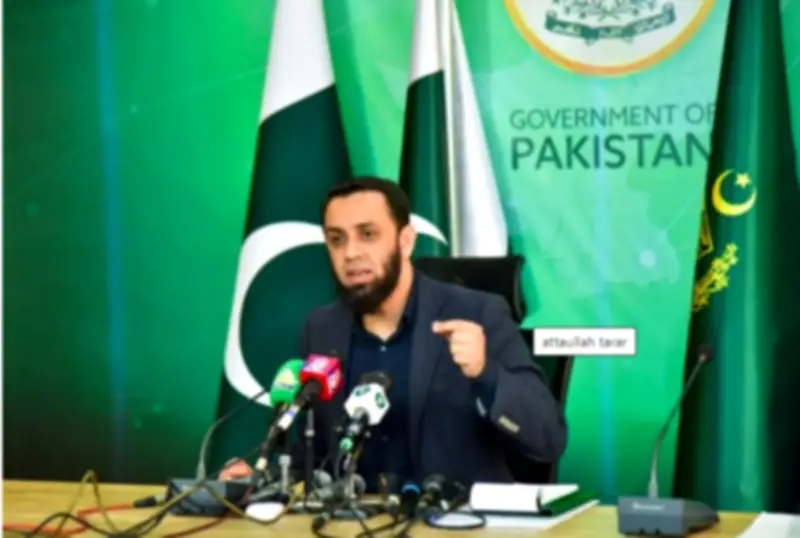
In a detailed briefing on the 2026–27 federal budget, Tarar, speaking alongside State Minister for Finance Bilal Azhar Kayani, said the government had introduced the financial plan after a difficult period of economic uncertainty. He said the upcoming fiscal year was being approached with a focus on public relief alongside continued macroeconomic stability.
Tarar said Prime Minister Shehbaz Sharif was always ready to provide relief, adding that every segment of society had been extended relief in the budget. He said the government was moving towards export-led growth, while new tribunals had been formed to improve tax dispute resolution.
He said Pakistan had previously been in a fragile economic position in which, as he put it, “some government officials even went on leave because they did not want a default to happen during their tenure.” He added that at the time “no one was willing to take responsibility for the economy”, describing the period as one marked by uncertainty and indecision.
According to Tarar, the situation was stabilised under the leadership of the Pakistan Muslim League-Nawaz (PML-N). He said the party’s leadership stepped in during a critical phase and guided economic management, crediting former prime minister Nawaz Sharif’s vision and Prime Minister Shehbaz Sharif’s execution of economic policy.
He said engagement with the International Monetary Fund (IMF) had been crucial in averting default and restoring economic confidence. Referring to past uncertainty, he said that without progress in talks held in Paris, “there was a risk the country could have defaulted”. He added that the prime minister had personally played a key role in securing agreements that led to stabilisation.
A significant portion of the briefing focused on reforms in the Federal Board of Revenue (FBR), which Tarar said had been central to improving revenue collection and creating fiscal space for tax cuts. “There were several problems in the FBR,” he said. “Digitalisation had stalled, officers were corrupt, and postings were being made on recommendation.”
He said the government had ended influence-based postings and introduced a merit-based system. He emphasised that “appointments are no longer made on recommendation”, warning that any attempt to bypass procedures would result in disciplinary action. He said officials were now being assessed through structured evaluations and placed according to merit.
“There is now a faceless appraisal system and no direct contact with customs officers,” he said, adding that clearance times had been reduced from weeks to days through automation and digital processing. Under the system, importers and exporters clear goods digitally using Goods Declaration (GD) numbers without direct engagement with customs officers.
On revenue enforcement, the minister said the government’s anti-evasion measures had significantly increased collections across multiple sectors, including sugar, tobacco, beverages and cement. He said the sugar industry had been the first major sector brought under digital monitoring, with production and sales tracked through cameras and barcode systems.

“Production and sales are monitored through an IT system, with barcode and QR code tracking,” he said, adding that the reforms had generated around Rs60 billion in additional revenue from the sugar sector alone. He further said the tobacco industry had shown estimated leakages of around Rs200 billion, which were being addressed through enforcement operations against illegal trade.
Tarar said reforms in tax dispute resolution had also improved recoveries, with new tribunals established and long-pending cases expedited. He said the removal of stay orders had enabled significant additional revenue collection, adding: “In the past year alone, enforcement measures have generated around Rs800 billion.”
The minister said these fiscal gains had allowed the government to introduce a broad package of tax relief measures. He said salaried individuals earning up to Rs50,000 per month would pay no income tax, while those earning between Rs50,000 and Rs100,000 per month would face an income tax rate of approximately one per cent.
He added that additional reductions had been introduced across higher income brackets to ease pressure on middle-income groups, saying the policy aimed to ensure “the burden does not fall disproportionately on salaried classes”.
On housing policy, Tarar said the government had reduced taxes on small property transactions and prioritised construction as a driver of economic activity. He said Rs90 billion had been allocated for the “Apna Ghar” programme, with Rs11 billion already disbursed, adding that construction activity would generate demand across more than a dozen allied industries, including cement, steel and building materials.
He said export competitiveness had also been strengthened through the removal of advance tax and super tax for exporters, alongside a reduction in export refinancing rates to four per cent compared with market rates of around 11 per cent. He said these steps were aimed at boosting investment, production and employment.
The briefing also highlighted youth-focused programmes, including agricultural and business loans expected to benefit around 550,000 young people. Tarar said investments in skills development and sports initiatives, alongside the expansion of educational institutions such as Danish schools, formed part of a broader human capital strategy.
In agriculture, he said import duties on machinery, including tractors, harvesters, pumps and related equipment, had been abolished to reduce costs for farmers. He added that financing support would be expanded through lower interest rates under a “Zarakhizi” scheme, while research institutions were being reformed on a merit basis.
He also said around 3.5 million retailers were currently outside the tax net and would be brought into it through a simplified fixed-tax scheme developed after consultations with trader organisations. Under the scheme, retailers would pay a minimum annual tax of Rs25,000 and receive formal registration while benefiting from simplified compliance requirements.
Tarar confirmed that the Benazir Income Support Programme had been expanded to Rs833 billion, supporting more than 10 million families. He said eligibility criteria were aligned with international standards in collaboration with the World Bank, and that payments were largely disbursed to women in beneficiary households.
He added that the budget also included tax exemptions on reproductive health products for women, aimed at reducing costs and improving access to essential healthcare. On the private sector, he said the government had increased the minimum wage by 10 per cent and raised public sector salaries, while ensuring that freelancers and IT professionals were not subject to additional taxation.
“There is no additional tax burden on freelancers,” he said, describing the IT sector as a priority for growth. Concluding the briefing, Tarar described it as “a reform-oriented and relief-oriented budget achieved through teamwork”, adding that the government remained committed to long-term economic stability, growth and recovery.