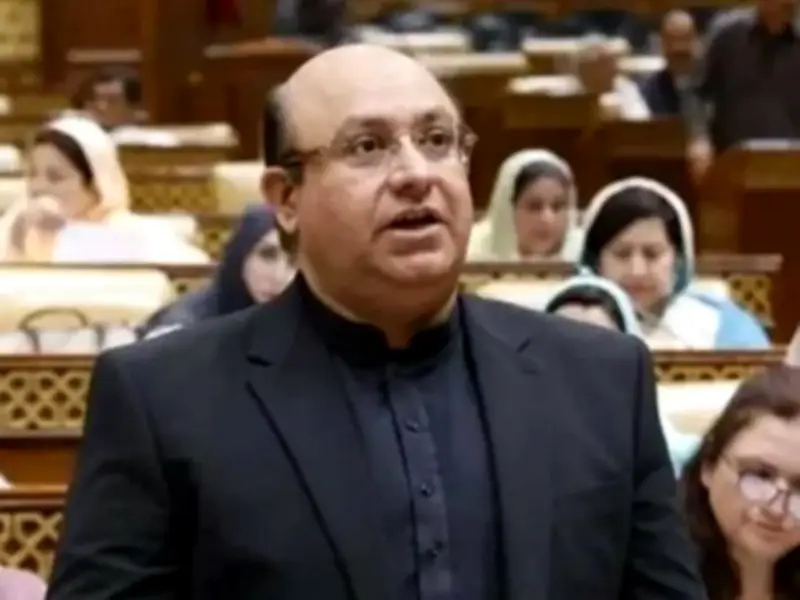
The Punjab government will establish a unified tax authority modeled on the Federal Board of Revenue (FBR) during the next fiscal year, consolidating all provincial taxes under a single institutional framework. This was announced by Punjab Finance Minister Mian Mujtaba Shujaur Rehman during a post-budget news conference in Lahore.
Revenue Targets and Achievements
The finance minister revealed that Punjab achieved 99% of its tax collection target in the outgoing fiscal year. For FY 2026-27, the revenue target has been increased by 46%, and the minister expressed confidence that the enhanced target would be met through ongoing reforms. Revenue from Punjab's own resources is expected to grow by 30% to 40%.
Minister Rehman emphasized that no new taxes have been imposed, nor have existing tax rates been increased over the past two years. Instead, improvements in revenue collection have been driven by eliminating corruption in administration and expanding the provincial tax base.

Departmental Performance
The Punjab Revenue Authority (PRA) exceeded its target by 30% in the current fiscal year, while the excise and taxation department recorded a 12% increase. Among non-tax revenue departments, the mines and minerals department was the leading contributor. For the upcoming year, the collection target for PRA has been set at Rs528 billion, for excise and taxation at Rs124 billion, and for non-tax departments at Rs461 billion.
Budget Adjustments and Fiscal Gap
The minister noted that only modest revisions to certain existing tax rates have been proposed for the upcoming fiscal year, considering the economic circumstances. A key factor behind this adjustment is Punjab's decision to provide a Rs546 billion grant to the federation, which reduced the province's development budget from Rs1,240 billion to Rs752 billion. This decision was made by the chief minister in the national interest, reaffirming that the strength of the federation depends on the strength of its constituent units.
Despite the reduction in development resources, the government has not compromised on development agenda or public services. The fiscal gap is being addressed through rationalization of current expenditures and promotion of greater economic activities.
Tax Revisions and Digitization
Responding to media queries, the minister explained that taxes whose rates have been revised had remained unchanged for decades. Proposed amendments to the Agricultural Tax, unchanged since 1998, will apply to landholdings exceeding 12.5 acres. Following the digitization of excise and taxation collection, the Board of Revenue's collection system will also be shifted online. The property tax regime is being fully digitized to eliminate corruption and improve efficiency.
With the expansion of the Punjab Revenue Authority's mandate, its human resource capacity is also being strengthened. These reforms aim to enhance governance, institutional efficiency, and transparency across the provincial revenue system.