The Monetary Policy Committee (MPC) of the State Bank of Pakistan (SBP) decided on Monday to maintain the policy rate at 11.5 percent, citing persistent inflation and global uncertainties.
Global and Domestic Factors
The MPC noted that global oil prices have eased following positive geopolitical developments but remain elevated compared to pre-conflict levels. The impact of the Middle East conflict is now visible in recent economic indicators, with headline inflation rising to double digits in April and May, while core inflation has also edged up.
Economic activity is showing signs of moderation due to elevated prices, austerity measures, and economic uncertainty. However, external account pressures remain moderate. The MPC assessed that the current monetary policy stance remains appropriate to guide inflation toward the target range of 5–7 percent over the medium term.

Key Developments Since Last Meeting
- GDP Growth: Real GDP growth for FY26 is provisionally estimated at 3.7 percent by the Pakistan Bureau of Statistics (PBS).
- Confidence Indicators: Consumer and business confidence recovered marginally, while inflation expectations eased somewhat.
- Foreign Exchange Reserves: Successful completion of IMF reviews for EFF and RSF, along with ongoing purchases, increased SBP’s FX reserves to $17.2 billion as of June 5, 2026.
- Fiscal Position: The government estimated a primary balance surplus of 2.5 percent of GDP for FY26 and targets a surplus of 2.0 percent for FY27.
- Global Impact: The Middle East conflict has begun to affect macroeconomic conditions in many economies, leading several central banks to raise policy rates.
Growth and External Sector
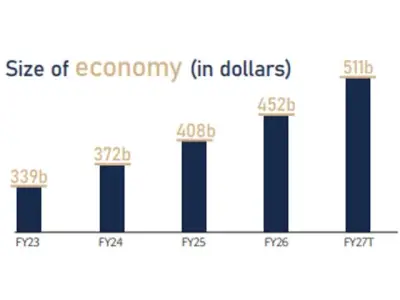
According to provisional PBS estimates, real GDP grew by 3.7 percent in FY26, up from 3.2 percent in FY25. This growth was primarily driven by services and industry sectors, with meaningful contributions from agriculture. Large-scale manufacturing posted strong growth of 6.5 percent during July-March FY26, though moderation is expected in Q4-FY26.
The current account turned into a deficit of $0.3 billion in April, resulting in a cumulative deficit of $0.2 billion during July-April FY26. This was mainly due to a widening trade deficit amid a surge in energy imports. However, sizable workers’ remittances in May are likely to contain the current account deficit for FY26 to the lower end of the projected range.
Fiscal Consolidation and Monetary Aggregates
Fiscal consolidation efforts remained broadly on track, driven by expenditure restraint. The FBR revised its revenue target to around Rs13 trillion for FY26. Despite this, the government expects to achieve a primary balance surplus of 2.5 percent of GDP by containing expenditures.
Broad money (M2) growth moderated to 14.3 percent year-on-year as of May 29, 2026, from 14.5 percent on April 10, 2026. Private sector credit grew by around 13 percent, with increases in working capital, fixed investment, and consumer financing.
Inflation Outlook
Headline inflation rose sharply from 7.3 percent in March to 10.9 percent in April and 11.7 percent in May. The Middle East conflict has fueled inflation directly through higher domestic energy prices and indirectly through increased transportation and production costs. Core inflation rose to 8.2 percent in April and 8.7 percent in May.
The MPC assessed that inflation may remain in double digits for the next few months before gradually easing. This outlook is subject to risks including geopolitical developments, pass-through of global prices, adjustments in power and gas tariffs, fiscal slippages, and uncertain food prices.
The MPC reiterated the importance of accelerating structural reforms to strengthen the economy’s resilience to supply shocks, enhance productivity, and create conditions for higher and more sustainable economic growth.