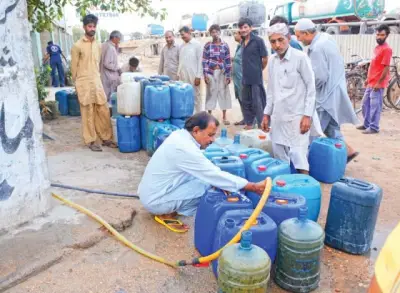
Karachi's approval of new infrastructure spending should, in principle, be welcome news. A city of its size, economic importance, and population burden desperately needs better roads, bridges, water supply, and drainage. The Sindh cabinet's decision to approve Rs11.198 billion for major Karachi infrastructure projects and Rs8.824 billion for water and drainage schemes across the province responds to real and urgent needs.
Governance Crisis Overshadows Investment
Yet, in Karachi's case, money alone cannot inspire confidence. The problem is not that the city does not need investment. It does. The problem is that Karachi has seen too many grand announcements, expensive schemes, and development packages that failed to alter the lived reality of its citizens. Broken roads, overflowing drains, collapsing municipal services, tanker mafias, encroachments, garbage mismanagement, and administrative confusion remain part of daily life.
Against this background, the public is entitled to ask whether this latest package will produce actual improvement or simply become another costly disappointment. Cartoon money spent is not the metric. Governance is. If funds are siphoned off, if contracts are distributed through patronage, if municipal services remain captured by monopolies and mafias, and if departments continue to operate without accountability, then even billions of rupees will disappear without transforming the city.

Structural Reforms Essential
Karachi's decay is not merely an infrastructure problem. It is a governance crisis. The approved road and bridge projects may ease traffic in certain corridors. Water and drainage schemes may address some immediate failures. But unless the municipal management system itself is reformed, these projects will remain temporary patches on a deeply broken structure.
Karachi needs transparent procurement, empowered local bodies, professional urban planning, independent audits, and a serious crackdown on the networks that profit from municipal dysfunction. Infrastructure spending is necessary, but it is not sufficient. Without reform, another mega project will only repeat Karachi's oldest tragedy: large promises, large funds, and little change.