Pakistani Financial Expert Drives Efficiency at Qatar's LNG Shipping Leader
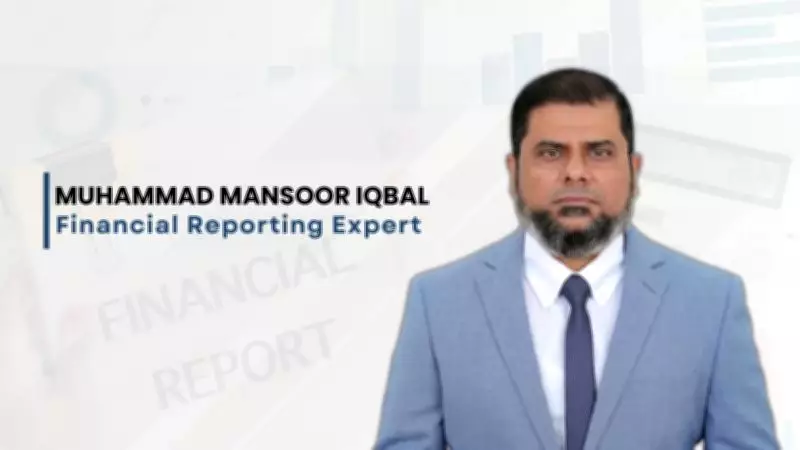
When a publicly listed corporation unveils its quarterly financial performance, the general audience typically observes only the final, polished outcome. The genuine challenge, however, unfolds long before that moment: the intricate process of synthesizing numerous disparate accounting records into a single, coherent, and trustworthy narrative for investors and regulatory bodies. In Doha, Qatar, this critical behind-the-scenes work is masterfully executed by Muhammad Mansoor Iqbal, a Financial Reporting Expert at the headquarters of Qatar Gas Transport Company Limited (Nakilat) QPSC.
The Critical Role of Consolidated Financial Reporting
Nakilat stands as the world's largest owner of liquefied natural gas (LNG) carriers and is listed on the Qatar Stock Exchange. The stakes are exceptionally high; a single delayed or inaccurate report can severely undermine the credibility of a company under constant market scrutiny. Financial reporting serves as the structured mechanism through which a company transparently discloses its earnings, expenditures, assets, and liabilities to creditors and suppliers.
Consolidated financial reporting elevates this process significantly. It amalgamates the financial outcomes of a parent company with all its subsidiaries and joint ventures, presenting the entire corporate group as a unified entity. This consolidation meticulously eliminates internal transactions between group companies, preventing the double-counting of funds and transforming operational complexity into clear, actionable insight for stakeholders.

Managing a Vast Global Network
As the Financial Reporting Expert, Muhammad Mansoor Iqbal is responsible for consolidating and reviewing reports for Nakilat's parent company, its subsidiaries, and its joint ventures. This encompasses an impressive network of over 120 distinct entities operating across multiple international jurisdictions, including Japan, Germany, Cyprus, Canada, Malta, South Korea, the United Kingdom, Greece, and Qatar itself.
All reporting is meticulously prepared under International Financial Reporting Standards (IFRS), the globally recognized set of accounting rules, and is processed through the group's sophisticated SAP S/4HANA finance system. Despite the advanced tools, each quarter-end imposes rigorous deadlines with minimal tolerance for inaccuracies.
Quantifiable Impact and Process Innovation
One of the most tangible measures of Mansoor's contribution is the dramatic reduction in time required for financial closure. He successfully streamlined the group's close cycle, slashing it from 12 days post-quarter-end to just 5 days. This achievement was realized by standardizing the methodologies through which subsidiary companies compile and submit their financial data.
Furthermore, he implemented automation for consolidation adjustments, which resulted in a reduction of manual effort by over 35 percent and a corresponding decrease in errors by approximately 80 percent. The outcome is a significantly accelerated reporting process that maintains, and even enhances, the rigorous accuracy checks essential for reliability.
Solving Intercompany Challenges and Ensuring Audit Excellence
Group reporting frequently encounters breakdowns due to intercompany mismatches, where different entities record the same transaction inconsistently. Mansoor addressed this persistent issue by introducing system-based verification checks and further automation, achieving a remarkable reduction of more than 90 percent in such discrepancies. This improvement minimizes last-minute reconciliations, allowing finance teams more time to analyze results rather than merely correcting them.
His professional excellence is further evidenced by outstanding audit outcomes. Since 2006, Mansoor has prepared IFRS-compliant consolidated financial statements that have received zero audit findings, covering nearly two decades of quarterly reporting cycles. Since 2018, he has also coordinated internal control testing over financial reporting, collaborating with auditors and various departments, with no control deficiencies reported. These controls function as essential guardrails, ensuring reporting integrity despite the group's extensive and complex structure.

Adapting to Evolving Standards and Professional Foundation
Accounting rules are perpetually evolving, and large multinational groups are particularly sensitive to these changes. Mansoor has played a pivotal role in supporting the group-wide implementation of major new IFRS standards, including IFRS 9, 15, and 16. He provides ongoing training and practical guidance to finance teams through hands-on "NICE" sessions and maintains his expertise with annual IFRS update trainings conducted by leading audit firms in Qatar.
His professional journey is rooted in Pakistan. He received his academic foundation from the University of Karachi and his professional qualification through the Institute of Chartered Accountants of Pakistan. He built his early audit experience with Deloitte's member firms in Pakistan before embarking on a distinguished and lengthy career in Qatar.
A Lesson in Professional Integrity
For aspiring Pakistani professionals, Mansoor's career offers a powerful lesson: global recognition and respect are often earned through consistently excelling at difficult, repetitive tasks. He articulates his philosophy with clarity: "The job is to make the numbers make sense, not to make them look good." He adheres to another fundamental principle in his work: "If the report is fast but wrong, it is not fast." This unwavering commitment to accuracy and sense over superficial appeal defines the high standards he brings to the complex world of global financial reporting.