ISLAMABAD - Information Minister Attaullah Tarar on Wednesday described the next fiscal year's budget as “relief-oriented”, stating that the country has moved from the risk of economic default towards stabilization following structural reforms in taxation, governance, and enforcement.
Budget Overview
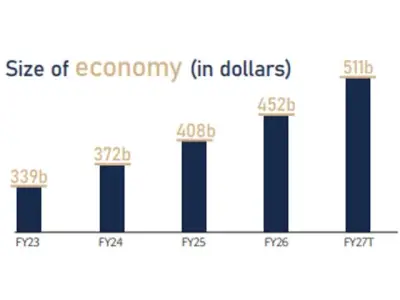
On June 12, Finance Minister Muhammad Aurangzeb presented the federal budget, proposing total federal expenditure of around Rs18 trillion and setting an economic growth target of 4%. He described the budget as being anchored in “stabilization, reform, and growth”.
Government's Focus on Relief
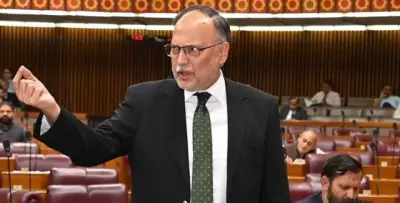
In a detailed briefing on the 2026–27 federal budget, Tarar, speaking alongside State Minister for Finance Bilal Azhar Kayani, said the government introduced the financial plan after a difficult period of economic uncertainty. He emphasized that the government focused on public relief alongside continued macroeconomic stability in the upcoming fiscal year budget.

He was of the view that engagement with the International Monetary Fund (IMF) had been crucial in averting default and restoring economic confidence. Referring to past uncertainty, Tarar said without progress in talks held in Paris, “there was a risk the country could have defaulted”. He added that the prime minister personally played a key role in securing agreements that led to stability on the economic front.
Reforms and Revenue
Tarar said reforms in tax dispute resolution had also improved recoveries, with new tribunals established and long-pending cases expedited. He said the removal of stay orders had enabled significant additional revenue collection, adding: “In the past year alone, enforcement measures have generated around Rs800 billion.”
Tax Relief Measures
The information minister said these fiscal gains had allowed the government to introduce a broad package of tax relief measures. He said salaried individuals earning up to Rs50,000 per month would pay no income tax, while those earning between Rs50,000 and Rs100,000 per month would face an income tax rate of approximately one percent.
He added that additional reductions had been introduced across higher income brackets to ease pressure on middle-income groups, and the policy aimed to ensure “the burden does not fall disproportionately on salaried classes”.
Anti-Evasion Measures
On revenue enforcement, the minister said the government's anti-evasion measures had significantly increased collections across multiple sectors, including sugar, tobacco, beverages, and cement. Tarar said the sugar industry had been the first major sector brought under digital monitoring, with production and sales tracked through cameras and barcode systems.
He further said the tobacco industry had shown estimated leakages of around Rs200 billion, which were being addressed through enforcement operations against illegal trade.
Housing and Agriculture
On housing policy, the minister said the government had reduced taxes on small property transactions and prioritized construction as a driver of economic activity. He said Rs90 billion had been allocated for the 'Apna Ghar' scheme, with Rs11 billion already disbursed, adding that construction activity would generate demand across more than a dozen allied industries, including cement, steel, and building materials.
In agriculture, Tarar said import duties on machinery, including tractors, harvesters, pumps, and related equipment, had been abolished to reduce costs for farmers. He said financing support would be expanded through lower interest rates under a “Zarakhizi” scheme, while research institutions were being reformed on a merit basis. He also said around 3.5 million retailers were currently outside the tax net and would be brought into it through a simplified fixed-tax scheme developed after consultations with trader organizations.
Conclusion
Towards the end of the briefing, Tarar described next year's budget as “a reform-oriented and relief-oriented budget achieved through teamwork”, adding that the government remained committed to long-term economic stability, growth, and recovery.