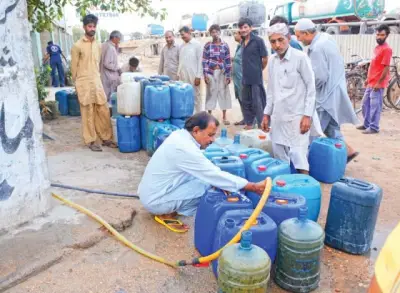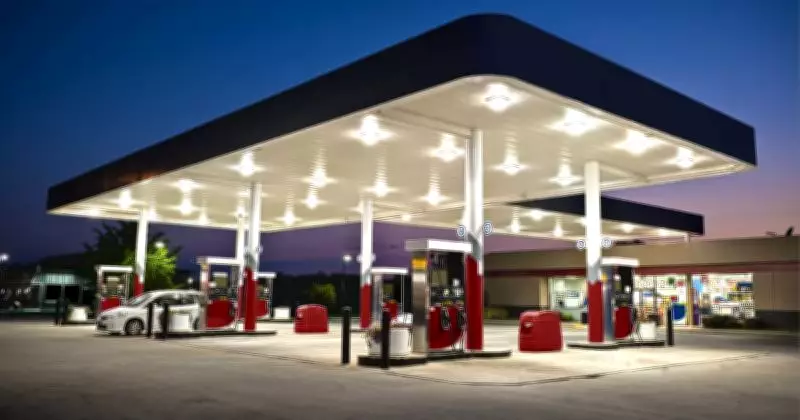
The Oil and Gas Regulatory Authority (OGRA) revised fuel prices again this week. As history serves as an indicator, the nation reacted similarly to how it did the previous month. After rumours of a massive hike spread, city roads were clogged with long queues by evening, and stations ran out of fuel by midnight. Consequently, the Pakistani nation, in an attempt to save 42 million rupees, spent nearly 400 million rupees. The actual increase was six rupees, whereas the rumour was a 100-rupee-per-litre jump. For a 35-litre tank, the total saving per vehicle was approximately 210 rupees, yet thousands of citizens nationwide endured a wait of two to three hours to get it.
A university teacher, for instance, earns roughly 1,200 rupees an hour and expends 3,000 rupees' worth of his time to safeguard 210. Can anyone imagine that he would give a stranger 2,790 rupees to receive 210 in return? Yet, he did it willingly and drove home believing he had won. He was not alone. They consisted of car owners, bank managers, medical professionals, shop owners, and officials — people with degrees and salaries whose time is not Pakistan's cheapest resource. Still, we queued as if it were. This is the perfect example of time economy, and we are not very good at it. We always treat time as a free resource because the state has conditioned us to do so.
The Hidden Costs of Waiting
When power goes out for six hours, we mostly remain patient. When a file sits on a desk for three weeks, we wait. When a convoy blocks the road, we pause. We have been trained to think that time is an abundant resource and money is scarce. By saving 42 million rupees at the fuel pumps, the community lost approximately 500,000 hours of work in just one night. Stuck behind a fuel line, it is 60,000 patient consultations that a doctor could not give and 160,000 school lessons that a teacher could not prepare. It is thousands of containers that did not reach their destinations promptly, and wages that were not earned by drivers and shopkeepers.

The Environmental and Economic Toll
If we add the fuel burned by idling engines, a vehicle consumes 0.6 to 1 litre per hour while stationary. This means that approximately 300,000 to 500,000 litres of petrol were wasted to save money on petrol. Add ambulances delayed in traffic, perishable goods rotting in trucks, and the public health cost of stress and exhaust. A cautious approximation of the societal loss exceeds 400 million rupees to safeguard 42 million in savings. We did it for a rumour of a 100-rupee hike that never happened. It was the point where behavioural economics became our national policy.
Behavioural Traps: Loss Aversion and Herd Mentality
The pain of losing is twice as intense as the pleasure of gaining, as per Daniel Kahneman's work on loss aversion. The rumour of a 100-rupee hike felt like a mugging, while the certainty of wasting two and a half hours felt like Tuesday. Pakistan's problem is not that we are poor; it is that we are poor at being rich. So we chose the visible pain of the queue to avoid the imagined pain of the pump. Sensible calculations are not made under such circumstances, and we reacted according to the general psyche.
According to PIDE's Dr Nadeem Ul Haque, the expense associated with delays and queues represents the most significant tax on our economy. It is not reflected in the budget, yet every citizen incurs it daily. This is no different from herd behaviour. A long line of vehicles tells every driver that thousands of people cannot be wrong. Social proof overrides private calculation. In a low-trust society, we do not trust the ticker. No one in that line had a spreadsheet — we had a crowd, and crowds think in herds.
Mental Accounting: Time vs. Money
The third trap is mental accounting. Money and time are always kept in separate ledgers: money is audited; time is not. In an attempt to save ten rupees, we will argue for ten minutes with a shopkeeper, spending 20 rupees of our time to save ten. We do not see it because time does not send a monthly statement. We have a normalised delay. A two-hour wait is not a bug; it is the system. So when the petrol pump asks for two hours, we pay without blinking.

The Systemic Failure
The statement “but who cares” serves as the nation’s epitaph. Neither the government nor a minister’s car is kept idle in queues, while the pump owner sold two days of inventory in three hours. The external costs are socialised, and they belong to everyone, which means they belong to no one. Each driver made a rational choice, but the sum of those choices was collective ruin. As one cannot lecture people out of a behavioural trap, we need to design the trap out of the system.
Solutions: Choice Architecture and Personal Discipline
The fix is choice architecture. There must be an end to the midnight surprises, and price changes need to be made in the afternoon on a working day when people are in offices. Announce and implement within the same hour to kill the speculation window that turns six rupees into 100 rupees in the public imagination. Moving from shock adjustments to small, frequent, and predictable changes — such as a two-rupee increase every ten days — creates no queues, whereas a ten-rupee increase once a quarter will.
For citizens, the fix is simpler: put a price on your time. Before you join any line, ask what you earn in one hour. If the savings are less than two hours of your income, drive on. The market already values your time, and so does your employer — only you are programmed to think that time is free. Pakistan’s problem is not that we are poor; it is that we are poor at being rich. We have cars, phones, degrees, and salaries, yet we make decisions as though we have nothing to lose but time.
We lose money, health, productivity, and dignity in every such episode. Time is not the cheapest resource in Pakistan; it is the most expensive one we keep handing out for free. The real price hike was not only at the petrol pump but on your watch too. Driven by loss aversion and herd behaviour, fuelled by a 100-rupee rumour that became a six-rupee reality, we paid it. OGRA will make another announcement next time. The question is whether we will line up to be poorer again and call it a win.