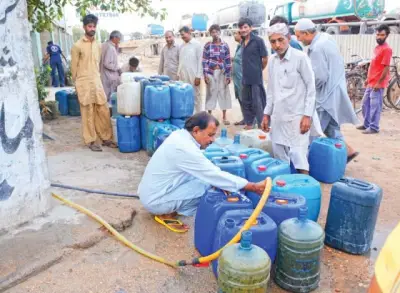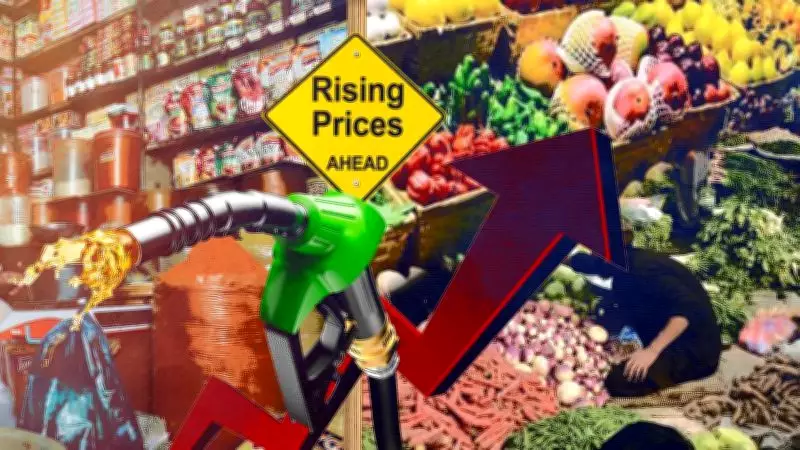
Pakistan’s recent inflationary episode is primarily driven by higher fuel prices, freight shipping costs, and insurance charges, stemming from oil price supply shocks due to the closure of the Strait of Hormuz amid the Iran–US war. Higher fuel costs may have a devastating impact on Pakistan's economy, as oil is the single most important energy source powering economic activity. These inflationary pressures have escalated rapidly, with transportation and logistics costs, food and non-food prices, and raw material costs for farming, industry, and trade increasing drastically within just half a month.
If these pressures persist and become permanent, the economy will face second-round effects in wage and price-setting behaviors. Controlling rising inflation is a foremost policy concern for central banks, and anticipating this, the State Bank of Pakistan increased the policy rate by 100 basis points in its April Monetary Policy Committee meeting. However, the question arises: Is the recent monetary tightening stance the right response to energy price-driven inflation when the economy is in its early recovery stage after a prolonged recession?
Empirical Evidence Against Tightening
Empirical evidence suggests that tightening monetary policy will have a deeper recessionary impact, causing significant welfare losses for households, businesses, and credit markets. Pakistan Bureau of Statistics data reveal consumers face sudden inflationary pressures, particularly in energy bills (11.5%) and transport costs (12.5%) due to energy supply shocks in February 2026, alongside persistent inflation in education (9.3%), health (9%), and miscellaneous items (21.61%).

Raising interest rates addresses inflation if it comes through the demand channel. However, current inflation in energy and transport is purely supply-side, a cost-push phenomenon. Inflation in education and health signals structural inefficiencies, not demand overheating, and should be resolved through administered measures, not demand suppression.
Impact on Industry and Growth
Raising the interest rate will keep the banking sector further from the private sector, causing a crowding-out effect. It increases borrowing costs for producers, reduces production and output, creates unemployment, lowers consumer earnings, and generates welfare losses. The Monthly Quantum Index of Manufacturing Industries (QMI) stood at 131.50 in February 2026, down 8.97% from 144.46 in January 2025, though showing 6.45% year-on-year growth in March 2026 compared to 10.54% in January 2026.
The Pakistan Institute of Development Economics (PIDE) policy view indicates the QMI index shows a volatile stop-start pattern, with a sharp early-year slowdown, partial mid-year recovery, strong uptick in January 2026, and renewed contraction in February 2026, signaling fragile, externally driven momentum. The economy is not booming but in a recovery phase, not distress. The recent fuel cost surge has increased production, raw material, energy, and logistics costs significantly, likely lowering production in coming months.
Consequences of Tight Monetary Policy
In this situation, the economy cannot sustain tight monetary policy. The SBP's rate hike will increase borrowing costs for working capital and fixed investments, reducing the net present value of business projects. Further hikes would reduce industrial output, create unemployment, weaken export competitiveness, and slow the recent recovery. Empirically, a 100-basis-point increase in the policy rate reduces investment by 0.40% annually.
High borrowing costs crowd out the private sector while making government securities more attractive. Consequently, banks channel funds into government securities rather than private lending, as reflected in the wide gap between Advances-to-Deposits and Investment-to-Deposits ratios. This crowding-out effect further hampers economic growth. Additionally, higher policy rates amplify fiscal debt and interest payments, with severe fiscal implications.

Business Sentiment and Policy Uncertainty
Business sentiment is inversely linked to the policy rate. Pakistan faces high economic policy uncertainty, with the EPI index reaching 350.23, a 77.2% growth in March 2026 compared to February 2026. Literature indicates that economic policy uncertainty curbs business sentiment and can set back the economy for decades. The current rate hike will erode newly regained business sentiment.
Knowing that current inflation is supply-side and active monetary policy deepens recession, major central banks—like the US Federal Reserve, Bank of England, European Central Bank, and Bank of Japan—have held their policy rates unchanged. PIDE policy view calls this a status quo action. Raising interest rates in response to energy inflation is akin to treating the wrong ailment, imposing real economic costs without addressing the root cause.