Gwadar Port's $25 Billion Economic Potential Faces Technical and Security Hurdles
Pakistan's deep-sea port at Gwadar, strategically positioned in the southwestern Balochistan province, holds the potential to contribute up to $25 billion annually to the national economy, according to official statements. However, experts warn that persistent technical limitations, security challenges, and policy shortcomings continue to constrain its role as a regional transshipment hub.
Strategic Advantages and Economic Projections
Gwadar Port, often described as the crown jewel of the China-Pakistan Economic Corridor (CPEC) with over $60 billion in Chinese investments, offers unique geographical benefits. Located just 87 kilometers from Iran's border and near the Strait of Hormuz, it provides land connectivity to Iran and Central Asia, positioning it as a potential rival to major hubs like Dubai's Jebel Ali and Colombo.
Noor-ul-Haq Baloch, Chairman of the Gwadar Port Authority (GPA), emphasized that the port offers competitive tariffs and incentives such as free storage, making it a cost-effective and less congested alternative. "Gwadar is strategically positioned and can serve as a gateway for maritime trade in the region," he stated this week, highlighting its potential to unlock economic opportunities for landlocked Central Asian nations.

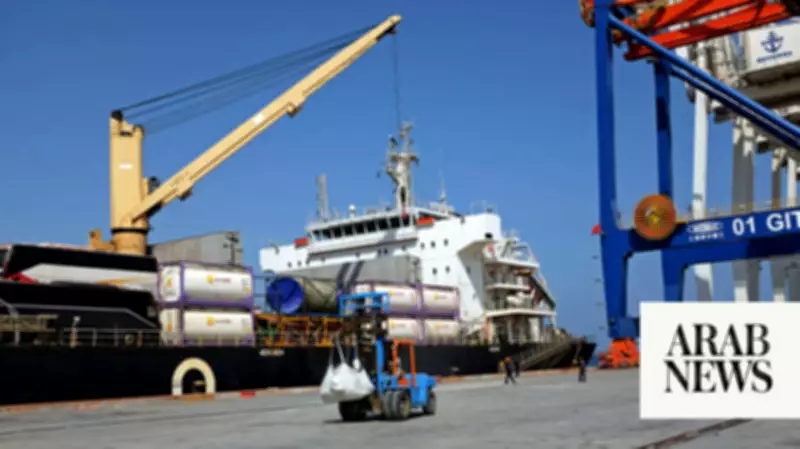
Commercial activity is gradually increasing, with two vessels docking this year compared to only one last year, and expectations for five more arrivals in the near future. Baloch noted that authorities are actively engaging shipping lines and traders to boost operations, supported by plans for industrial zones and export facilities to create a broader logistics ecosystem.
Technical Limitations and Operational Constraints
Despite its potential, industry experts caution that technical issues remain a significant barrier. Mohammed A. Rajpar, Chairman of the Pakistan Ships' Agents Association and former vice chairman of the Karachi Port Trust, pointed out that Gwadar is "not yet a true deep-water port."
Currently, Gwadar's operational draft is around 12.5 meters, below its designed 14 meters due to expensive dredging, while Karachi's Port Qasim maintains a draft of 16 meters. This limitation prevents large container vessels with drafts of 13 to 14 meters from docking, effectively restricting the port's transshipment capabilities.
"If the mother vessel cannot come, the entire transshipment model becomes limited," Rajpar explained. However, he acknowledged that Gwadar can still handle breakbulk, general cargo, fertilizer, steel, and project cargo, and has potential as an oil storage site for countries like China or Japan during crises.
Policy Gaps and Missed Opportunities
Ex-senator Kauda Babar Baloch, a native of Gwadar district, highlighted "missed economic opportunities" due to policy shortcomings. He noted that Gwadar's strategic value as a transshipment gateway and energy corridor has been recognized since 2001 but not fully leveraged.
"Pakistan has not fully capitalized on Gwadar's potential," he said, calling for tax exemptions and incentives to attract export-oriented industries. He also emphasized the untapped potential of trade with Iran, suggesting that eased sanctions could transform Gwadar into a major industrial hub by reducing costs and attracting investors from Karachi and Punjab.
Security Concerns and Human Resource Challenges
Balochistan province's long-running insurgency, with frequent attacks by separatist and militant groups, adds to Gwadar's challenges. Recent incidents, including an attack on a Pakistan Coast Guards patrol boat that killed three members, underscore security risks.
Rajpar pointed out that frequent communication shutdowns and a lack of trained local labor create uncertainty, deterring global shipping lines. "Without security, connectivity, and a skilled workforce, serious business cannot grow," he stressed.
In response, GPA Chairman Baloch insisted that security arrangements are in place and the government has addressed policy and customs bottlenecks. A committee formed by the prime minister is taking steps to facilitate trade, with attractive incentives communicated to shipping companies to encourage operations.

As Pakistan eyes Gwadar's economic boost, overcoming these multifaceted hurdles will be crucial to realizing its $25 billion potential and establishing it as a competitive regional hub.