Pakistan has officially cleared the way for Iran to import goods from third countries through Pakistani territory by opening new transit routes, the Pakistani commerce ministry announced on Sunday. This development is part of Pakistan's broader efforts to enhance regional trade as the country seeks to stabilize its economy under a $7 billion International Monetary Fund (IMF) program.
New Transit Routes Designated
As part of the arrangement, Islamabad has designated several routes for the transit of goods to Iran. These include Gwadar-Gabd; Karachi/Port Qasim-Layari-Ormara-Pasni-Gabd; Karachi/Port Qasim-Khuzdar-Dalbandin-Taftan; Gawadar-Turbat-Hoshab-Panjgur-Nagg-Besima-Khuzdar-Quetta/Lakpass-Dalbandin Nokundi-Taftan; Gwadar-Liari-Khuzdar-Quetta/Lakpass-Dalbandin-Nokundi-Taftan; and Karachi/Port Qasim-Gwadar-Gabd.
“This Order shall apply to the transportation of transit goods in transport units, consigned from the territory of a third country and destined to a place in the territory of Iran through the territory of Pakistan,” the Pakistani commerce ministry said in a notification issued on Sunday. “The transportation of cargo under this notification shall be regulated in accordance with the provisions of the [Pakistan] Customs Act.”

Scope and Limitations
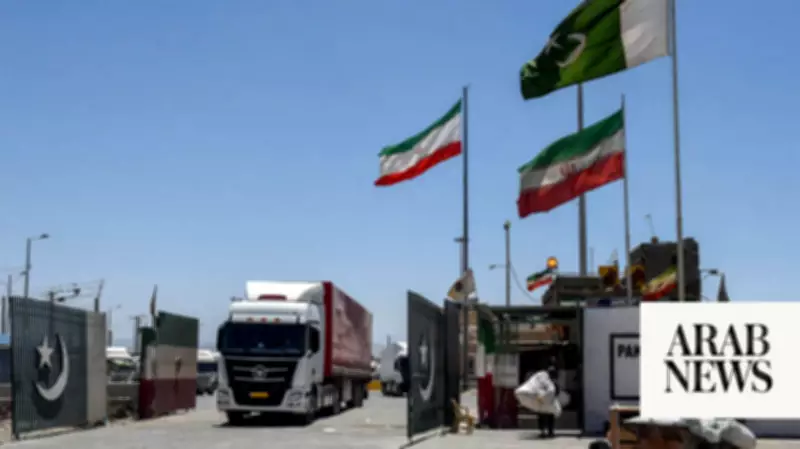
The notification did not specify whether Iran, which faces international sanctions, could export goods to third countries via Pakistan. This announcement comes weeks after Pakistan’s Directorate General of Transit Trade (DGTT) announced it had operationalized a new transit corridor via Iran by dispatching its first export shipment to Uzbekistan. The shipment contained frozen beef and was transported in trucks from Karachi to Uzbekistan, opening a new route crossing the Gabd-Rimdan border crossing between Pakistan and Iran.
“The Iran corridor will open access to Iran and Central Asian states to the Pakistani ports of Karachi and Gwadar,” a DGTT statement read. Pakistan has eyed Iran as an alternative trade corridor for exports to Central Asia, as its traditional overland routes through Afghanistan have faced repeated disruptions due to heightened tensions between Islamabad and Kabul.
“The increasing volume of international trade and regional connectivity will bring economic benefit for Pakistan and regional countries,” the DGTT said earlier this month.