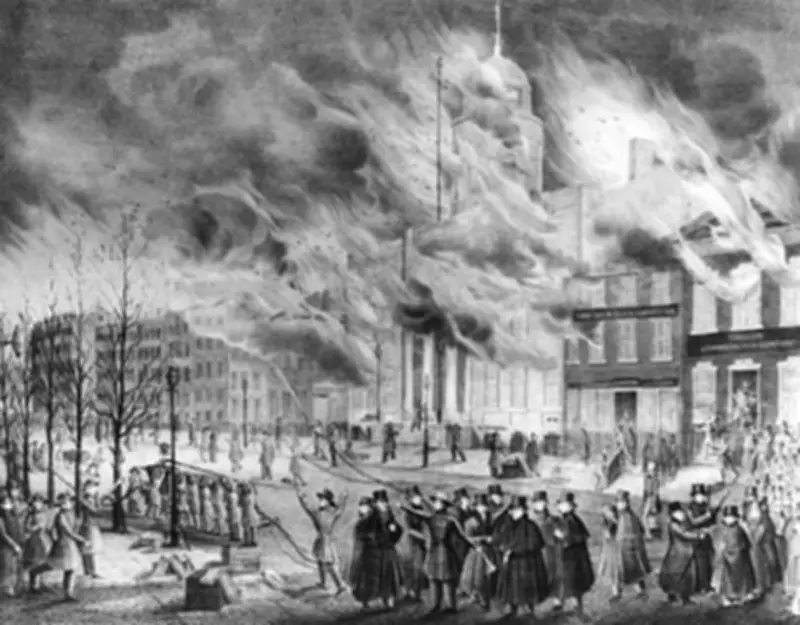
The Great Fire of New York in 1835: A Turning Point in Urban Safety
The Great Fire of New York in 1835 stands as one of the most catastrophic events in American urban history, engulfing much of lower Manhattan in a devastating inferno. This disaster not only caused immense physical destruction but also exposed critical weaknesses in the city's infrastructure and emergency response systems, ultimately leading to transformative reforms in fire safety and urban planning.
Origins and Rapid Spread of the Blaze
The fire originated in a warehouse located on Pearl Street, a bustling commercial area in lower Manhattan. Due to a combination of strong winds and the city's predominantly wooden structures, the flames spread with alarming speed. Within hours, the blaze had consumed entire blocks, fueled by the dense, flammable materials common in buildings of that era. The lack of effective firebreaks and the close proximity of structures allowed the fire to jump from one building to another, creating a chain reaction of destruction.
Challenges in Firefighting Efforts
Efforts to contain the blaze were severely hampered by a significant lack of proper firefighting equipment and organisation. At the time, New York City relied on volunteer fire companies, which were often poorly coordinated and equipped with rudimentary tools such as hand-pumped engines and leather buckets. The intense heat and rapid spread of the fire overwhelmed these resources, leaving firefighters struggling to gain control. Additionally, water sources were limited, and the city's infrastructure was ill-prepared to support large-scale firefighting operations.

Extent of the Destruction
Over 600 buildings were destroyed in the fire, including numerous businesses, homes, and warehouses. The economic impact was profound, with many merchants and residents losing their livelihoods and possessions. The destruction spanned a wide area of lower Manhattan, leaving a landscape of charred ruins and displaced communities. This scale of devastation highlighted the vulnerability of urban centers to such disasters and underscored the urgent need for improved safety measures.
Legacy and Reforms
The fire served as a stark wake-up call, highlighting the need for improved fire safety measures in urban areas. In response, New York City implemented a series of reforms that would set a precedent for cities across the United States. These included the establishment of professional, paid fire departments to replace the volunteer system, ensuring better training and coordination. Stricter building codes were also enacted, mandating the use of less flammable materials and requiring fire-resistant construction techniques. These changes not only reduced the risk of future fires but also laid the groundwork for modern urban safety standards.
Broader Implications for Urban Development
Beyond immediate fire safety, the disaster influenced broader urban planning and development. It prompted cities to invest in improved water supply systems, better street layouts to facilitate emergency access, and enhanced public awareness campaigns about fire prevention. The lessons learned from the Great Fire of New York in 1835 continue to resonate in contemporary discussions about disaster preparedness and resilient city design.