The Rise of Organized Living in Saudi Arabia: A New Standard for Luxury
In today's fast-paced world, the demands of work and daily life often leave little time or energy for maintaining an organized home. For many, the result is an overwhelming environment where clutter accumulates, making it difficult to know where to begin. This common challenge inspired Saeed Moussli, founder and managing partner of Bayt Zayn, to launch a company dedicated to transforming spaces through structured, efficient design.
From Personal Insight to Business Innovation
The idea for Bayt Zayn traces back to 2017, during a fit-out project that revealed Moussli's natural inclination for order. "While working on a project, the client, Dr. Nisreen Hokail, noticed my attention to detail—what some might call OCD tendencies—and gave me a scope that included organizing closets, pantries, and storage spaces," he explained. "I used that to my advantage instead of fighting it."
This moment became a turning point. "I'm wired to notice what's off—what's inefficient, what could work better. The Saudi market was full of beautiful spaces that weren't actually working for the people living in them," Moussli said. "So I built Bayt Zayn to fix that—not just design for the eye, but for real life."

Redefining Luxury Through Intentional Design
Today, Bayt Zayn is helping shape a broader shift in Saudi lifestyle trends, where luxury is increasingly defined by intention rather than excess. "I see it directly in my clients," Moussli noted. "People are starting to realize that luxury isn't about having more, it's about living better." Organized spaces, clear systems, and intentional design are becoming new markers of status, with clients seeking homes that function effortlessly rather than merely looking good.
Client attitudes toward organization have evolved significantly. "There's been a big shift," Moussli observed. "Before, clients would come in for a one-time decluttering session. Now, they want ongoing support." What was once seen as a quick fix is now viewed as a long-term system, with repeat clients and regular bookings becoming more common.
The Functional and Psychological Benefits
While many clients initially seek organization for practical reasons—such as efficiency, accessibility, and better use of space—the impact often goes deeper. "They begin to value the lifestyle that comes with it—clarity, control, and a sense of ease," Moussli said. "And they want to maintain that standard long-term."
For Moussli, successful design always begins with usability. "Form follows function, always," he emphasized. "If a space doesn't work, it doesn't matter how beautiful it is." His approach starts with optimizing how a space is used—improving flow, storage, and accessibility—before building the aesthetic around it.
Beyond aesthetics and efficiency, organized spaces have a profound effect on mental well-being. "When a space is cluttered, the mind feels cluttered; it's constant noise," Moussli explained. "But when everything is organized, people feel calmer, more in control, and more at ease." He added that when everything has a place and is easy to access, daily routines become smoother, significantly reducing stress.
High-Demand Services and Market Trends
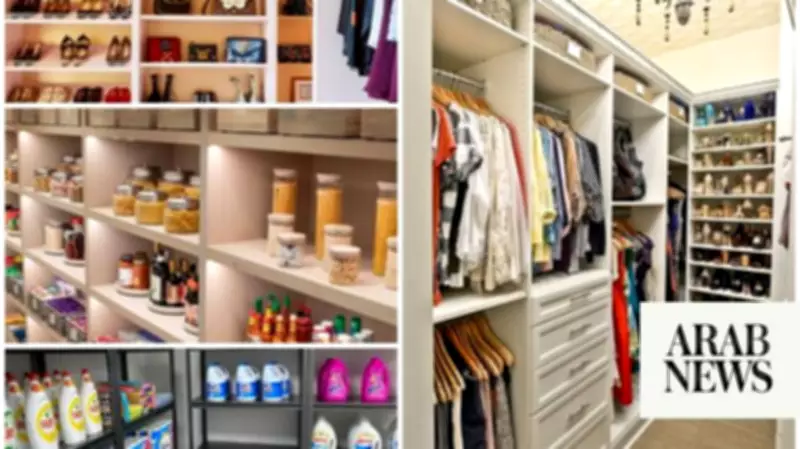
Closet organization and decluttering are currently the most in-demand services. "Closets are where chaos builds up fastest," Moussli said. "It's the first thing people deal with every day, so when it's messy, it affects their entire routine." Once clients experience the benefits in one area, they often expand the process to the rest of their homes. The company has also introduced wardrobe styling services, which are gaining popularity.
Vision 2030's Influence on Consumer Expectations
Saudi Arabia's Vision 2030 has played a key role in shaping consumer expectations. "Vision 2030 changed the mindset," Moussli stated. "Clients today are more exposed, more aware, and more demanding." With greater global exposure, clients now expect spaces that match international standards of quality, efficiency, and lifestyle. "It's no longer enough for a space to look good. It has to work, support their routines, and reflect a higher standard of living," he added.

Addressing Misconceptions and Future Expansion
Despite growing demand, misconceptions about professional organizing remain. "A lot of people think it's just about making things look pretty. It's not," Moussli clarified. "It's about how a space works. If the system isn't right, the mess will always come back." Organization is often underestimated, he noted, with some viewing it as a "nice-to-have" until they experience its necessity in reducing daily stress.
Bayt Zayn is now expanding into commercial and operational environments, including offices, hospitals, and warehouses. In these settings, the focus shifts from clutter to efficiency—designing systems for storage, tracking, and workflow optimization.
A Vision for the Future
Looking ahead, Moussli envisions the company as more than a business. "Long term, Bayt Zayn isn't just a service, it's a movement," he said. His goal is to make intentional living the standard, transforming how people live at home, operate in workplaces, and manage larger systems. "I want Bayt Zayn to be the name people associate with clarity, structure, and spaces that actually work," he concluded. "Because when your environment is right, everything else becomes easier."