Luxor Museum Prepares to Unveil Restored Cache Hall with Enhanced Artifacts
Egypt's Ministry of Tourism and Antiquities has officially completed extensive restoration work on the Cache Hall at Luxor Museum, marking a significant milestone in the country's cultural preservation efforts. The hall is now ready for its grand reopening, following a comprehensive four-month project that has transformed the exhibition space.
Modernization Strategy and Enhanced Visitor Experience
Tourism and Antiquities Minister Sherif Fathy emphasized that this restoration project aligns with Egypt's broader strategy to modernize museums nationwide and elevate the cultural experience for visitors. The initiative represents a substantial investment in making Egypt's rich historical heritage more accessible and engaging to both domestic and international audiences.
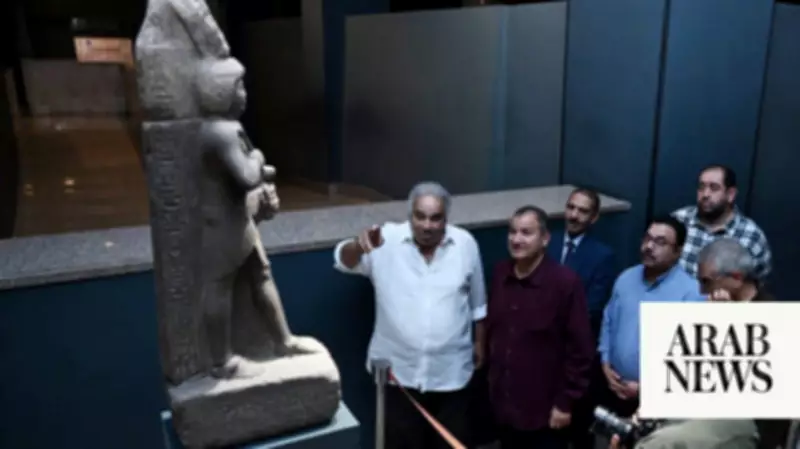
Professor Mahmoud Mabrouk, a distinguished member of the museum's Display Scenario Committee, revealed that the number of displayed artifacts has increased significantly from 17 to 26 following recent additions. This expansion allows visitors to appreciate a more comprehensive collection of ancient Egyptian treasures.

Comprehensive Restoration and Modern Features
The redistribution and development process involved meticulous work on numerous artifacts, including the restoration of the cobra statue and several other significant pieces. The hall now boasts state-of-the-art features designed to enhance the visitor experience:
- Modern display systems that showcase artifacts in optimal conditions
- Comprehensive information panels providing detailed historical context
- Specialized lighting systems that highlight the artistic details of each piece
- Interactive screens that engage visitors with multimedia content
Significant Artifacts in the Enhanced Collection
The restored Cache Hall features several remarkable ancient Egyptian artifacts that represent different periods of pharaonic history:
- A statue of Tutankhamun created in the distinctive artistic style of Akhenaten's reign
- A sculpture depicting the symbolic fusion of human and lion forms, representing traditional concepts of kingship
- A statue of Amenhotep III, considered one of the last documented sculptures of this important pharaoh
- A black granite statue of Horemheb, showcasing exceptional craftsmanship
- Distinctive statues of the deity Hathor, representing Egyptian religious traditions
Architectural and Accessibility Improvements
The restoration project included substantial architectural enhancements to improve both aesthetics and accessibility:
- Installation of new marble floors and skirting boards throughout the hall
- Construction of an arched gypsum-board ceiling that enhances the space's acoustics and visual appeal
- Conversion of part of the staircase into a ramp, ensuring improved accessibility for all visitors
- Replacement of wooden paneling with natural stone partitions for better preservation
- Addition of two new display cases at the entrance to welcome visitors
Historical Significance of the Luxor Cache
The Luxor Cache holds particular historical importance, originally discovered in 1989 during routine soil testing in the courtyard of Luxor Temple. Archaeologists uncovered a deep pit containing royal and divine statues dating from the 18th to the 25th Dynasties, approximately 1550 to 656 B.C.
The discovery was made by an Egyptian mission working under the direction of Dr. Mohammed El-Saghir. Mustafa El-Saghir, professor and archaeologist, explained that the excavation began when a worker found a stone fragment in sandy soil following a rise in groundwater levels. This stone block marked the base of a statue of Horemheb, leading to further investigation.
Following this initial discovery in the festival courtyard, authorities approved a budget for comprehensive excavation, eventually revealing numerous statues buried underground. This cache represents one of the most significant archaeological finds in the Luxor region, providing valuable insights into ancient Egyptian art and culture across multiple dynasties.

The restoration and reopening of the Cache Hall at Luxor Museum represents a major achievement in Egypt's ongoing efforts to preserve and showcase its cultural heritage. By combining modern exhibition techniques with careful preservation of ancient artifacts, the museum creates an immersive experience that bridges millennia of Egyptian history.