Architect of Minar-e-Pakistan: A Life of Exile and Creation
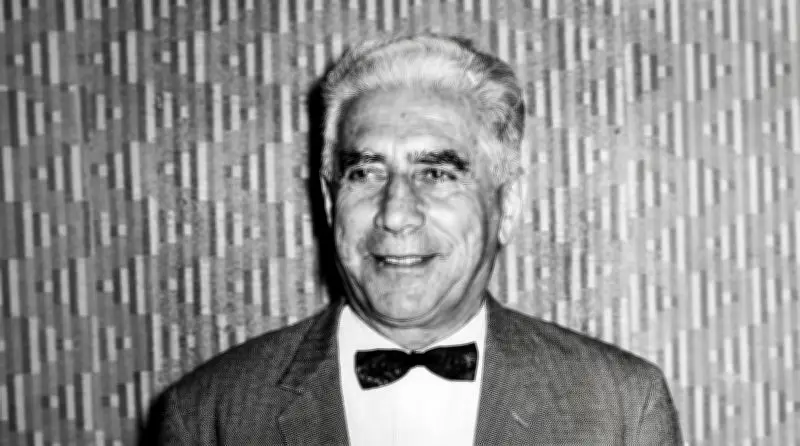
Nasreddin Murat-Khan, the architect who designed Pakistan's iconic Minar-e-Pakistan, lived a life that spanned continents and empires. Born in 1904 in Temir-Khan-Shura (now Buynaksk, Dagestan, then part of the Russian Empire), he was a Kumyk—a Turkic-speaking Muslim people. His father, Atloo Khan, was an officer in the Imperial Russian Army; his mother died when he was young. The Russian Revolution of 1917 interrupted his schooling, but in 1925 he moved to Leningrad, qualifying in architecture, civil engineering, and town planning by 1930.
From Soviet Acclaim to Stalin's Purges
Murat-Khan's early career in the Soviet Union was distinguished. He designed a prize-winning national theatre in Derbent, an 800-student polytechnic institute, a 600-bed hospital in Makhachkala, a residential township, a Lenin memorial, and several civic buildings. By the late 1930s, he was a member of the Union of Soviet Architects. However, during Stalin's purges of engineers, he was arrested but survived. By 1940, he was chief engineer and architect of the Pyatigorsk branch of the North Caucasian Project Trust, later directing its operation in Voroshilovsk (now Alchevsk, Ukraine).
According to his daughter Meral, the family was blacklisted: his brother was sent to Siberia, his sister exiled to Iran, and several relatives killed. Though not every detail is independently verified, the central truth is that Murat-Khan had become unsafe in his homeland.

Flight Across Europe and Life in Refugee Camps
In early 1944, as war swept the Caucasus, Murat-Khan fled westward with retreating German forces. He was not a Nazi collaborator but a fugitive from Soviet persecution. In post-war Germany, he lived in refugee camps in Mittenwald, where he worked as an engineer and became deputy chief of the camp's central technical office. There he met Hamida Akmut, a Turkish citizen of Pakistani and Austrian parentage working as a nurse. Her father, Dr. Abdul Hafiz, had studied chemical engineering in Leipzig and helped establish the Wah Ordnance Factory; her mother, Anna Maria Nimmerrichter, was Austrian. Nasreddin and Hamida married in 1946 and had five daughters: Pari, Zeynab, Maryam, Mesme, and Meral. Meral later became the guardian of her father's papers and memory.
Choosing Pakistan as Home
By 1950, the refugee camps were closing. Return to Dagestan was impossible, and Europe never felt like home. Pakistan offered a possibility through Hamida's family connections. The family sailed to Karachi on the Caledonia and traveled by train to Lahore. Murat-Khan arrived as a displaced professional, not a celebrated master. In his citizenship application of 21 May 1954, he wrote that he wished to make Pakistan his home "in lieu of" the homeland he had lost. He deliberately chose Pakistan.
Building a New Nation
Pakistan urgently needed hospitals, schools, offices, and national symbols. Murat-Khan first worked as a garrison engineer with the Wah Ordnance Factory and the Military Engineering Service. In 1951, he joined the Pakistan Public Works Department as a Class I officer and special architect, later serving as consulting architect. In 1959, he established his own practice, Illeri N. Murat Khan & Associates ("Ileri" means "forward" in Turkish). His buildings include Nishtar Medical College and Nishtar Hospital in Multan; Lahore Stadium (later Gaddafi Stadium); Fortress Stadium; the mental hospital at Mansehra; Sihala Police Training College; Sinclair Hall at Forman Christian College; Divisional Public Schools in Lahore and Faisalabad; the Textile College in Faisalabad; WAPDA colonies and flats at Mangla, Lahore, and Multan; the Multan Municipal Office; mosques in Mirpur and at Governor's House, Lahore; a library and women's park in Rahim Yar Khan; the Bank of America building in Lahore; a shopping centre in Peshawar; clinics, parks, educational buildings, and more than eighty private residences.

The Masterpiece: Minar-e-Pakistan
After a public competition failed, Murat-Khan was invited in 1959 to propose designs for the Pakistan Day Memorial. He produced three models; the third was selected. The foundation stone was laid on 23 March 1960. His design combined modern engineering with Islamic and Mughal references. Rough, uncut stone at the base represented hardship; polished marble symbolized progress. The tower's upward movement embodied national aspiration. He originally intended an open summit symbolizing endless growth, but the supervising committee insisted on a dome-like cap. He objected but the alteration was imposed. He surrendered his professional fee, asking in a 1968 letter that the record acknowledge this gift or release the money for charity.
As the monument neared completion, his relationship with the committee deteriorated. He refused to certify the final bill until defects were corrected, after which he was removed from supervision and excluded from the inauguration. Another account says he resigned after a dispute. The hurt was profound. In 1963, he received the Tamgha-e-Imtiaz for his services to architecture.
Legacy and Death
Nasreddin Murat-Khan died suddenly in Lahore on 15 October 1970, aged about sixty-six, from a heart attack. His family said he "died of a broken heart" due to his exclusion from the monument's final stage. He was buried in Misri Shah Cemetery, Lahore. His life spanned the Russian Empire, Soviet rule, Stalin's purges, war, refugee camps, and a new home in Pakistan. He left behind hospitals, schools, stadiums, homes, and the monument beneath which the nation remembers its birth. His surviving plans and models deserve public exhibition, his buildings should bear his name, and his grave should be properly maintained. He came to Pakistan as an immigrant who had lost almost everything and gave the nation its most enduring symbol.