The Syrian Mosaic Foundation has initiated restoration work on the primary Jewish cemetery in Damascus, founder Joe Jajati confirmed to AFP on Tuesday. This development comes as members of Syria's diminishing Jewish community seek to reclaim their heritage following the ouster of former ruler Bashar Assad.
Cemetery Details and Current Condition
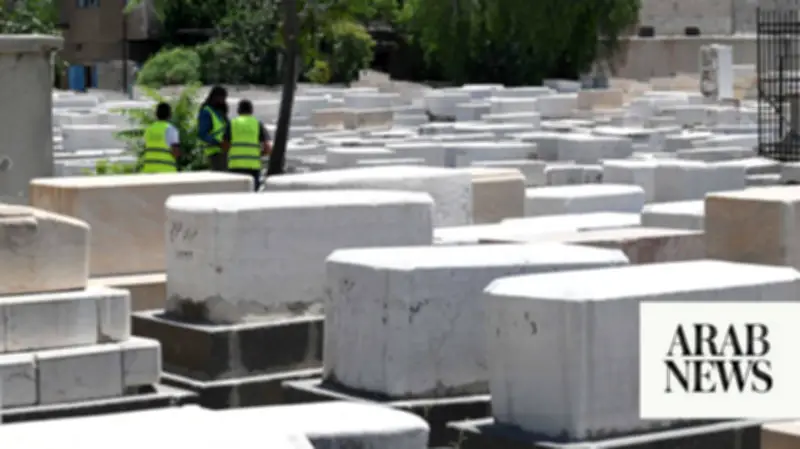
The cemetery, situated along the airport road near the capital, contains hundreds of tombs, according to Jajati. An AFP correspondent observed rows of stone graves with Hebrew inscriptions as workers inspected the site. Jajati, a Syrian-American businessman whose grandfather was a Syrian rabbi, stated that initial efforts have focused on cleaning the cemetery and reinforcing some dilapidated graves. He added that restoration of the outer walls, along with installation of lighting and surveillance cameras, is scheduled for completion next month.
Jajati noted that the cemetery sustained no damage during Syria's civil war, which began in 2011. The most recent burial occurred approximately one and a half years ago.

Historical Context and Recent Changes
Visits to the cemetery had largely ceased for several decades but resumed after Assad's ouster in December 2024. Members of the Syrian Jewish community abroad have since returned to inspect properties, visit synagogues, and tend to family graves.
Under former president Hafez Assad, Bashar's father, Syria's Jewish community could practice their religion but were barred from leaving the country until 1992. Subsequently, their numbers dropped sharply from around 5,000 at that time to only a handful today. The civil war led to synagogue closures and a dramatic decline in Jewish visits.
Government Assurance and Community Revival
Since Assad's ouster, Syria's Jewish community has been welcoming back emigrants. The new Islamist-led authorities have sought to reassure minorities of protection and pledged to safeguard Jewish community property. In December 2024, a license was granted to a Jewish-Syrian organization aiming to reclaim properties confiscated under previous governments.
In February 2025, Jews residing in Damascus, together with those from abroad, held a group prayer for the first time in over three decades at the Faranj synagogue in Damascus's Old City.