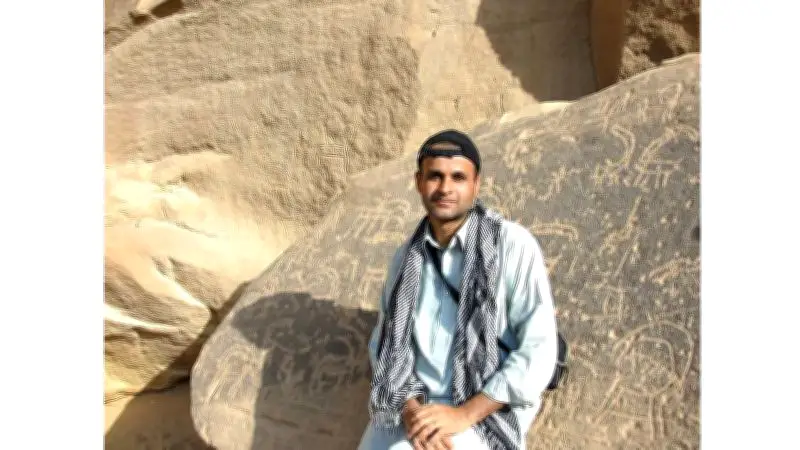
New Book Unveils Rich Rock Art Heritage of Sindh's Taki Valley
Anthropologist Zulfiqar Ali Kalhoro has released a new book titled Stones That Speak: Rock Carvings of the Taki Valley, Sindh, published by the Dr NA Baloch Institute of Heritage Research, Jamshoro. The 184-page volume comprises five chapters, a glossary, references, and an index, richly illustrated with photographs. It is the culmination of over two decades of fieldwork across the Khirthar mountain range in Sindh, home to thousands of petroglyphs.
According to Kalhoro, the rock art of Sindh is distributed across many mountain ranges, hidden within deep fissures and cliff faces of numerous nais (hill streams) and their tributaries. Since 1998, he has been documenting these carvings, discovering sites in valleys such as Seeta, Mazarani, Keharji, Radh, Buri, Khurbi, Makhi, Sallari, Gaj, Nari/Nali, Kukrani, Angai, Thado, Mol, Baran, and many others.
Diverse Themes Spanning Millennia
The book focuses specifically on the rock art landscapes of Khashani, Mamani, Heengan, and Loondo, all tributaries of Taki Valley in Dadu District, west of Johi Taluka. Kalhoro documented and analyzed 15 rock art sites across these four valleys. The petroglyphs range from prehistoric hunting scenes to modern engravings of helicopters and automobiles, showcasing a continuous tradition spanning thousands of years.

Notable themes include bull domestication, a subject not seen in any other rock art region in Pakistan. Other animals depicted include bison, camels, horses, goats, deer, cats, leopards, and wolves. Human figures, geometric patterns, Buddhist stupas, Zoroastrian fire altars, temples, and symbolic motifs are also common. Kalhoro notes that the juxtaposition of ancient and modern engravings on the same rock face is evidence of a vibrant, enduring artistic tradition adapting to changing realities.
Methodology and Insights
Kalhoro weaves together ethnographic insights and landscape phenomenology to unravel the meanings embedded in the rock art. The petroglyphs are divided into prehistoric and historic periods, with the historic phase further subdivided into ethnographic or modern petroglyphs. This latter category offers insights into authorship and intention, informed by interviews with herders and local people who continue to engrave the landscape.
“This book is the outcome of a journey that began in 1998—one shaped as much by the physical act of walking the land as by sustained academic inquiry,” Kalhoro said. “It is, in essence, an effort to give voice to the silent stones of Sindh.”
Significance of Gorakh Hill Area
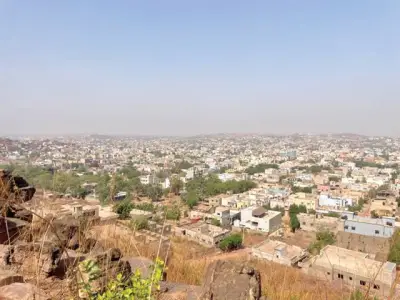
Taki Valley lies on the way to Gorakh Hill, the highest peak in the region, which offered a cooler refuge during summer months for pastoral nomads and seasonal migrants. Gorakh remains a major tourist attraction in Dadu District. Khaval Lak, on the way to Gorakh, provides expansive panoramic views of surrounding valleys and hills. The rock art in these valleys attests to a long history of human movement and engagement with the mountainous landscape.
Kalhoro emphasizes that the book is an invitation to see the mountains of Sindh not as empty wilderness but as a manuscript written by thousands of hands over millennia. “These stones speak—carrying stories from the distant past into the present,” he concludes.