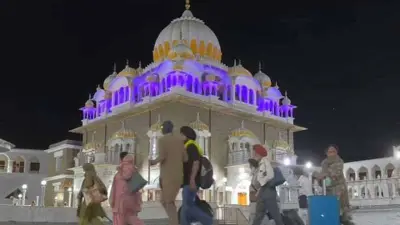
Hazrat Ali Hajwiri, beloved Data Sahib of this ancient soil, I write to you from the heart of Lahore, a city associated with your name for centuries. In the presence of your shrine, which itself is undergoing mega-expansion, this city has developed into a center of power, trade, devotion, art, and empire. As Lahore expands into a complex urban landscape, its historic buildings confront a critical decision: to honor their rich past or face an uncertain future. These structures are not merely distant relics; they represent a living heritage that demands appreciation and attention.
Forgotten Corners of Lahore Revealed
Recently, Dr. Kanwal Khalid presented her book, Between Light and Memory: The Glass Plate Negatives of Lahore, highlighting this profound architectural legacy. She revealed forgotten corners of the city, the domes, minarets, and gateways of the past, as captured employing early photographic techniques. These visual records demonstrate that beneath centuries of dust lies an exceptional repository of craftsmanship and narrative.
Foundations of a Metropolis
The foundations of Lahore as a fully developed metropolis, distinct from its mythic presence, were established by medieval sultans, warriors, and saints. Malik Ayaz, the Ghaznavid governor who reconstructed Lahore's first mud-and-brick fort in the 11th century, is still commemorated by his resting place in Rang Mahal. The Neevin Mosque, with its prayer floor twenty-five feet below the current street level, and the tomb of Sultan Qutb-ud-din Aibak in Anarkali preserve rare remnants of the Delhi Sultanate.

Mughal and Sikh Contributions
Building upon these early structures, Lahore's identity reached new heights with Mughal-era expansions in Lahore Fort, Badshahi Mosque, Shalimar Gardens, and Wazir Khan Mosque, among others. The Sikh period saw the introduction of Samadhis and more havelis. The British Raj established red-brick Indo-Saracenic landmarks along Mall Road. Each brick and archway of Lahore reflects the legacy of those who lived under your spiritual influence in Data ki Nagri.
Current Preservation Efforts
Currently, the fate of these historic structures is uncertain; their preservation is imperative. Restoration initiatives by organizations such as the WCLA or the Aga Khan Foundation have revitalized significant landmarks. For example, the Picture Wall of the Lahore Fort, the frescoes of Mariam Zamani mosque, and the kashikari at Wazir Khan Mosque shall add to the life of these structures. But what about the organic spirit of the buildings and their surroundings?
Challenges and Tragedies
The recent uplift of the Neela Gumbad area represents a crucial step in rescuing our shared urban memory from the brink of commercial decay, offering a glimpse of how historic pockets can be reclaimed for the public or at least in the name of the public. However, beyond these main tourist spots, a parallel tragedy unfolds. Many historic havelis, the traditional mansions that contributed to the city's distinct character, are being demolished or revamped without any sense.
Ewing Hall Controversy
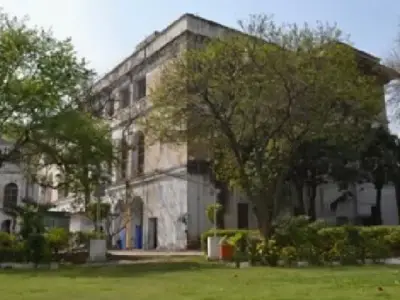
The recent situation involving FCCU's managed Ewing Hall, which was abruptly claimed by the government, must raise concerns among civil society, minorities, and the academic community. Previously, we have witnessed absurdities, as in the case of the Orange Train project that threatened the Chuburji; the then CM promised to build "new, better heritage" as an alternative. Such claims expose the authorities' nonchalant attitude. The fact is that the Ewing Hall cannot be recreated or reallocated. It can only be restored with caution, keeping its sanctity and spirit alive while paying close attention to its material and physical features.

A Balanced Approach for the Future
Looking ahead, the preservation of Lahore's architectural identity requires a balance between modernization and conservation. Restoration and renovation are indeed sensitive gestures that involve complex, deeply thoughtful processes. Crucially, the future of these buildings should not involve transforming them into something new or static museums, freezing them in time as sterile spectacles. At the same time, we must ensure that, in our rush to modernize, adapt, or commercialize, the actual material and spiritual integrity of these spaces is not compromised. They must remain active, living, and accessible, retaining the organic human connection that mimics the enduring daily energy of your own sacred shrine.
Prayers, Bano, June 2026