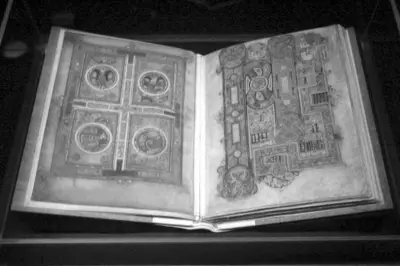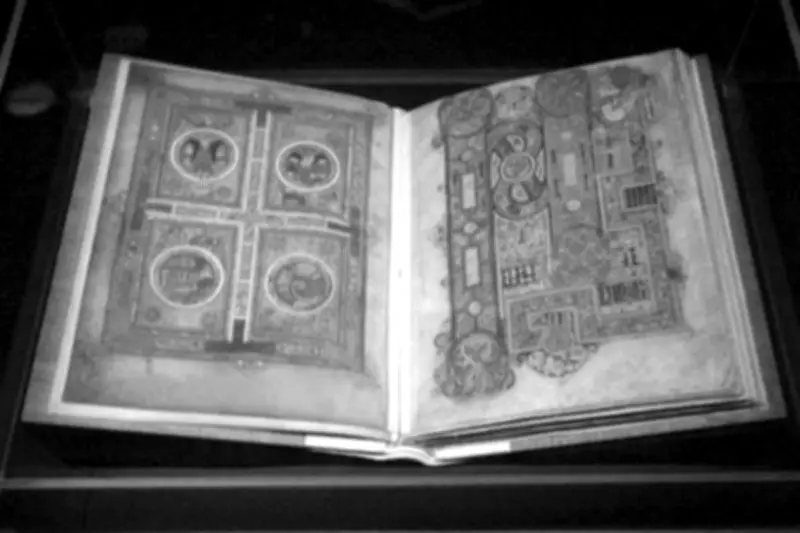
The Book of Kells, an illuminated manuscript crafted around the 8th century, stands as a pinnacle of medieval artistry and Irish heritage. Housed in Trinity College Dublin, this masterpiece intertwines intricate Celtic designs, vibrant colours, and biblical text with unparalleled sophistication. Its ornate pages, brimming with Gospel narratives, demonstrate an unparalleled fusion of Christian iconography and Irish artistic traditions. Despite its mysteries and unknown origins, the book’s exquisite craftsmanship captivates scholars and art enthusiasts alike. Revered for its enigmatic beauty and cultural significance, The Book of Kells remains a testament to the ingenuity and creativity of ancient scribes in preserving a timeless legacy.
Artistic Brilliance and Symbolism
The manuscript is renowned for its elaborate decoration, including intricate knotwork, zoomorphic figures, and lavish initial letters. Each page is a harmonious blend of religious symbolism and Celtic motifs, reflecting the deep spirituality and artistic prowess of its creators. The use of vibrant pigments, such as ultramarine and gold leaf, adds to its visual impact, making it one of the most studied artifacts of medieval art.
Historical Context and Preservation
Created by Columban monks around 800 AD, the manuscript survived Viking raids and centuries of turmoil. Today, it is preserved at Trinity College Dublin, where it attracts over 500,000 visitors annually. Digital initiatives have made high-resolution images accessible worldwide, allowing broader appreciation of this cultural treasure.


- Contains the four Gospels in Latin, with extensive illuminations
- Features 680 vellum pages, many with full-page decorations
- Considered Ireland's greatest national treasure