The Enduring Legacy of Bulleh Shah: A Spiritual Rebel in Turbulent Times
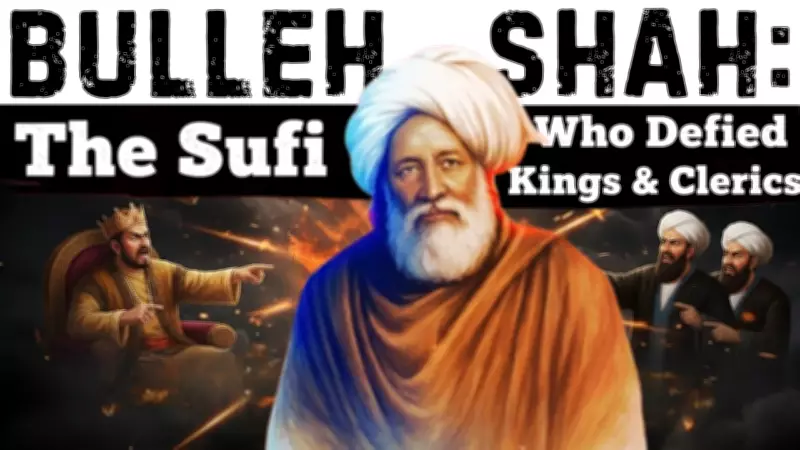
In the chaotic landscape of 18th-century Punjab, as the once-mighty Mughal Empire fragmented and regional powers vied for control, a unique voice emerged that would transcend the political turmoil of the era. Bulleh Shah, born into a privileged Syed family around 1680, chose a path far removed from worldly power or aristocratic privilege. Instead, he embarked on a spiritual journey that would make him one of the most revered figures in South Asian history.
Defying Social Hierarchy for Spiritual Truth
Bulleh Shah's life story is a testament to radical defiance of social conventions. Despite his high-born status, he rejected inherited privilege to become a disciple of Shah Inayat, a humble gardener and Sufi master from Lahore. This act alone was revolutionary in a society rigidly structured by caste and class. By choosing a teacher from a lower social stratum, Bulleh Shah demonstrated that spiritual wisdom knows no social boundaries and that divine truth cannot be confined by human-made hierarchies.
Poetry as a Weapon Against Injustice
Through his powerful Punjabi poetry, Bulleh Shah launched a multifaceted critique of the social and religious establishment of his time. His verses targeted:

- Rigid clerical authority that prioritized dogma over genuine spiritual experience
- Empty religious rituals performed without inner transformation
- Caste-based discrimination that divided humanity
- Political tyranny that oppressed the common people
The Immortal Question: "Bulla, ki jaana main kaun?"
Perhaps his most famous line—"Bulla, ki jaana main kaun?" (Bulla, what do I know who I am?)—encapsulates his philosophical approach. This simple yet profound question challenged all identities imposed by society: religious labels, caste distinctions, gender roles, and national boundaries. By questioning the very foundation of identity, Bulleh Shah invited his listeners toward an inner awakening that transcended superficial differences.
A Living Legacy in Modern Culture
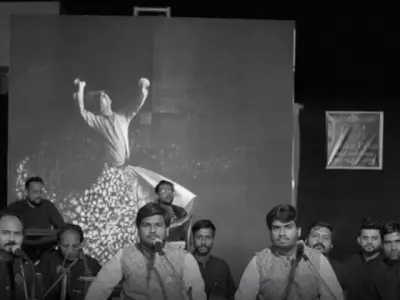
Nearly three centuries after his death, Bulleh Shah's poetry continues to resonate powerfully across cultural boundaries. From the soulful renditions of Abida Parveen to the transcendent performances of Nusrat Fateh Ali Khan, his verses have become anthems of resistance, love, and unity. Contemporary artists across Pakistan and beyond continue to interpret his work, finding in it relevance to modern struggles against oppression, sectarianism, and spiritual emptiness.
Why Bulleh Shah Still Speaks to Us Today
In an era marked by political polarization, religious extremism, and social fragmentation, Bulleh Shah's message offers a powerful alternative. His poetry:
- Confronts unjust power structures with non-violent spiritual resistance
- Transcends sectarian divisions by emphasizing universal human values
- Speaks directly to the modern soul searching for meaning beyond materialism
- Builds bridges between communities rather than erecting walls of separation
The story of Bulleh Shah is not merely historical biography but a living tradition that continues to inspire those seeking a path of love over hatred, unity over division, and inner truth over external conformity. His voice echoes across centuries precisely because it addresses the timeless human quest for meaning, justice, and connection that remains as urgent today as it was in 18th-century Punjab.