The Shadow of Honor Killings and Violence Against Women in Pakistan
When a young girl observes her female teacher leading a classroom, it can plant the seed of aspiration, showing her that professional achievement is within reach. However, for many women in Pakistan, realizing such dreams is obstructed by deep-seated cultural practices and systemic violence. One of the most brutal manifestations is honor killing, locally known as Karo-Kari. This practice stems from the belief that a victim has brought dishonor upon their family or community, with their death seen as a means to restore reputation.
Alarming Statistics and Reporting Discrepancies
According to the Human Rights Commission of Pakistan, over 470 cases of honor killing were officially reported in 2021 alone. However, human rights defenders estimate the actual number is much higher, with around 1,000 women murdered annually in the name of honor. These crimes predominantly target innocent women and persist year after year, with indications that the frequency may be increasing as some individuals normalize the practice.
Girls face lethal violence not only under the guise of honor but also due to other pretexts such as marriage choices, love relationships, and pursuit of education. In certain regions of Pakistan, girls are even sold, and families may coerce daughters into situations considered shameful to discuss. For instance, in Sindh province, approximately three thousand women die each year during childbirth, highlighting broader issues of healthcare and gender inequality.

Cases That Shocked the Nation
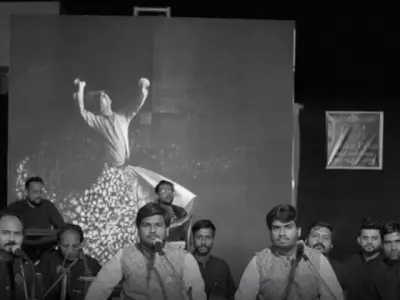
Several high-profile cases illustrate the severity of this crisis. Asma Udas, a Pashtun singer from Peshawar, was shot dead by her two brothers, who viewed her divorce, remarriage, and artistic career as damaging to family honor. No prosecutions followed. In July 2008, in Baba Kot, Balochistan, five women—three teenagers and two middle-aged—were kidnapped, beaten, shot, and burned alive by tribesmen of the Umrani tribe for choosing their own marriage partners.
In May 2014, Farzana Iqbal, a pregnant woman, was stoned to death by her family outside a court in Lahore. Another notorious case is that of Qandeel Baloch, a social media personality celebrated for her bold videos and independent lifestyle. In July 2016, she was murdered in Multan by her brother, who admitted the killing was due to perceived family dishonor.
Widespread Sexual and Domestic Violence
Sexual violence remains rampant across Pakistan. The Human Rights Commission reported 6,624 rape cases in 2023, equating to roughly one incident every 45 minutes. Honor killings continue unabated, with recent data showing:
- Islamabad: 22 honor killing cases reported in 2024, with zero convictions.
- Khyber Pakhtunkhwa: 143 honor killing cases reported, also with no convictions.
- Sindh: 243 rape cases and 375 domestic violence cases reported, none leading to convictions.
- Balochistan: 32 honor killing cases and 21 rape cases reported, with no convictions.
- Punjab: 225 honor killings and 160 domestic violence cases reported, resulting in only two convictions.
Domestic violence is equally pervasive, with women often enduring physical, emotional, and financial abuse. Many hesitate to report incidents due to social stigma and fear of backlash. Notably, when a girl opts for a love marriage, she risks being killed, whereas boys in similar situations often receive leniency or even encouragement, rarely facing honor-based violence due to familial support.
Societal Attitudes and the Path Forward
A woman is not a mere object to be used and discarded or a puppet to be controlled. From birth, parents may worry about managing a daughter's future, sometimes forcing her into marriage. Refusal can lead to honor killings, reflecting a cultural adage: "When wealth is lost, nothing is lost; when health is lost, something is lost; but when honor is lost, everything is lost."

Despite these challenges, there are signs of gradual change. Some women are now finding the courage to stand up for their rights, seeking separation or divorce. Sexual and domestic violence have escalated even in major cities like Karachi and Lahore, despite improved education and awareness, underscoring the need for robust intervention.
Addressing this issue effectively requires a multi-faceted approach: raising societal awareness, enforcing existing laws properly, and providing support systems to empower women to live safe and independent lives. Only through collective action can Pakistan hope to dismantle these harmful traditions and foster a more equitable society.