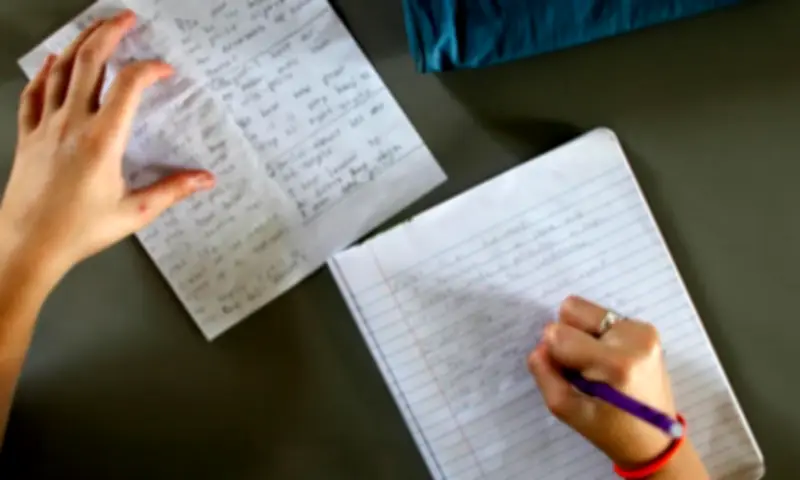
My parents started dating back in the 1980s, and for a while, they were in a long-distance relationship. Before smartphones and email, they kept in touch through mail. My father would send cassette tapes with songs that reminded him of my mother, and they exchanged letters reminiscing about their time together. I treasure these letters because they offer a glimpse into my parents' lives before I was born. I can feel the paper and admire my mother's beautiful penmanship. These letters also remind me that many of us struggle to recall the last time we wrote something by hand.
The Decline of Handwriting in Schools
According to Shawn Datchuk, a professor of special education at the University of Iowa and former director of the Iowa Reading Research Center, schoolchildren are writing less, and cursive is increasingly neglected. He told Vox, "The vast majority of states have adopted a national set of academic standards that specifically focus on teaching handwriting during kindergarten and extends a little past first grade. On average, teachers report spending as little as 10 minutes a week on explicit handwriting instruction in kindergarten classrooms."
When Did Handwriting Lose Priority?
Significant changes began around 2010 with the adoption of Common Core academic standards in the United States. These standards pushed students to quickly move past handwriting and adopt typing. They explicitly state that students should transition to keyboarding right after first and second grade. This shift completely dropped cursive handwriting from the curriculum. Many people remember being excited for third grade because that was when cursive was taught.

Is Cursive Making a Comeback?
In recent years, there has been a swing back toward cursive. Approximately 26 states have passed legislation to reintroduce cursive into their statewide curriculum. Evidence suggests that handwriting, whether print or cursive, is closely linked to reading development. Following the COVID-19 pandemic, reading scores dipped nationwide. Some educational stakeholders and legislatures believe that focusing on handwriting, particularly cursive, might improve reading scores. Additionally, parents and teachers are interested in minimizing screen time, and some advocate for cursive to help students read founding documents like the Declaration of Independence.
Pen and Paper vs. Screens
For younger children learning to read, using pencil and paper offers benefits. Handwriting helps students commit to memory the shape, name, and sound of letters. For older high school students, screens can be distracting, with notifications and online activities pulling attention away from learning. However, screens are here to stay, as are pencils and paper. With the rise of artificial intelligence, the question is not which is better, but how much time children need with each communication method.
AI and the Case for Handwriting
Artificial intelligence adds complexity to computer-based writing, raising questions about authorship. Professors struggle to determine how much of a student's work is computer-generated versus their own effort. This has led to a shift back to handwritten exams, known as blue books. The University of Iowa bookstore has started stocking blue books for the first time in over a decade.
What Students Lose Without Handwriting
Beyond academic benefits, handwriting is deeply personal. A handwritten note resonates emotionally with us. For instance, sending a handwritten card for a birthday or Mother's Day creates a meaningful connection. Writing by hand encourages deeper thinking and synthesis of information compared to typing. As Datchuk notes, "When you engage in writing with a pen or pencil, you tend to synthesize or think more deeply about that information than when you’re just typing."