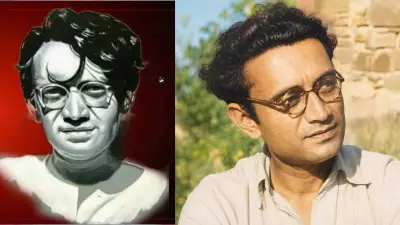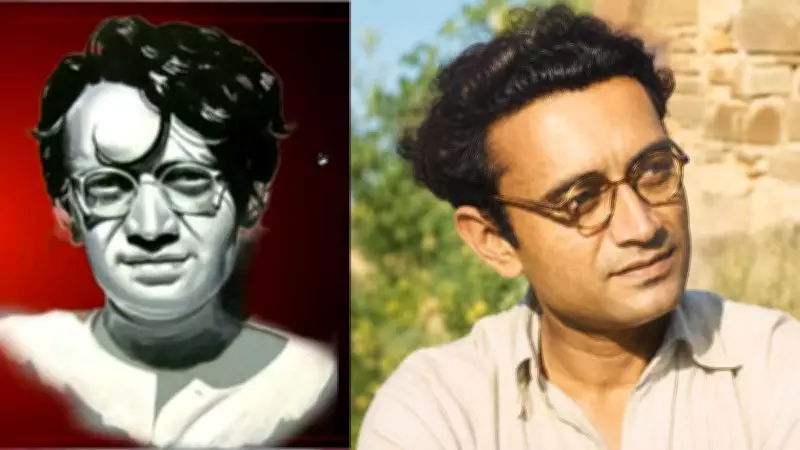
He lived just 42 years, 8 months, and 15 days. Yet 114 years after his birth, Saadat Hassan Manto still unsettles, provokes, and endures. May 11 marked the 114th birth anniversary of the man who turned a mirror on the subcontinent—and forced it to look at what it preferred to hide.
A Controversial Literary Voice
Manto, the short story writer, novelist, and playwright, remains South Asia's most controversial literary voice. He wrote without flinching about partition's horrors, society's hypocrisies, and the raw edges of human desire. Born on May 11, 1912, in Ludhiana, British India, to Maulvi Ghulam Hussain—a judge with a stainless reputation and a harsh temperament—Manto was the son of his father's second wife. Childhood was fractured. His father's sternness and his foster siblings' indifference would later bleed into the rebellion that defined his prose.
That rebellion left a mark. In a career spanning barely two decades, Manto produced nearly 270 short stories, around 100 radio dramas, more than 20 essays, and screenplays for films across undivided India and later Pakistan. Before Partition, Bombay knew him as a rising film writer who earned well scripting for studios and penning fiction for prominent Urdu magazines.

Early Struggles and Mentors
His path wasn't obvious. As a student, he once failed Urdu in Matriculation. After Intermediate, journalist Bari Alig took him under his wing at the Urdu daily Masawat. Alig sharpened Manto's craft, guiding him through his first major translation: Victor Hugo's The Last Day of a Condemned Man. But even Alig, the story goes, could not marshal the storm inside him—shaped by childhood trauma, isolation, and relentless struggle. He later translated Oscar Wilde, sought guidance from poet Akhtar Shirani, and found his own voice.
Tamasha, his first short story inspired by the Jallianwala Bagh massacre, appeared in the magazine Khalq. Once confident in Urdu, he moved to Bombay to chase cinema. There he found work, love, and Safia—the woman who stayed by him till his last breath despite all odds. In 1940, All India Radio in Delhi brought him into the orbit of Noon Meem Rashid and Krishan Chander.
Partition and Its Aftermath
But it was Partition in 1947 that split Manto's world open. The bloodshed, the displacement, the moral collapse — it all poured into his fiction. He became unequivocal. In stories like Toba Tek Singh, Khol Do, Thanda Gosht, and Tetwal Ka Kutta, he stripped society bare. No euphemism. No apology. That honesty cost him. He faced multiple obscenity trials for Thanda Gosht, Khol Do, and Kali Shalwar. The Pakistan Government banned his work repeatedly. Yet the same pen produced Hatak and Naya Qanoon—stories that are now canon across the subcontinent.
Manto's bond with the cultural world ran deep. His friendship with Madam Noor Jehan birthed the piece Noor Jehan Suroor-e-Jahan. But his final years were marred by alcoholism, financial ruin, and repeated stays in a mental asylum. He died in 1955 after a protracted illness, leaving behind a body of work that refused to die with him.
Enduring Legacy
Today, Gen Z quotes him on Instagram. In 2015–16, Sarmad Khoosat's telefilm Manto introduced him to a new generation, winning critical acclaim for its unflinching portrait. In 2012, Pakistan posthumously honored him with the Nishan-e-Imtiaz. Manto once wrote, If you cannot bear my stories, it is because we live in unbearable times. One hundred and fourteen years on, the times are still catching up to his words.