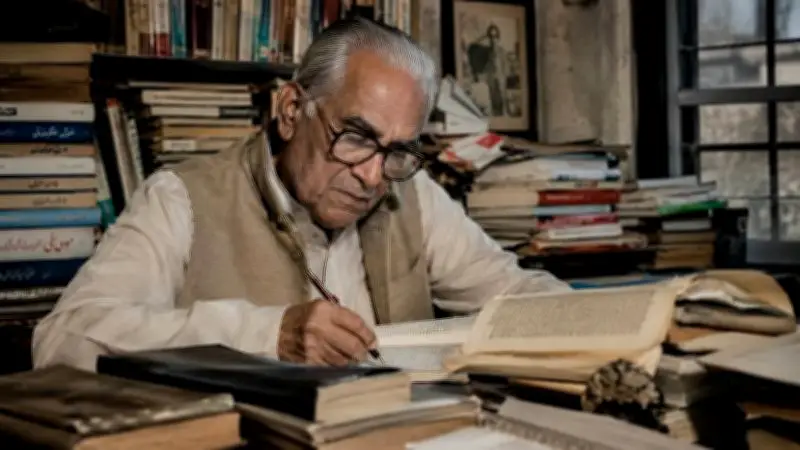
Moulai Sheedai, the nom de plume of Rahimdad Brohi (1894–1978), remains one of Sindh's most prolific historians, yet his vast literary output—covering the history, culture, and economy of Sindh—has largely fallen out of print and is increasingly inaccessible to new generations. Born in Sukkur and belonging to the Mengal tribe of Brohis, Sheedai dedicated over half a century to research and writing, producing works such as The History of Sindh (Janat-ul-Sindh), The History of the Civilisation of Sindh (Tarikh-e-Tamadun-e-Sindh), The History of Sukkur (Tarikh-e-Sukkur), The History of the Talpurs (Tarikh-e-Talpur), and The Old Cities of Sindh (Sindh ja Qadeem Shahar). He also wrote on Balochistan, the Mengals, and Islam, leaving behind a treasure trove of unpublished manuscripts.
A Scholar's Exacting Craft
Sheedai's work was characterized by meticulous research, separating fact from myth through years of hard labor. As noted by a friend from Balochistan's literary circles, renowned scholar Mir Gul Khan Nasir extensively relied on Sheedai's research while completing his own two-volume history of Balochistan—a testament to Sheedai's scholarly rigor. His books, drenched in patriotism and deep attachment to Sindh, transport readers through the political and economic evolution of the land. Sindhi literary giants have praised his unparalleled dedication, with his words reflecting an abiding bond with the Indus River and its people.
Neglect and the Need for Preservation
Despite his monumental contributions, Sheedai's intellectual legacy has received scant attention from Sindh's new literary generation. Many of his books are out of print or close to disappearing. The Government of Sindh has never prioritized reprinting these vital works, nor have institutions like the Sindh Book Foundation or Sindhi Adabi Board compiled lists of titles needing preservation. A former ambassador and writer, M. Alam Brohi, laments this neglect, noting that even the federal level lacks responsibility for this national task. In contrast, U.S. presidents establish libraries and write memoirs for posterity, while Pakistan's rulers go to their graves with their stories.

A Call to Action
To address this, a seminar on Moulai Sheedai is planned for 9 July 2026, aiming to sensitize society to its literary heritage. The author urges the Government of Sindh to issue directives for reprinting Sheedai's works and to establish libraries in towns and cities, reminiscent of the National Book Centres set up by Zulfikar Ali Bhutto. He also calls on local media to recognize not only Sheedai but also other Brohi intellectuals like Abdul Haleem, Ahmed Ali, and Allama Jauhar. With a growing youth population, preserving this intellectual heritage is crucial for building capacity and connecting new generations with Sindh's rich past.