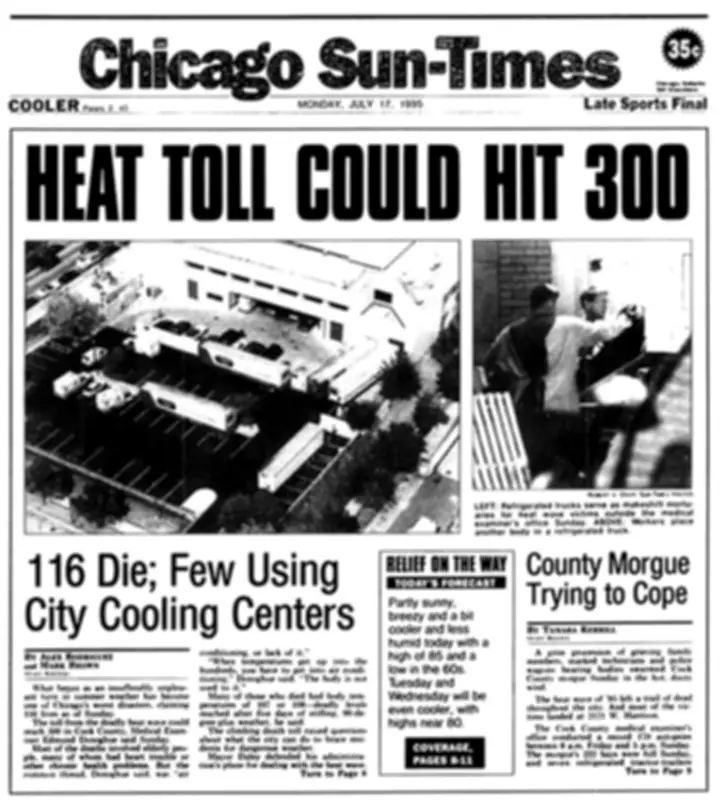
The Chicago heat wave of 1995 remains one of the deadliest in the city's history. From July 12 to July 16, temperatures soared above 100 degrees Fahrenheit, leading to over 700 deaths. The elderly and impoverished communities were disproportionately affected due to inadequate cooling facilities and social isolation. Emergency services were overwhelmed, and morgues reached full capacity.
Impact on Vulnerable Populations
The heat wave exposed deep social inequalities. Many elderly individuals lived alone without air conditioning, and poor neighborhoods lacked access to cooling centers. Social isolation prevented check-ins on at-risk residents, exacerbating the crisis.
Emergency Response Challenges
Emergency services struggled to keep up with the surge in calls. Hospitals were overcrowded, and the city's morgue ran out of space, requiring refrigerated trucks to store bodies. The response was criticized for being slow and poorly coordinated.

Lessons Learned and Reforms
The disaster prompted significant changes in urban planning and emergency preparedness. The city established a network of cooling centers, improved communication systems, and launched community outreach programs to check on vulnerable residents. Public awareness campaigns were also initiated to educate about heat-related health risks.
Ongoing Preparedness
Today, Chicago has a comprehensive heat emergency plan that includes early warning systems, coordinated response efforts, and resources for at-risk populations. The 1995 heat wave serves as a stark reminder of the importance of proactive measures in mitigating the effects of extreme heat events.