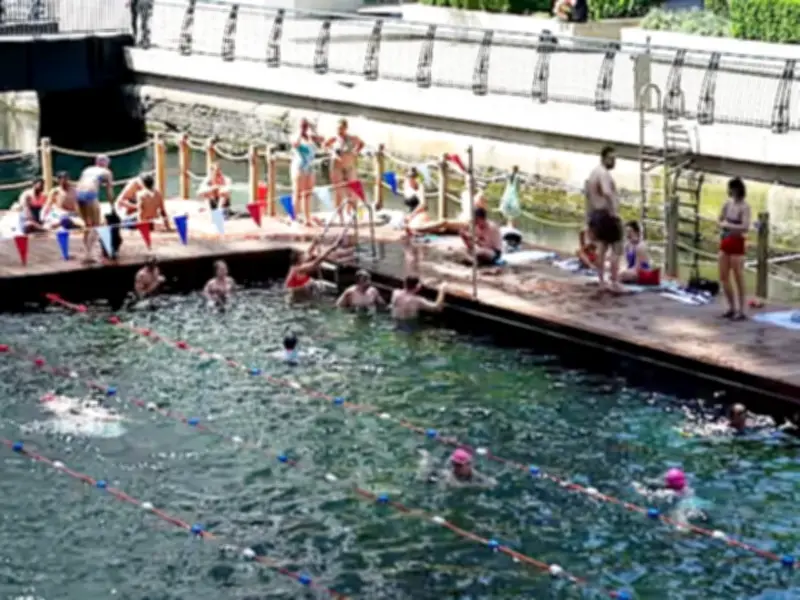
At least 40 people have drowned in heatwave-related deaths in France since Thursday, Prime Minister Sébastien Lecornu announced, as record temperatures gripped several major cities and the heatwave peaked across multiple European countries. Sports and Youth Minister Marina Ferrari warned on French radio: “It’s not something to be taken lightly, going swimming in unsupervised areas during a heatwave.” France, Spain, and Italy have been the hardest hit.
Record Heat and Fatalities in France
France experienced its hottest June day on record Tuesday, with an average temperature of 29.8°C, and its hottest night Monday at a minimum average of 21.6°C, according to Météo France. More than half the country remains on red alert. Among the fatalities was a 13-year-old girl who drowned in the River Seine at Fontaine-La Port on Sunday evening while swimming with her family; she did not know how to swim. A young professional footballer was in critical condition after being rescued from the River Rhône near Lyon, where swimming is banned. Two other deaths Monday involved children aged two and four found in a family car in a carpark in Carpentras, attributed to the extreme heat.
Spain and Italy Under Red Alerts
In Spain, temperatures are set to exceed 40°C in some areas, with red alerts in Andalusia, Cantabria, and the Basque Country on the third day of a national heatwave. Spain’s state weather service Aemet noted that June heatwaves are becoming more common, with 10 recorded in mainland Spain between 2000 and 2025, compared to just two in the previous 25 years. Temperatures could top 44°C near Córdoba on Tuesday and exceed 42°C in the Ebro valley. Aemet’s Rubén del Campo told Spanish media: “There is evidence that heatwaves were now taking place more frequently at the start of summer than in previous decades.” In Italy, a red heatwave alert has been declared in 15 cities, including Rome, Milan, Florence, Turin, and Venice, signaling health risks even for healthy adults. The government revived emergency labor protections for workers exposed to the sun, such as farm and construction workers, allowing companies to access state-backed furlough support if they halt operations due to dangerous heat.

Germany and Other Countries Affected
Several drownings also occurred in Germany, where temperatures are expected to reach 40°C in the west and south-west by week’s end. The German Lifesaving Association (DLRG) reported six fatal swimming incidents between Friday and Sunday, with men overestimating their abilities. Three bodies were found in the Rhine near Biblis, days after three men aged 23, 27, and 50 went missing in two separate river areas.
Transport and Cultural Closures
Météo France extended the red alert Wednesday afternoon from 54 to 58 of the country’s 96 metropolitan departments, including areas in the north-west. Valérie Pécresse, president of the Île-de-France region covering Paris, urged people not to travel and to work from home, stating: “The rail tracks cannot withstand temperatures above 50°C. So we’ll have a lot of disruption to public transport.” The Eiffel Tower closed early Tuesday at 16:00 (14:00 GMT) instead of its usual 00:45, with last entry at 12:15; 6.75 million people visited the monument last year. The Louvre Museum, the world’s most visited, advanced its closing time from Wednesday to Saturday to 16:00 local time, citing that its historic building “remains fragile and is not sufficiently adapted to climate change” and that “build-up of heat is at its highest at the end of the day, and intensified by the volume of visitors.”

Nuclear Plant Shutdown and Broader Impact
A nuclear power plant in southwest France was shut down Monday night because water temperatures in the River Garonne were set to reach 28°C on Tuesday, exceeding the legal limit for cooling reactors at the Golfech plant. Spanish forecasters expect temperatures to fall from Wednesday, but they will peak in the Netherlands, Belgium, and Germany on Friday. The Dutch KNMI issued a Code Orange weather alert for southern and central areas from Wednesday to Friday, indicating a “high chance of dangerous weather.” Belgium’s Risk Management Group activated the “alert phase of the national ozone and heat plan” for only the second time, first used in August 2020, though no specific national measures were announced beyond raising awareness and urging care for the elderly and children.