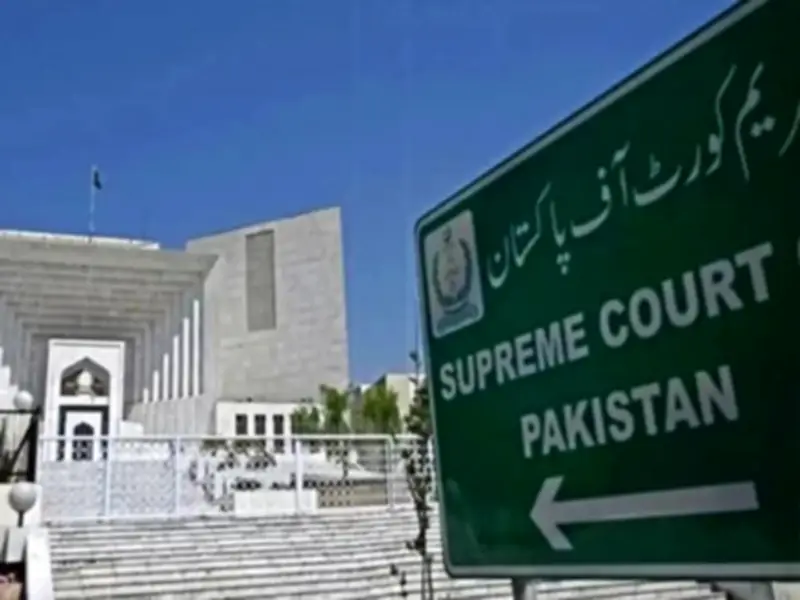
The Supreme Court of Pakistan has directed all Inspectors General of Police (IGPs) across the country to devise and implement effective mechanisms for the protection of girls attending schools, colleges, and universities, with particular emphasis on complaints of harassment, stalking, and other offences.
Judgment Details
In an 18-page judgment authored by Justice Salahuddin Panhwar, the court issued the directives while hearing an appeal against a death sentence awarded to a sweeper for raping a 10-year-old schoolgirl. The judgment emphasized that such complaints must be treated seriously, investigated promptly, and acted upon without delay.
The court also ordered that visible patrolling be ensured around educational institutions, public transport facilities, bus stops, and routes commonly used by female students. A copy of the judgment was circulated to all high courts, lower courts, federal and provincial law officers, and all IGPs.

Key Directives
The judgment stated: "All Provincial Inspectors General of Police and the Inspector General, Islamabad Capital Territory Police, shall devise and implement effective mechanisms for the protection of girls attending schools, colleges, and universities. Particular attention shall be paid to complaints of harassment under Section 509 PPC, stalking, and other precursor offences against women and children. Such complaints shall be treated seriously, investigated promptly, and acted upon without delay."
It further added: "Visible patrolling shall be ensured around educational institutions, public transport facilities, bus stops, and routes commonly used by female students. Preventive policing, rather than post-crime reaction, must become the governing principle in matters affecting the safety of girls."
Broader Concerns
The court lamented that a child of merely ten years was not safe even within a school environment, a place expected to provide security, learning, and protection, and instead became a victim of sexual violence. The case compelled the court to examine the broader question of safety for girls in educational institutions and during their commute.
The judgment noted that acts of harassment, stalking, intimidation, and sexual misconduct often begin with conduct already recognized as criminal under law. Section 509 PPC criminalizes conduct intended to insult the modesty of a woman, invade her privacy, or subject her to harassment, and also places an obligation on law enforcement agencies to respond promptly and effectively.
Importance of Early Intervention
The court stressed that early police intervention at the harassment stage may prevent escalation into more serious offences. "If a child is not secure in an educational institution, or while travelling to and from it, the constitutional promise of education, dignity, equality, and personal security becomes illusory," it added.
The judgment further held that the state's obligation is not limited to establishing educational institutions but extends equally to ensuring that girls can attend them free from fear, intimidation, harassment, and violence.
Medico-Legal Infrastructure
On medico-legal infrastructure, the court observed that the quality of medico-legal examination, documentation, and testimony is critical in sexual offence prosecutions and depends on a trained, dedicated, and properly resourced medico-legal service. It referred to the Sindh Medico Legal Act, 2023 as a legislative model providing for a regulated medico-legal service, a directorate for its administration, and criteria for appointment of medico-legal officers.
The judgment suggested that the federal and provincial governments may adopt similar frameworks to establish a dedicated medico-legal cadre with structured training in forensic examination of sexual violence victims, adequate appointment of women medical officers, and coordination with forensic science agencies.
Implementation
The court directed the Attorney General for Pakistan, all provincial advocate generals, health departments, and police authorities to consider the observations for implementation in accordance with law.