Cuba's Deepening Humanitarian Crisis: A Man-Made Catastrophe
The vibrant streets of Havana, once echoing with music and bustling daily life, now present a starkly different scene. Long queues form at petrol stations that have nothing to dispense, hospitals experience flickering power that threatens patient care, and uncollected rubbish accumulates because sanitation trucks lack fuel to operate. This deteriorating situation is not the result of natural disaster or civil conflict but stems from deliberate policies implemented by the world's most powerful government—a self-imposed siege that endangers human lives and challenges global norms.
From Embargo to Blockade: The Escalation of US Measures
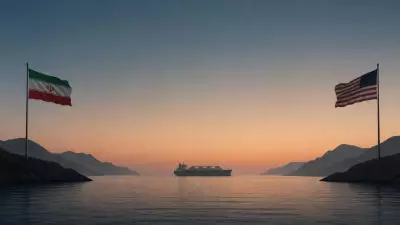
While Washington has maintained an embargo against Cuba since 1962, recent escalations have transformed this policy into something more severe. The US declaration of a "national emergency" has empowered tariffs on countries supplying oil to Cuba, effectively blocking Venezuelan oil destined for the island. This transcends conventional sanctions and resembles, in both form and function, a blockade that restricts the flow of basic necessities to the Cuban population.
An embargo typically restricts trade between two states, but a blockade represents a tool of warfare that stops goods from reaching a population regardless of sovereignty or third-party interests. When the affected goods include essential energy resources whose absence destabilizes hospitals, water systems, sanitation services, and food production, the situation moves beyond political pressure into the realm of collective punishment.

The Human Cost: Daily Life Unravels
The tightening of US measures has produced immediate and devastating effects across Cuban society. Power grids that previously struggled now experience complete collapse with rolling blackouts lasting up to 20 hours daily. Cuban health officials report that ambulances cannot find fuel to transport patients, hospital services are severely hampered by power outages, and vital flights carrying medical supplies cannot land because jet fuel has run out.
These are not mere inconveniences but strategic conditions engineered to degrade daily life to the point where society itself begins to crumble. The crisis affects every aspect of existence—electricity, healthcare, transport, food supply, sanitation, and even the ability of airlines to maintain connections with the island nation.
Geopolitical Chess with Human Pawns
In geopolitical terms, the United States is redirecting Venezuelan oil exports away from Havana, threatening penalties on nations that would assist Cuba, and insisting that Cuba represents an "unusual and extraordinary" threat to US security. However, the board on which these moves unfold is not theoretical—it is an island of 11 million residents struggling to secure basic sustenance while enduring extreme deprivation.
What has emerged is scarcity weaponized: energy constraints imposed to foment instability and potentially provoke political change through human suffering. This represents policy masquerading as pressure—a strategy that uses fundamental human needs as leverage in geopolitical maneuvering.
Ideological Fixation Versus Practical Realities
The architects of this policy in Washington are driven not merely by strategic considerations but by an ideological fixation on regime change rooted in political constituencies, historical grievances, and Cold War antagonisms. This worldview dangerously misreads both the durability of the Cuban state and the consequences of pushing a society already facing infrastructural challenges beyond the brink.
The assumption that deprivation will produce revolution rather than desperation—that civic order will bend toward political reform rather than collapse into lawlessness and despair—ignores the lessons of history and the resilience of Cuban social institutions that have survived decades of hardship.

Regional Implications and Global Responses
This crisis carries significant regional implications. Latin America has witnessed the fallout of destabilized states—from Venezuela's economic unraveling to Haiti's cycle of political violence and humanitarian breakdown. Any scenario in which Cuba becomes acutely deprived of essential services risks triggering what analysts term "Haitianization": a spiral of insecurity, social atomization, and uncontrollable migration that could create regional chaos.
As US tariffs and threats isolate Cuba economically, other global players are stepping into the void. Russia has publicly supported Cuba's sovereignty and pledged aid, while China's involvement in renewable energy initiatives on the island underscores the broader geopolitical competition now unfolding. Meanwhile, Latin American governments and regional organizations have offered muted responses, reflecting political diversity and strategic hesitation in confronting unilateral coercive measures.
International Norms and Humanitarian Principles
The United Nations human rights office has criticized fuel blockades as undermining human dignity—a clear signal that the legitimacy of such measures is not universally accepted, even among US allies. International institutions warn that punishing a nation's economy in ways that directly threaten its civilian population violates principles of human rights and established international norms.
A paradox exists at the heart of this crisis: while Cuba's government has expressed willingness to hold talks with the United States without preconditions, the very policies meant to compel negotiation—sanctions that break supply chains, tariffs that choke imports, and threats against third-party nations—make constructive dialogue increasingly difficult.
A Path Forward: From Coercion to Engagement
The lesson of history demonstrates that coercion rarely yields stable, positive political change. More often, it begets resentment, internal repression, and long-lasting distrust. The smarter course, both geopolitically and ethically, involves shifting away from maximum pressure toward a strategy that blends pragmatic engagement with clear red lines—one that addresses legitimate security concerns while ensuring that human lives are not held hostage to political ambitions.
Cuba today stands at a critical juncture with its energy grid failing, hospitals struggling, essential services collapsing, and its people bracing for greater suffering. What began as an old embargo has morphed into something resembling a blockade that imperils basic human needs. If the United States genuinely wishes to promote stability, democracy, and human dignity in the Western Hemisphere, it must reconsider strategies that put civilian populations at risk.
Humanitarian catastrophe is not an inevitability but a choice. In the case of Cuba, the time has come to choose differently—to recognize that populations, not regimes, bear the immediate cost of coercive policies and that true diplomatic engagement requires acknowledging the humanity of the other side.