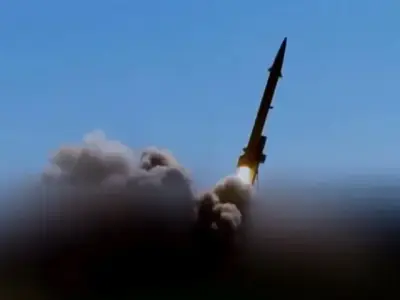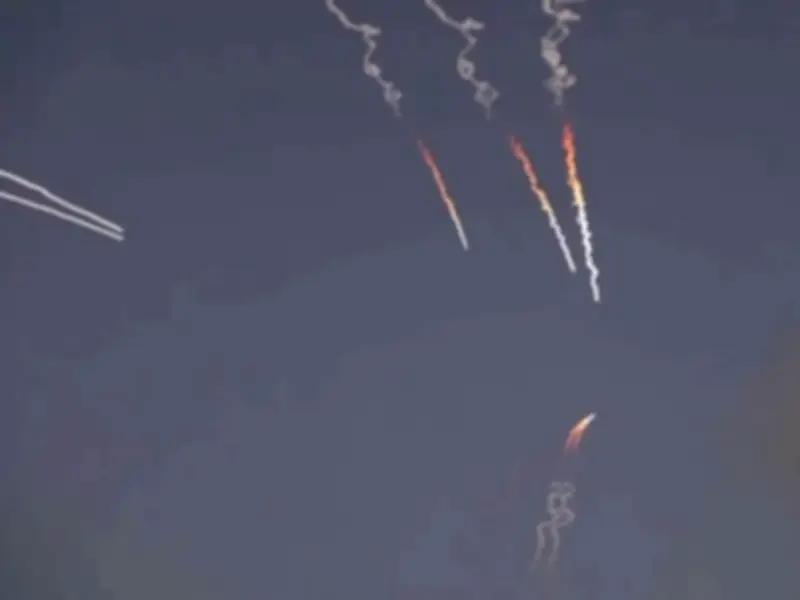
Iran's Revolutionary Guards announced they executed missile and drone attacks on US military bases in Jordan, Kuwait, and Bahrain on Wednesday, retaliating against American strikes on Iranian positions around the Strait of Hormuz. This exchange, following US President Donald Trump's statement that Iran downed a US Apache helicopter near the strait, represents one of the most significant escalations since Washington and Tehran agreed to a ceasefire in April.
Trump Calls for Strong Response
President Trump told ABC News on Tuesday, "I believe the response should be very strong, very powerful, and that's what this one is." The US military targeted Iranian air defenses, ground control stations, and surveillance radar sites, describing it as a "proportional response" to the helicopter downing, whose two crew members were rescued.
Diplomatic Reassessment
The tit-for-tat attacks, occurring just days after Iran exchanged fire with Israel for the first time since the ceasefire, cast fresh doubt on prospects for a peace deal. Iran's Foreign Ministry spokesperson Esmaeil Baghaei stated Tehran would "reassess" its diplomatic engagement with Washington due to "repeated ceasefire violations," emphasizing that "any diplomatic process requires a minimum stable environment."

Details of the Strikes
US strikes lasted around four hours, with Central Command announcing operations ended by 9 pm ET (6 am PKT Wednesday). A US official reported nearly 20 Iranian targets were hit. Iran's Islamic Revolutionary Guard Corps (IRGC) confirmed attacks on Qeshm Island and the port city of Sirik, with Iranian media also reporting explosions in Bandar Abbas and near Jask at the Strait of Hormuz entrance.
Iran Targets US Bases
The IRGC claimed it attacked US bases in Bahrain, Kuwait, and Jordan with drones and missiles in response to "U.S. aggression." It stated it fired long-range missiles at four sites at the US al-Azraq base in Jordan, including F-35 fighter jet hangars and a command-and-control center, and warned of a "crushing and decisive" response to further US action.
A US official, speaking anonymously, said initial assessments indicated nearly all Iranian missiles and drones were intercepted, with no immediate reports of harm to US personnel or damage to facilities. The Pentagon did not respond to a request for comment, and Reuters could not independently verify the reports.
Regional Interceptions
Jordan's military said it intercepted and shot down five missiles from Iran toward al-Azraq, with falling debris causing no injuries or damage. Kuwait's defense ministry reported intercepting "hostile aerial targets," while Bahrain's air defenses repelled attacks, according to a media adviser to the king. Kuwait houses major US military facilities, and Bahrain hosts the US Navy's regional fleet headquarters.
Market Reactions
Asian stocks fell, and oil prices rose amid the renewed hostilities, though movements were more subdued compared to previous Gulf conflicts.
Trump Downplays Helicopter Incident
The US attack helicopter was downed by a one-way Iranian attack drone, according to a US official. Two crew members were uninjured, Trump said. The helicopter went down off Oman's coast while on patrol at around 3 am Tuesday (5 am PKT Tuesday), and a Navy surface drone located and rescued the crew after two hours. Iran's state media, citing a military source, denied any offensive air operations in the strait in the preceding 24 hours. Central Command said the crew was in stable condition, a more cautious assessment than Trump's description.
Iranian Foreign Minister Abbas Araghchi warned that foreign forces in the region risk accidents or crossfire, stating, "To reduce risk, best solution is for them to leave." Trump later told the Wall Street Journal the incident "wasn't a big deal" and stressed "the pilot is fine." Nevertheless, the episode adds strain to peace efforts.
Peace Deal Appears Remote
The April ceasefire was announced with plans for peace talks. Diplomats have sought to reopen Hormuz, end a US blockade of Iranian ports, and create a pathway for negotiations over Iran's nuclear program. Trump has repeatedly said a deal is close, but despite several rounds of indirect talks mediated by Pakistan and Qatar, the two sides remain far apart.

Fighting continues in a parallel war between Israel and Iran-backed Hezbollah in Lebanon, and Tehran maintains restrictions on most shipping through the strait, which previously carried a fifth of the world's crude oil and LNG. Washington keeps its blockade of Iranian ports. Trump insists any peace deal must ensure Iran cannot develop a nuclear weapon, which Iran denies seeking. Iran demands lifting international sanctions, releasing frozen assets, recognition of its control of the strait, and an end to fighting in Lebanon.