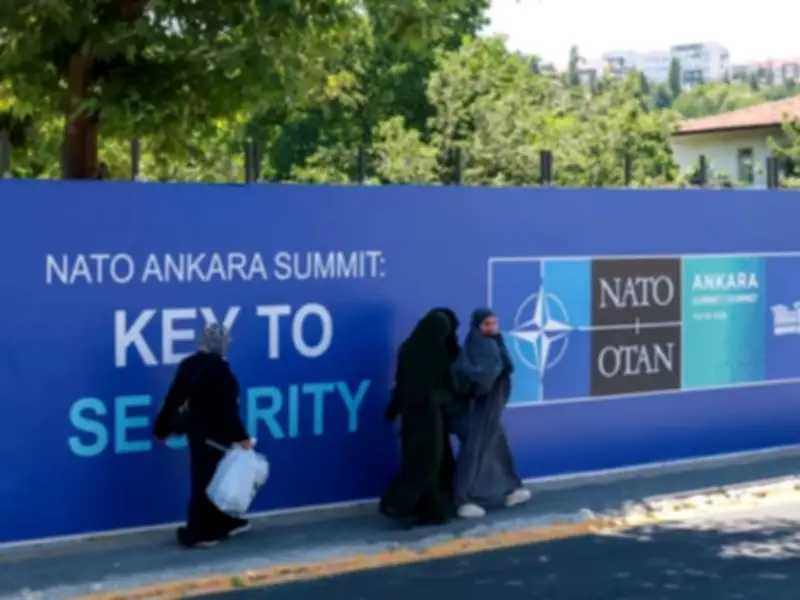
NATO Summit in Ankara: Europeans Seek to Demonstrate Unity
NATO leaders are set to convene in Ankara next week, where European allies aim to set aside tensions with United States President Donald Trump over Iran and Greenland, showcasing their commitment to bolstering continental defence as Washington reduces its NATO commitments. The gathering on Tuesday and Wednesday will highlight Europeans honouring pledges to increase defence spending to deter potential Russian aggression, with arms deals worth tens of billions of dollars expected to be signed, according to NATO Secretary General Mark Rutte.
Key Attendees and Agenda
Leaders are also anticipated to reaffirm their commitment to funding weapons for Ukraine in its fight against Russia's invasion. Ukrainian President Volodymyr Zelenskiy will attend a dinner hosted by Turkish President Tayyip Erdogan, who will also hold bilateral talks with Trump. European officials expressed hope that Trump's strong relationships with Erdogan and Rutte would ensure a smooth summit, though uncertainty remains due to lingering transatlantic bitterness over the Iran war and Trump's frequent criticism of NATO.
Trump's Criticism and European Response
In a Truth Social post on Thursday, Trump complained that the US was spending money to protect NATO members "without getting any benefit from so doing." Rutte and other NATO leaders have countered that the alliance contributes to US security and that Europeans are heeding Trump's longstanding calls to increase defence spending. Rutte stated, "The summit next week will focus on turning extra spending into combat-ready capabilities, and significantly scaling up our defence industries." He added, "NATO is, and will always be, a transatlantic alliance but we need to rebalance it for the better. Working closely with the United States, European allies and Canada are taking greater responsibility for conventional defence in Europe."

Defence Spending Increases
Rutte noted last month that NATO's European members and Canada spent $90 billion more on defence in 2025 than the previous year, reaching a total of over $570 billion. At a summit in The Hague last year, NATO leaders agreed to spend 3.5% of GDP on core defence items such as weapons and troops by 2035, up from a previous goal of 2%. They also committed to investing an additional 1.5% of GDP on broader defence-related investments, including cybersecurity.
Strains Within the Alliance
European officials are hoping for a repeat of the smooth Hague summit, where Trump reaffirmed the US commitment to the 32-member alliance and its Article 5 mutual defence pact, and praised fellow leaders. However, the past year has severely strained the alliance. Trump threatened to take Greenland from fellow NATO member Denmark and waged a war against Iran that disrupted the global economy without consulting European allies. The US has also announced troop withdrawals from Europe, reduced forces assigned to NATO's defence plans—including an aircraft carrier, refuelling aircraft, fighter jets, and drones—and launched a six-month review of its military presence on the continent. A European diplomat, speaking anonymously, said, "The alliance is alive and kicking but a bit bruised."
Impact of the Iran War
European officials worry that the Iran war could overshadow the summit if the conflict flares up—currently under a fragile ceasefire—or if Trump vents anger at Europeans for not assisting US military operations more. Trump suggested this meant the US did not need to honour its commitment to aid a fellow NATO member under attack. NATO officials note that most allies honoured commitments to allow US use of their airspace and bases, despite the war being deeply unpopular in Europe and lacking support from many European leaders. The war also ruptured personal ties between Trump and leaders such as Italian Prime Minister Giorgia Meloni and outgoing British Prime Minister Keir Starmer, raising concerns that these strains could resurface at the summit. A senior NATO diplomat expressed optimism, saying, "I'm optimistic [that won't happen] because I think the leaders know what is at stake. And if something like that does occur, then we always have the ultimate marriage counsellor, Mark Rutte, to smooth things over."