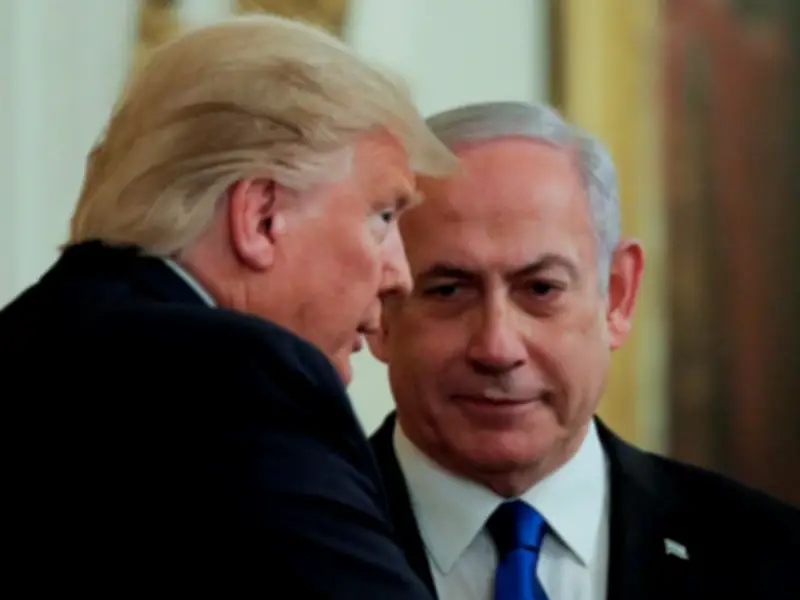
Benjamin Netanyahu has long portrayed himself to the Israeli public as uniquely adept at dealing with Donald Trump, capable of winning and sustaining the US president's backing. However, an acrimonious phone call this week, where Trump called the prime minister 'f***ing crazy,' first leaked by Axios and later publicly confirmed, laid bare the strains that have emerged between the two leaders.
Leaked Call Damages Netanyahu Politically
Israeli officials, speaking on condition of anonymity, acknowledged the call was among the most heated Netanyahu has had with Trump. One official said the leak damaged Netanyahu politically ahead of this year's national election. The US website Axios broke the news on Monday, reporting that Trump angrily confronted Netanyahu over Israeli threats to resume air strikes on Beirut's southern suburbs. 'Everybody hates you now. Everybody hates Israel because of this,' Trump was quoted as saying.
US-Israel Differences Now Public
A senior Israeli official told Reuters that Netanyahu made clear to Trump that any pause in Israeli plans to strike Beirut would only work if Hezbollah stopped hitting northern Israel. Trump was receptive to this position, the official said. Following the call, Trump said Israel and Hezbollah had agreed to stop shooting at each other, prompting accusations by Netanyahu's political opponents that he had ceded Israel's sovereignty to the US. 'A total protectorate,' said opposition leader Yair Lapid.

Nimrod Goren, president of the Israeli think tank Mitvim, said 'the differences are now very public,' unlike in the past when they were quietly managed behind closed doors. Trump told the New York Post that he was 'a little bit perturbed' by Netanyahu constantly attacking Lebanon, but added: 'We've worked very well together.'
Contrasting War Popularity in Israel and US
The wars with Iran and Hezbollah have been widely popular in Israel, including among supporters of Netanyahu's political rivals, and much of the public wants fighting to continue. That stands in contrast to the US, where many voters oppose the war. Trump has repeatedly said the US was close to an agreement with Iran on ending the war. 'We are basically being forced to stop,' said Israeli pollster Mitchell Barak. 'We don't have a say in this anymore.'
Netanyahu's Unachieved Goals
At the start of the war with Iran, Netanyahu said the Iranian government would be toppled, and its nuclear and missile programs destroyed. He also said Hezbollah must be disarmed in southern Lebanon. So far, none of these goals has been achieved. Recent domestic polls show Netanyahu's coalition government would fail to win a majority at the next election.
Goren said Netanyahu was working to accommodate Trump's demands because he will need the president's support closer to the elections, including a possible visit by Trump to Israel. Before the war, Trump was expected to visit in April to be awarded Israel's highest civilian honor.
Mixed Reactions in Israel and US
Some Israelis are uncomfortable with Trump's influence on Israeli military decisions, while in the US, some Trump critics say Netanyahu has outsized influence on US foreign policy. Itamar Ben-Gvir, Netanyahu's national security minister, said an Israeli leader must know how to say 'no' even to the US president. Former Netanyahu adviser Nadav Shtrauchler said the premier was counting on Trump's support in the election. 'The way the war will end will affect, more than anything, the result of the election.'
Trump has often lavished public praise on Netanyahu and lobbied Israel's president to pardon him on corruption charges. But Trump has also emphasized how much Israel needs Washington and has used expletives about Israel publicly. Netanyahu describes Trump as 'the greatest friend Israel has ever had in the White House.'
A US official told Reuters the phone call was one of several where Trump has been very direct with Netanyahu, but the two remain friends and close allies. However, the Israeli source acknowledged the leak was not helpful to Netanyahu ahead of an election he is polling to lose. Shtrauchler said the perception of a rift was overstated, but an abrupt end to the wars would pose a 'huge problem' for Netanyahu, as many Israelis would see it as Trump having forced his hand. 'No one wants to feel like we are another star on the flag,' he said.