Pakistan Activates Crisis Unit and Issues Urgent Advisory for Nationals in Middle East
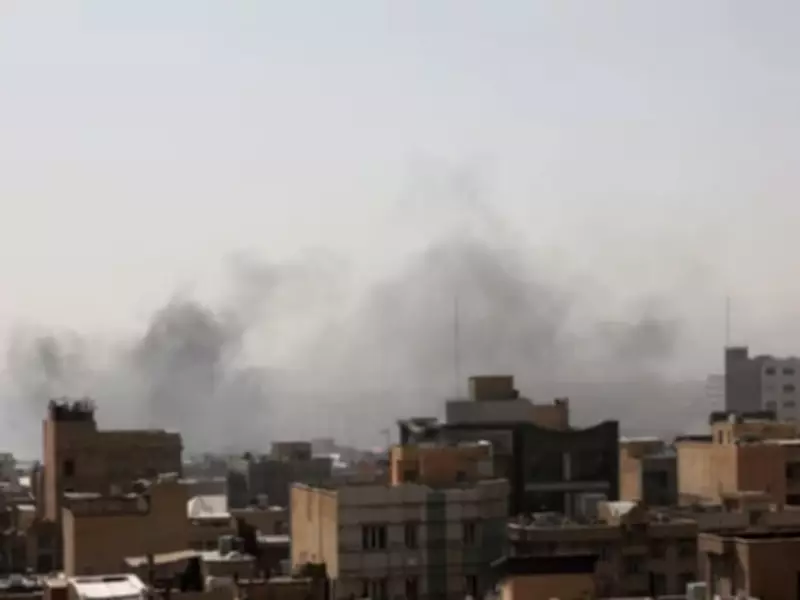
The Foreign Office of Pakistan has issued an official advisory for Pakistani nationals residing in the Middle East and Persian Gulf regions, while simultaneously activating its Crisis Management Unit (CMU) to monitor the escalating regional tensions. This decisive action comes in response to a series of military confrontations initiated by the United States and Israel, which launched a coordinated attack on Iran, resulting in the reported martyrdom of Supreme Leader Ayatollah Ali Khamenei.
Immediate Response and Advisory Details
In a statement released on Sunday, the Ministry of Foreign Affairs (MOFA) confirmed the activation of the Crisis Management Unit, which is now operational 24/7 to provide continuous monitoring and necessary assistance to citizens abroad. The government has strongly urged all Pakistani nationals in the Gulf region to exercise utmost caution, remain indoors whenever possible, avoid unnecessary travel, and strictly adhere to the instructions and advisories issued by the respective host governments.
For emergency assistance or information, Pakistani citizens can contact the CMU directly at +92-51-9207887. Additionally, the Foreign Office has made available the emergency contact details of Pakistani embassies and consulates throughout the region to facilitate citizens requiring immediate support.

Regional Escalation and Casualty Report
The advisory follows a day after a tragic incident where a Pakistani national in the United Arab Emirates (UAE) was killed during the interception of an Iranian missile. This event occurred in the aftermath of joint US and Israeli strikes on Iran, which prompted retaliatory attacks from the Islamic Republic. The Foreign Office has condemned this unfortunate death, while the UAE extended its sincere condolences and deepest sympathies to the family and relatives of the Pakistani national, expressing full solidarity with them.
The UAE government emphasized that targeting civilians and civilian objects is condemned under all legal and humanitarian standards, reinforcing the gravity of the situation.
Background of the Conflict
The regional tensions escalated significantly when the United States and Israel jointly launched strikes on Iran, pushing the Middle East into a renewed military confrontation. These actions have further dimmed hopes for a diplomatic solution to the West's long-standing effort to denuclearize Iran, despite Tehran's repeated assertions that it will not pursue nuclear weapons.
In response to the attacks, Iran targeted Israel and US bases across the Middle East, with explosions reported in Kuwait, the United Arab Emirates, Bahrain, and Qatar. Iranian state media later confirmed that Supreme Leader Ayatollah Ali Khamenei was killed in the strikes by Israel and the US, announcing 40 days of public mourning in the Islamic Republic.
International Reactions and Justifications
Hours after the United States and Israel stated that an air strike killed Ayatollah Ali Khamenei as part of the most ambitious series of attacks on Iran in decades, Iranian state media confirmed the 86-year-old leader's death on Saturday. US President Donald Trump said the air strikes, launched on Saturday on Iranian targets, were aimed at ending a decades-long threat from Iran and ensuring it could not develop a nuclear weapon.
President Trump sought to justify this risky gambit, which seemed to go against his professed opposition to American involvement in complex overseas conflicts, by framing it as a necessary measure for regional security.
The Pakistani government's proactive measures underscore its commitment to the safety and well-being of its citizens abroad during this volatile period, as the situation in the Middle East continues to evolve rapidly.