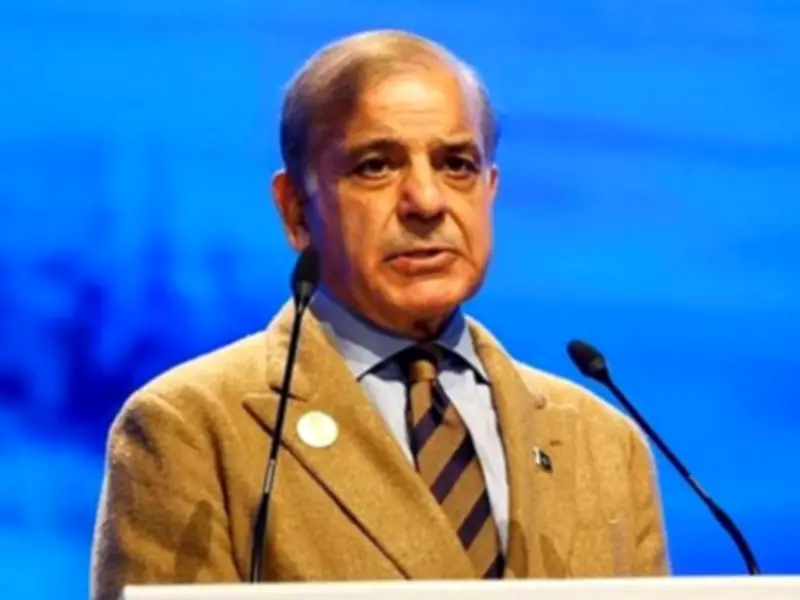
Prime Minister Shehbaz Sharif on Monday urged all sides to exercise restraint and give peace a greater chance after Iran and Israel exchanged a fresh round of missiles. The statement came after Iran and Israel exchanged strikes on Sunday for the first time after the truce announced on April 8. US President Donald Trump also urged both nations to show restraint.
In a statement posted on his X account, the prime minister referred to the recent flare-ups in the region, stressing that the surge in violence served as a stark reminder of the fragility of ceasefires and the devastating consequences that follow. “As we work earnestly and painstakingly, together with our brothers and partners, to find a peaceful diplomatic solution to the conflict, and especially when the final objective is just about to be achieved, we sincerely urge all sides to exercise restraint and give peace a little more chance,” he said.
PM Shehbaz further urged all sides to remain on the path of peace and diplomacy, which he said had bright prospects of success, instead of violence and destruction. The recent surge in violence in the Middle East is a stark reminder of the dangers associated with a tenuous ceasefire and the unbearable consequences it may lead to. As we work earnestly and painstakingly, together with our brothers and partners, to find a peaceful diplomatic… — Shehbaz Sharif (@CMShehbaz) June 8, 2026

Iran fired a salvo of missiles at Israeli targets in retaliation for an attack on the outskirts of Beirut. Tehran has long said any peace deal with the US would depend on a ceasefire also holding in Lebanon, which Israel invaded in March in pursuit of Hezbollah fighters who fired rockets and drones across the border in solidarity with Tehran. Iran blames the US for the latest exchanges of fire with Israel and said that exchanges of fire would only worsen an already "chaotic diplomatic process" with the US. Iranian Foreign Ministry spokesperson Esmaeil Baghaei said that Israel's actions in Lebanon, whether carried out with US knowledge and consent or not, were aimed at sabotaging diplomacy.
Pakistan emerged as a central facilitator in the sensitive diplomatic track, positioning itself as an “honest broker” amid sharply polarised positions between Washington and Tehran. The war began in February 2026 when US and Israeli strikes targeted Iranian military infrastructure. Iran retaliated across the region and closed the Strait of Hormuz, triggering a global energy shock. By early April, Trump was threatening to destroy Iranian civilisation entirely, deadlines set for March 21, then March 23, then April 7, as diplomats scrambled for an opening.
Pakistan provided that opening. On April 8, Islamabad brokered a conditional two-week ceasefire. Trump confirmed it himself, naming Field Marshal Asim Munir and Prime Minister Shehbaz Sharif as the Pakistanis who had persuaded him to stand down. Iranian Foreign Minister Abbas Araghchi was equally warm, publicly thanking Pakistan's tireless efforts on behalf of the Islamic Republic. With a ceasefire in place, Pakistan moved swiftly to host formal negotiations. On April 11 and 12, delegations from the United States and Iran convened at the Islamabad Serena Hotel. The US team was led by Vice President JD Vance, accompanied by Witkoff and Kushner; Iran sent a delegation headed by Parliament Speaker Qalibaf. The talks ran for 21 hours and while both sides reported progress on most points, two issues proved intractable: the Strait of Hormuz and Iran's nuclear programme. No agreement was reached. No memorandum was signed.