In Bangladesh, thousands of Russian engineers are building the country's first nuclear power plant in Rooppur, creating a unique community known as 'Little Russia'. The 2.4-gigawatt facility, developed by Russian state nuclear corporation Rosatom, has attracted over 5,000 Russian professionals and their families, who now make up about 20 percent of the municipality's population.
A Home Away from Home
Artem Matyukhin, a 34-year-old civil engineer from Chelyabinsk, left his home near the Ural Mountains three years ago for a job in riverine Bangladesh. Despite initial skepticism from friends and relatives, he has never regretted his decision. 'When I got the job in Rooppur, all my friends and relatives were asking: why are you going there?' Matyukhin told Arab News. 'But when I arrived, I kind of got hooked. I absolutely don't regret coming here. I made new friends, Russians and Bengalis, and I just like it here ... The nature here is incredibly beautiful.'
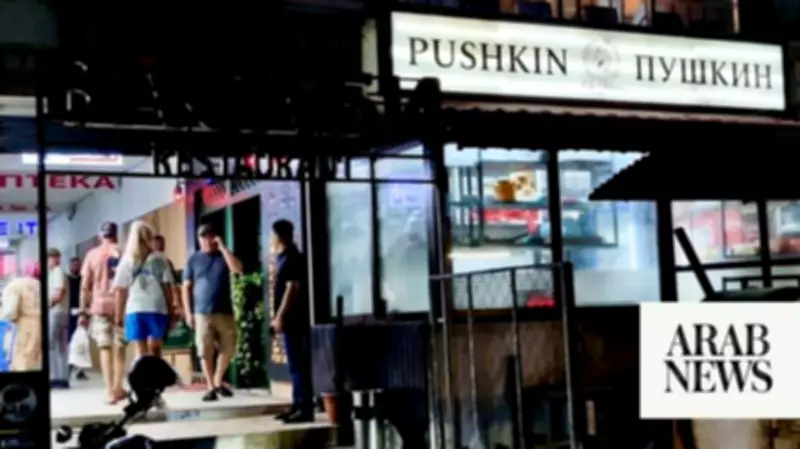
The area around the plant has gradually become known as the 'Russian enclave' or 'Little Russia'. Most signboards, as well as shop, hotel, and restaurant names, are written in Cyrillic, and many local vendors have picked up some Russian. Elena Toshchakova, a schoolteacher from Voronezh, appreciates the warm welcome: 'Bangladeshis are very welcoming toward us — they always smile and communicate with us well. They learn our language, and that's very nice.' She has been teaching children of Russian employees for 18 months and enjoys the experience, though she sometimes misses home. When that happens, she cooks Russian dishes like borsch or pelmeni, or visits restaurants serving Russian cuisine.

Economic and Social Impact
The power plant project has generated about 30,000 jobs, according to the Bangladesh Atomic Energy Commission, which oversees the facility. Saikat Ahmed, the commission's spokesperson, highlighted the socio-economic benefits: 'The project has brought significant socio-economic benefits to the region. These include job creation, infrastructure development, increased business activity, and improvements in healthcare and transportation. The project has attracted several thousand Russian scientists, engineers, and technical experts, making it one of the largest concentrations of foreign nuclear professionals in Bangladesh's history.'
The Russian experts will stay in Rooppur for at least several more years to train Bangladeshi staff in operating the plant and provide technical support. 'The plant is expected to be progressively operated by Bangladeshi personnel, with Russian experts remaining in advisory and support roles,' Ahmed said. 'From the outset, strong emphasis has been placed on capacity building of Bangladeshi professionals. Thousands of engineers, scientists, and technicians have already been trained.'
Strengthening Bilateral Ties
Denis Shitikov, a civil engineer from Tiksi in Yakutia, values the friendships he has made: 'With work, I started to have many Bengali friends ... And I'm so grateful for this companionship. There's a long history of cooperation between our nations, and the future looks good.' Natalia Pluzhnaya, a teacher from Krasnodar, echoed this sentiment: 'I think that relations between Russia and Bangladesh are quite trusting. They are friendly towards each other, open to cooperation, and the future looks promising.'
Russia was one of the first countries to recognize Bangladesh's independence, and those working at Rooppur are aware of this history. Olesya Moskvina, head of the translation department, arrived from Yekaterinburg in 2019 and has witnessed the construction progress. 'Since the independence of Bangladesh, our countries have been in a very friendly relation. It hasn't changed,' she said. 'This is the best work I've had in my life ... The goal is big. It is a huge project and you could feel the energy from the very beginning. We hope that the future will be the same and even better.'