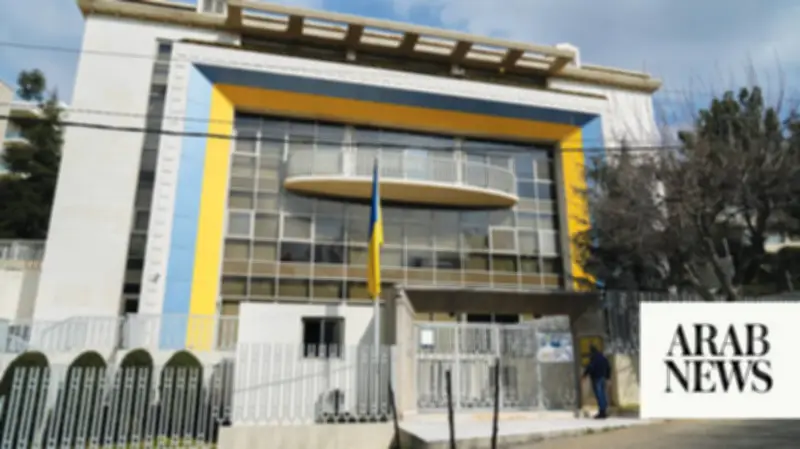
As Israeli warplanes bombarded Beirut's southern suburbs in March 2024, chaos erupted, and residents fled in terror. Amid the turmoil, one man seized the moment to slip out of his Hezbollah captivity. He navigated to the green hills overlooking the Lebanese capital and vanished into the Ukrainian Embassy in Baabda. His current whereabouts remain a mystery, entangled in an ongoing espionage saga as Hezbollah seeks to uncover Israeli intelligence operatives within its ranks.
The Spy in Question
Lebanese officials identify the man as Khaled Al-Aydi, a Palestinian refugee from Syria who also holds Ukrainian citizenship. Hezbollah had detained him in the Beirut suburbs on allegations of involvement in a thwarted Israeli intelligence plot to execute bombings and assassinations. Details of his escape and the Lebanese military court's case against him were provided by three judicial officials and two senior security officials in Lebanon, along with a senior Hezbollah political figure.
Political Implications
Al-Aydi's disappearance could strain the Lebanese government, which has remained largely silent on the matter. If evidence surfaces that the government aided his escape, tensions with Hezbollah's Shiite base might escalate. The government already faces criticism for direct negotiations with Israel amid ongoing hostilities with Hezbollah since the Iran war began.

The Ukrainian Embassy requested Lebanese authorities in March to facilitate Al-Aydi's departure after his escape, according to a Lebanese government document. However, Lebanon's General Security agency refused, citing a judicial arrest warrant issued in September 2025. Israel's Mossad and Ukraine's Foreign Ministry declined to comment. A Ukrainian official stated that Al-Aydi is not on the embassy premises.
Spy Crackdown Since 2024 War
Since the 2024 Israel-Hezbollah war, Hezbollah and Lebanese authorities have intensified efforts against alleged spy networks. About 50 individuals have been convicted and are serving sentences, with others under investigation. Hezbollah political official Wafiq Safa claimed success in detecting many spy networks, but noted that Israelis continuously recruit young Lebanese from all communities.
Many alleged spies are current or former Hezbollah members or their relatives. Al-Aydi, however, was an outsider. He acquired Ukrainian citizenship through his mother, according to the government document. It remains unknown how Israel allegedly recruited him. He entered Lebanon from Ethiopia in August 2025, a security official said.
Hezbollah's Expansion and Vulnerability
Hezbollah began as a small guerrilla force in the 1980s but expanded significantly after its 2006 war with Israel, making it easier for Israeli penetration, noted analyst Nicholas Blanford. The group's involvement in Syria's civil war further exposed it due to lowered recruitment standards. Lebanon's economic crisis also aided Israeli recruitment, with operatives paid between $2,500 and $20,000 for intelligence on Hezbollah sites, according to military court cases. Many were recruited via social media.
A high-profile case involves Mohammad Hadi Saleh, a singer and religious performer connected to Hezbollah, arrested in May 2025 for providing Mossad with maps of key Hezbollah sites later struck by Israel. He awaits trial. Analyst Mohanad Hage Ali noted the irony that Hezbollah accused opponents of being spies while actual spies came from within its own ranks.
Ongoing Recruitment Efforts
During the latest war, Israel dropped leaflets with QR codes in Lebanon, directing people to an Israeli military unit for recruitment. In October, Lebanon's General Security dismantled a network planning bombings and assassinations, including a plot targeting events for the one-year commemoration of Nasrallah's death. Authorities found a motorcycle rigged with explosives and a modified car. Al-Aydi and six others were charged; one also escaped, while others await trial. Only Al-Aydi was held by Hezbollah, likely as a high-value target.

The military court alleges the operation was orchestrated by a Mossad handler in Germany using encrypted apps. A summons to the Ukrainian Embassy went unanswered. Safa mentioned an unsuccessful attempt to smuggle Al-Aydi to Syria. Senior security officials believe he left Lebanon, though it's unclear if he crossed into Syria, where officials have no information.
If Lebanese authorities refused Al-Aydi's departure, the US and Ukraine could exert pressure for his release, Hage Ali said. Conversely, if the state let him escape, it would face public anger, especially among Lebanese Shia sympathetic to Hezbollah, potentially inflaming internal tensions.