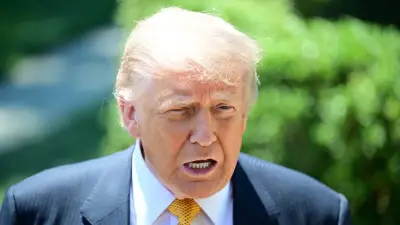
On May 25, 2026, US President Donald Trump shocked the world, particularly the Muslim world, when he proposed that more Muslim nations sign the Abraham Accords as a precondition for a broader political settlement in the Middle East. This surprising and polarizing move left many bewildered, as no one had anticipated that efforts to end the Iran war could be linked to expanding what has effectively become a new American-led security architecture for the region.
Trump's Surprise Demand
During a conference call with leaders of several Muslim allied nations, Trump floated the idea, requesting that Saudi Arabia, Qatar, Pakistan, Egypt, Jordan, and Turkey join the Abraham Accords en masse as a mandatory condition of an Iran deal. The reaction was one of hushed silence, broken only by Trump's quip, "Are you still on the line?" underscoring the awkwardness of his proposal. Instead of announcing progress on an Iran deal, Trump opened a can of worms, reinforcing perceptions of his impulsive and unpredictable foreign policy.
Reactions from Experts
Mushahid Hussain Sayed, former chair of the Senate Foreign Relations Committee, stated that Trump's Abraham Accords push has "absolutely no linkage with the Israeli aggression against Iran, which is illegal, unjust, and unwarranted — and which is being carried out in consonance with US policy." The move placed Pakistan, already playing a delicate mediating role between the US and Iran, in a diplomatically awkward and politically sensitive position. Dr. Huma Baqai, an international relations expert, noted, "President Trump's narrative is so inconsistent that we really don't know what the thrust of the Iranian deal is. He talks about the Abraham Accords in one breath, the Strait of Hormuz in the next, then enriched uranium, and then the Board of Peace. The credibility and shelf life of his narrative have diminished until his next statement."

Motivations Behind the Move
Some analysts believe Trump's puzzling move was an attempt to incentivize Israel to accept his Iran deal while appeasing Republican hawks opposed to any negotiated end to the conflict. Dr. Maleeha Lodhi, Pakistan's former ambassador to the US, UK, and UN, explained, "All President Trump was trying to do was distract attention from the criticism he had begun to face from the right-wing of his own party, as well as from Israel, over the Iran deal that everyone — including members of his own administration — was saying was imminent. So when this criticism began, Trump effectively deflected it by issuing a tweet about other countries being asked to join the Abraham Accords." Others argue that Trump seeks to complete an agenda left unfinished from his first term: reshaping geopolitical alignments in the Middle East to integrate Israel and further isolate Iran.
Why the Abraham Accords Matter
For over 70 years, Israel-Arab relations were defined by conflict and hostility following the creation of the Jewish state in 1948. Only Egypt and Jordan broke from this pattern through peace treaties in 1979 and 1994, respectively. However, shifting geopolitical and economic realities have changed regional calculus. The export of Iranian politico-religious ideology and its growing influence through allied groups across Iraq, Syria, Lebanon, and Yemen deepened security concerns in Gulf capitals. Dr. Baqai noted, "The proxy network Iran had created, or the Axis of Resistance as it was called, had become a source of concern not just for Israel and the US, but also for Arab states, especially the Gulf states. The way to counter it was to shift from the ideological construct of the conflict to a more geopolitical, security-oriented, growth-driven, and technologically pivoted solution. And that is where the Abraham Accords served all of those ends."

Incentives and Criticisms
Dr. Lodhi argued that the Iran factor may have been overstated, with the real driving force being the "enticements and incentives" offered by Trump. She noted, "The UAE got F35 fighter aircraft and promises of technological cooperation. Morocco got recognition of its sovereignty over Western Sahara. Bahrain received the promise of greater military and economic cooperation. And Sudan got debt relief. In each case the payoffs were different, but they were payoffs. These countries basically sold their soul for these incentives." The Palestinians condemned the accords as a betrayal, feeling that the consensus against recognizing Israel until a Palestinian state was established had been undermined.
Impact and Future
The Abraham Accords were widely seen as a radical shift in Middle Eastern diplomacy, but early optimism faded quickly. Israel's military campaign in Gaza, which killed tens of thousands of Palestinians and displaced over two million, reignited Palestinian centrality in regional politics. Saudi Arabia rejected Trump's calls for normalisation, reiterating its stance on Palestinian statehood. Pakistan also reaffirmed its commitment to the Palestinian cause. Analysts argue that normalisation efforts cannot succeed without addressing the core dispute over Palestinian statehood. Dr. Baqai concluded, "The security architecture of West Asia is undergoing a transition. It will never be what it used to be."