UN Secretary-General Antonio Guterres expressed deep concern on Thursday that the disruptions linked to tensions around the Strait of Hormuz would inflict damage that will be felt for years. Speaking at the UN headquarters in New York, he noted that although a fragile ceasefire is in place as the war with Iran enters its third month, the situation continues to deteriorate.
Global Economic Impact
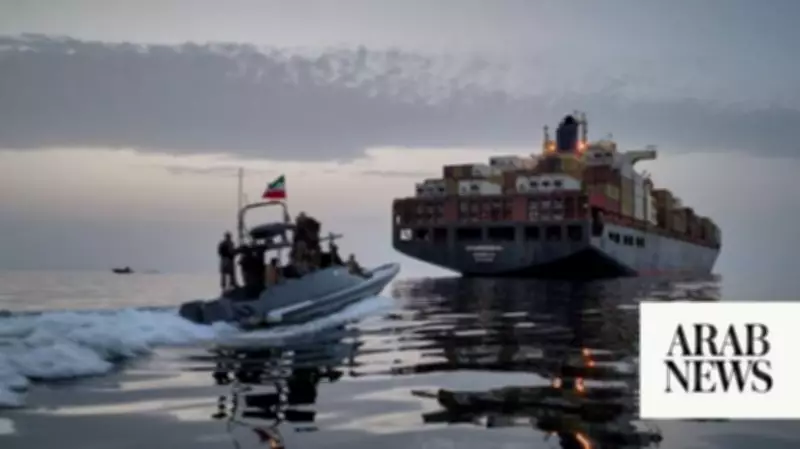
Guterres raised serious concerns about the denial of navigational rights and freedoms in the Strait of Hormuz, a vital global maritime route. He warned that disruptions were impeding the delivery of oil, gas, fertilizer, and other critical commodities, affecting energy, transport, manufacturing, and food markets, and "strangling the global economy." He added, "As with every conflict, the whole of humanity is paying the price — even if a few are reaping huge profits."
Three Scenarios Outlined
The UN chief outlined three potential scenarios based on multiple forecasts, emphasizing that even the most optimistic outlook carries significant economic consequences.

Best-Case Scenario
If restrictions on shipping are lifted immediately, global supply chains would still take months to recover. Global economic growth would decline from 3.4 percent to 3.1 percent this year, and inflation would rise from 3.8 percent to 4.4 percent. Merchandise trade growth would fall sharply from 4.7 percent last year to about 2 percent, with continuing supply chain disruptions. A world still recovering from the COVID-19 pandemic and the war in Ukraine would face additional economic strain.
Second Scenario
If disruptions persist through the middle of the year, global growth could fall to 2.5 percent, and inflation might reach 5.4 percent. About 32 million people would be pushed into poverty, fertilizer shortages would reduce crop yields, and an additional 45 million people could face extreme hunger. "Hard-won development gains are reversed overnight," Guterres warned.
Worst-Case Scenario
In the worst case, with severe disruptions continuing until the end of the year, inflation could surpass 6 percent, and global growth could drop to 2 percent. Guterres warned of "immense suffering," particularly among the most vulnerable populations, and raised the prospect of a global recession with serious economic, political, and social consequences. "These consequences are not cumulative, they are exponential," he said, stressing that the longer the disruption continues, the more difficult it will be to reverse the damage and the higher the cost to humanity.
Call for Action
Developing countries would be hardest hit, as high levels of debt limit their ability to respond, leading to job losses, deeper poverty, and increased hunger. "Every day that ships cannot move escalates these costs and amplifies their reverberations across the global economy," he said. Guterres called on all parties to restore navigational rights and freedoms immediately, in line with Security Council Resolution 2817. "Open the Strait. Let all ships pass. Let the global economy breathe again," he said, adding that reopening the waters alone is not sufficient; shipping must also be safe, predictable, and insurable. "Now is the time for dialogue, for solutions that pull us back from the brink and for measures that can open a pathway to peace. The world is waiting."