UN Committee Slams European Ministers Over Disinformation Campaign Against Rights Expert
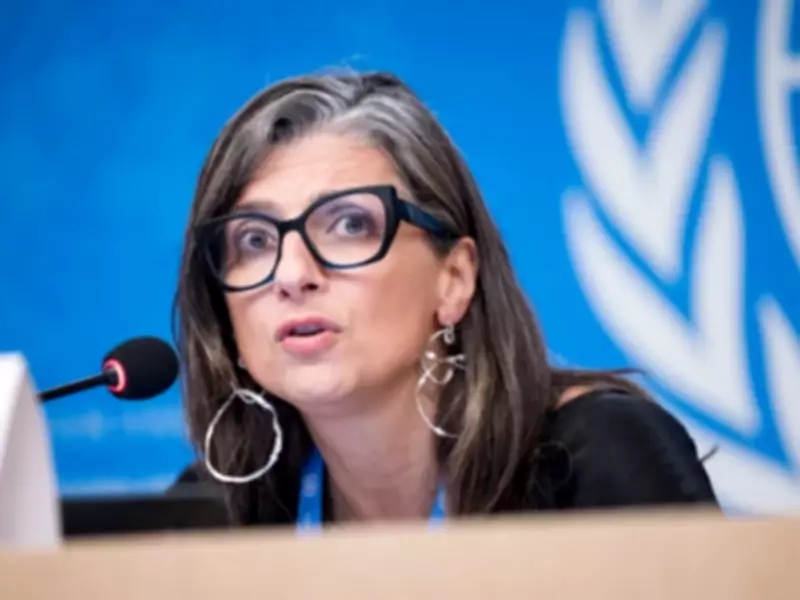
An independent United Nations body issued a strong condemnation on Tuesday, targeting what it described as "vicious attacks" by several European ministers against Francesca Albanese, the UN special rapporteur on Palestinian rights. The UN Coordination Committee, a group of six independent experts that facilitates the work of special rapporteurs, accused the ministers of relying on "manufactured facts" and disinformation in their campaign.
European Calls for Resignation Based on Alleged Remarks
Over the past week, multiple European nations, including Germany, France, Italy, and Austria, have demanded Albanese's resignation. The calls intensified after the Czech Republic's Foreign Minister, Petr Macinka, publicly joined the fray. Macinka quoted Albanese on social media platform X as having labeled Israel a "common enemy of humanity," a statement he used to justify his demand for her resignation.
However, a transcript of Albanese's remarks made in Doha on February 7, reviewed by Reuters, shows she did not characterize Israel in that manner. While Albanese has consistently criticized Israel's actions in the Gaza conflict, the specific quote attributed to her appears to be taken out of context or fabricated. The Italian lawyer has firmly denied making the remarks cited by the European ministers.

UN Committee Defends Albanese and Criticizes Political Pressure
The UN Coordination Committee responded forcefully, stating that instead of demanding Albanese's resignation for performing her mandate, these government representatives should focus on accountability for alleged war crimes in Gaza. "They should join forces to hold accountable, including before the International Criminal Court, leaders and officials accused of committing war crimes and crimes against humanity in Gaza," the committee emphasized.
The committee further warned that the pressure on Albanese is part of a broader, troubling trend of politically motivated attacks against independent human rights experts, UN officials, and international court judges. This environment, they noted, undermines the integrity of global human rights monitoring.
Background of Controversy and Previous Sanctions
Francesca Albanese has faced significant opposition throughout her tenure. In a social media post, she detailed a two-year defamation campaign by pro-Israel lobbyists, accusing them of chopping her statements and decontextualizing her words to misrepresent her positions. She asserts this campaign aims to portray her as justifying the October 7 atrocities, denying crimes like sexual violence, and downplaying the plight of hostages.
Her challenges are not new; during the Trump administration, the United States imposed sanctions on Albanese after she sent letters to US companies, accusing them of contributing to gross human rights violations by Israel in Gaza and the West Bank.
Institutional Context and Unlikelihood of Removal
UN special rapporteurs like Albanese are appointed by the Geneva-based Human Rights Council to monitor specific human rights crises but operate independently. There is no precedent for removing a special rapporteur during their term, although diplomats acknowledge that states on the 47-member council could theoretically propose such a motion.
However, given the strong support for Palestinian rights within the Human Rights Council, any motion to oust Albanese is considered highly unlikely to pass. This institutional backing provides a layer of protection against the political pressures she currently faces from European governments.