Trump Administration Declares War on Iran with Major Military Strikes
The United States has officially entered a state of war with Iran following a massive coordinated military attack launched by the Trump administration in the early hours of Saturday morning. This dramatic escalation comes after weeks of naval buildup in the Middle East and represents the second major use of military force abroad by President Trump in just the first two months of 2026.
Initial Attacks and Immediate Aftermath
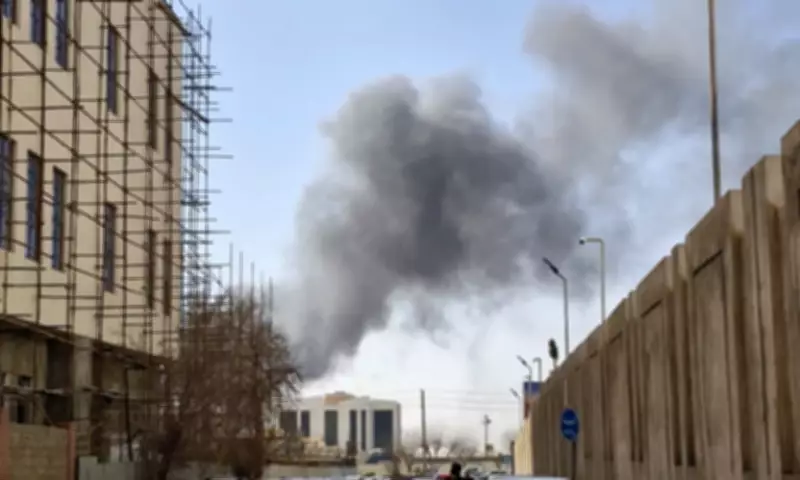
The first wave of attacks, conducted jointly by the United States and Israel, began around 1:00 AM Eastern Time on Saturday and targeted multiple Iranian cities including the capital Tehran. Initial reports indicate hundreds of casualties with many more injured in what appears to be the opening salvo of a prolonged conflict.
In a significant development, President Trump announced on Saturday afternoon that Iran's Supreme Leader Ayatollah Ali Khamenei was killed in the airstrikes. This announcement came after the initial military operations and adds a critical dimension to the unfolding crisis.

Iran has responded aggressively to the attacks, launching retaliatory strikes against targets throughout the region. These counterattacks have focused on Israel and several Persian Gulf nations hosting US military bases, including Qatar, the United Arab Emirates, Bahrain, and Kuwait. Remarkably, no US casualties have been reported in these initial exchanges.
Strategic Implications and Regional Impact
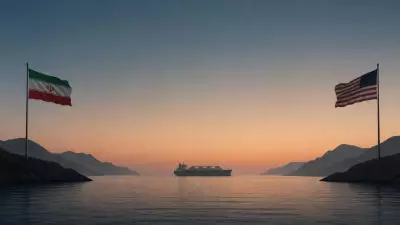
One of the most significant developments following the attacks is Iran's reported blockade of the Strait of Hormuz, a critical maritime chokepoint through which approximately 20% of the world's oil supply passes. This move has immediate implications for global energy markets and represents a major escalation in the conflict's economic dimensions.
President Trump has framed the conflict in sweeping historical terms, stating in a social media video: "For 47 years, the Iranian regime has chanted 'Death to America' and waged an unending campaign of bloodshed and mass murder. We're not gonna put up with it any longer." The president has explicitly promised regime change in Iran, building on earlier threats to support anti-regime protesters within the country.
Broader Conflict Dynamics and Future Prospects
Unlike the brief military operation in Venezuela earlier this year, the conflict with Iran appears to be developing into a full-scale war with potentially prolonged duration. Trump described the US campaign as a "massive and ongoing operation," with one aircraft carrier group already positioned in the region and another en route, suggesting preparations for a multi-week conflict at minimum.
The retaliatory strikes against Gulf states raise serious concerns about broader regional escalation, potentially drawing multiple Middle Eastern nations into direct conflict. Intelligence briefers reportedly warned President Trump ahead of the attack that it would constitute a high-risk, high-reward operation with unpredictable consequences.
Trump's justifications for the war have been characterized as "bewilderingly incoherent" by some observers, with the administration initially linking military action to negotiations over Iran's nuclear program, ballistic missile arsenal, and support for proxy forces like Hezbollah, before shifting to broader historical grievances.
International Response and Diplomatic Fallout
The conflict has already triggered significant international reactions, with multiple airlines suspending flights to the Middle East following the attacks. The situation represents a major test for regional diplomacy and has created new challenges for countries with interests in Middle East stability.
As the conflict enters its initial phases, many questions remain unanswered about the precise scope of military operations, the extent of casualties, and the potential for diplomatic resolution. What is clear is that the United States and Iran have entered a new and dangerous phase of confrontation that could reshape Middle Eastern geopolitics for years to come.
The coming days and weeks will be critical in determining whether this conflict remains contained or expands into a broader regional war with global implications for energy security, international relations, and regional stability.