Middle East on the Brink as US-Israel-Iran Conflict Intensifies
The escalating conflict between Israel, the United States, and Iran has propelled the Middle East toward one of the most perilous confrontations in recent decades. What originated with Israeli and American strikes on Iranian military and nuclear-related facilities has rapidly expanded into a broader regional crisis, encompassing missile attacks, threats to oil shipments, and grave concerns over disruptions to critical infrastructure across the Gulf. At the core of this rapidly intensifying conflict lie competing strategic objectives, evolving political calculations, and the growing likelihood that Iran may widen the war by targeting the economic and environmental lifelines of its adversaries.
Shifting US Objectives and Strategic Uncertainties
From the outset, considerable debate has surrounded Washington's ultimate goals in this conflict. Early commentary in political and strategic circles suggested the possibility of regime change in Iran, an idea that has intermittently surfaced in U.S. foreign policy discussions since the 1979 Iranian Revolution. However, as hostilities have unfolded, official statements from Washington have emphasized more limited aims, including degrading Iran's nuclear capabilities, weakening its ballistic missile and drone programs, reducing its capacity to support armed groups across the region, and protecting U.S. forces and allies in the Middle East.
This shift from discussions of regime change to narrowly defined military objectives reflects broader uncertainties in U.S. foreign policy and the war's scope. Critics, both domestically and internationally, argue that the absence of a clearly defined end-state or exit strategy risks entangling the United States in a prolonged conflict with unpredictable outcomes. Analysts also highlight the strong strategic partnership between Washington and Israel as a pivotal factor shaping U.S. involvement. Israel has long regarded Iran as its most serious regional adversary, repeatedly warning that Tehran's nuclear program poses an existential threat, thereby influencing American support for Israeli security concerns.

Iran's Asymmetric Warfare and Economic Leverage
Faced with the combined military might of the United States and Israel, Iran is unlikely to pursue victory through conventional warfare alone. Instead, Tehran appears to be relying on asymmetric strategies designed to escalate the economic and political costs of the conflict. One aspect of this approach involves targeting U.S. military bases throughout the region. American installations in countries like Qatar, Bahrain, Kuwait, and the United Arab Emirates provide logistical support for U.S. operations and symbolize Washington's military presence in the Gulf. Missile and drone attacks on these bases allow Iran to demonstrate that the conflict cannot be contained within its borders while increasing pressure on Gulf governments hosting U.S. forces.
Perhaps Iran's most significant leverage lies in the Strait of Hormuz, the narrow waterway through which approximately one-fifth of the world's oil supply passes. This strait serves as the primary export route for energy produced by Saudi Arabia, Iraq, Kuwait, the United Arab Emirates, and Qatar. For decades, Iranian military doctrine has underscored the strategic importance of this chokepoint. By threatening to block or disrupt shipping through the strait, Tehran can exert pressure not only on regional adversaries but also on the global economy. Even the mere possibility of disruption has caused oil prices to spike and compelled shipping companies to suspend operations, highlighting the critical importance of this waterway for countries reliant on Gulf energy supplies, including many in Asia and Europe.

Vulnerabilities in Gulf Infrastructure and Regional Expansion
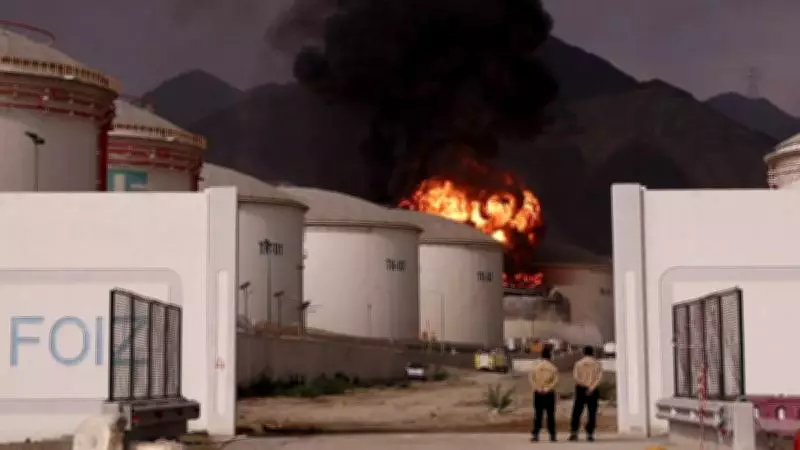
Another facet of Iran's strategy involves attacks on critical infrastructure across the Gulf, such as oil refineries, export terminals, pipelines, and ports. However, one of the most vulnerable and potentially devastating targets would be water desalination plants. Most Gulf states are situated in arid desert environments with limited natural freshwater resources. Countries like Saudi Arabia, the United Arab Emirates, Qatar, and Kuwait depend heavily on large-scale desalination plants to convert seawater into drinking water, with some relying on these facilities for over 80 to 90 percent of their supply. Located on coastlines and dependent on centralized infrastructure, these plants are highly susceptible to missile or drone attacks, and even temporary disruptions could lead to severe drinking water shortages for millions, potentially pressuring Gulf governments to distance themselves from the war.
Iran's strategy may also involve expanding the conflict beyond direct confrontations with U.S. and Israeli forces. Tehran has established relationships with a network of armed groups throughout the Middle East, including Hezbollah in Lebanon and various militias in Iraq and Syria. These groups could potentially open additional fronts, stretching Israeli and American military resources across multiple theatres and significantly increasing the risk of a wider regional war, with fighting potentially spreading across Lebanon, Syria, Iraq, and the Gulf states, leading to widespread instability.
Global Economic Implications and Future Prospects
Beyond its military dimensions, this conflict carries enormous implications for the global economy. The Persian Gulf remains the world's most important energy corridor, and any disruptions to oil and gas exports could trigger sharp increases in energy prices. Higher energy costs are likely to fuel inflation worldwide and strain economies heavily dependent on imported oil. Additionally, shipping disruptions in the Strait of Hormuz could affect global supply chains, delaying shipments and increasing transportation costs.
Despite the overwhelming military power of the United States and Israel, Iran possesses significant strategic advantages rooted in geography and asymmetric warfare. Rather than seeking a decisive battlefield victory, Tehran seems focused on raising the cost of the conflict for its adversaries by targeting shipping routes, energy infrastructure, and potentially water supplies. Meanwhile, the United States' evolving objectives from initial speculation about regime change to more limited military aims underscore the uncertainties surrounding the conflict. As the war continues, the central question remains whether the involved parties can contain the confrontation or if it will spiral into a broader regional crisis with global consequences.