US Warplanes Crash in Kuwait as Iran Retaliates Following Khamenei Killing
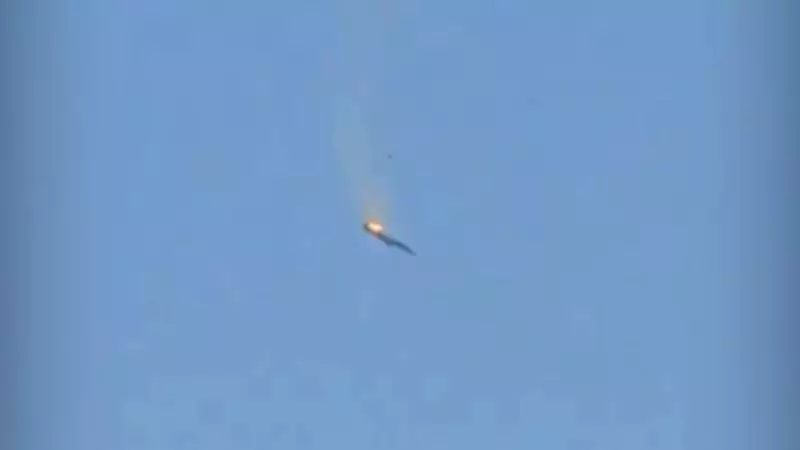
Amid rapidly escalating hostilities in the Middle East, several United States military aircraft have crashed in Kuwait as Iran continues its retaliatory strikes following the killing of Supreme Leader Ayatollah Ali Khamenei. Social media videos circulating widely show jets spiraling toward the ground with thick smoke trails visible against the sky. Kuwaiti authorities have confirmed multiple crash incidents, emphasizing that all crew members survived the accidents and were evacuated to hospitals in stable condition.
Search Operations and Regional Security Concerns
Search and rescue operations remain actively ongoing, with Kuwait coordinating closely with United States military officials. Smoke was also reported near the United States embassy compound in Kuwait, raising significant concerns about the security of diplomatic facilities throughout the region. Residents across Gulf nations have experienced repeated air raid sirens, with explosions reported in Abu Dhabi, Doha, and Manama. At Kuwait's Mina al-Ahmadi refinery, two workers sustained minor injuries from falling debris.
Mounting Civilian Casualties in Iran
The humanitarian toll continues to rise dramatically. The Red Crescent has reported at least 555 fatalities in Iran following joint United States and Israeli attacks, with impacts felt across 131 counties nationwide. Major cities including Tehran, Sanandaj, Bushehr, and Minab have witnessed both military and civilian targets being struck. Particularly devastating was an attack on an elementary school for girls in Minab, leaving more than 160 dead, while at least 20 civilians were killed in Tehran's Niloofar Square district.

The scale of civilian casualties has raised urgent international concerns about humanitarian access, compounded by an internet blackout in Iran that has now surpassed 48 hours, severely limiting communication and information flow.
Regional Infrastructure Damage and Disruptions
Saudi Arabia temporarily shut down its critical Ras Tanura refinery after debris from intercepted drones sparked a fire at the facility, though fortunately no casualties were reported from this incident. The conflict's disruption has extended far beyond physical infrastructure to digital systems. Amazon Web Services, the company's cloud computing unit, reported power and connectivity outages in its data centers located in Bahrain and the United Arab Emirates.
Two zones in the UAE were affected, with one suffering sparks and a minor fire after unidentified objects struck the facility, forcing an automatic shutdown. AWS has advised clients to rely on services in other regions while estimating that full recovery could take several hours.
Widespread Travel Chaos and Regional Military Actions
Global air travel has been severely impacted, with over 3,400 flights cancelled across the Gulf region due to extensive airspace closures. Major international airports in Doha, Dubai, Abu Dhabi, and Sharjah remain suspended, leaving hundreds of thousands of passengers stranded at terminals and hotels. Multiple governments, including the United Kingdom, are now organizing emergency evacuation plans for their citizens currently in the affected region.
Meanwhile, Israel has escalated its military operations in Lebanon, targeting Hezbollah positions and prompting the forced displacement of civilian populations. At least 31 deaths and 149 injuries have been reported in southern Lebanon and Beirut's suburbs. In Iraq, United States and Israeli missile strikes hit Kataib Hezbollah sites south of Baghdad, causing significant material damage to facilities and infrastructure.
Diplomatic Stalemate and Regional Dilemmas
Iran's National Security Council secretary Ali Larijani has firmly dismissed claims of any new push for negotiations with Washington, insisting that Iran is merely defending itself and will not seek talks while under direct attack. Regional analysts warn that Gulf states now face a precarious strategic choice: to engage militarily alongside Israel or remain passive while their cities continue to be targeted, with either option carrying serious long-term implications for regional stability.

As the conflict enters its third consecutive day, the Middle East confronts a mounting humanitarian crisis, escalating military confrontations, and severe economic disruptions across multiple sectors, with no immediate diplomatic resolution currently in sight.