The decision by the United States Department of Defense to restore the name of its Indo-Pacific Command to its original designation, the Pacific Command, may appear at first glance to be a minor administrative adjustment. In reality, it carries far greater significance. Strategic terminology is rarely changed without reason. Names often reflect priorities, and priorities reflect interests. When Washington abandons the “Indo-Pacific” label in favour of the traditional “Pacific” designation, it signals that the assumptions underpinning America’s regional strategy are being reassessed. This reassessment has implications that extend well beyond semantics. It reflects a broader reordering of geopolitical priorities in which South and West Asia are no longer viewed through the simplified lens that dominated much of the last decade.
Implications for India
For India, this should be seen as the proverbial writing on the wall. The concept of the Indo-Pacific was never merely geographical. It was a strategic construct that elevated India into a central position within American policy. The shift away from that framing suggests that India is no longer being placed at the centre of Washington’s regional calculus in the way it once was. The assumption that India would naturally serve as a long-term strategic anchor for American policy in Asia is increasingly open to question.
Pakistan’s Rising Diplomatic Profile
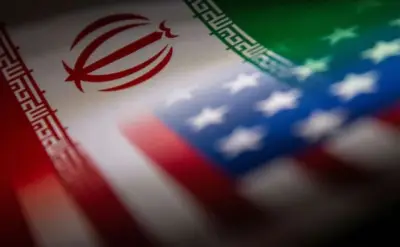
This development comes against the backdrop of a rapidly changing geopolitical landscape in South and West Asia. Recent events, beginning with Operation Sindoor and culminating in the Islamabad Agreement, have reshaped perceptions of regional influence and diplomatic relevance. Within this evolving environment, Pakistan’s profile has experienced a notable upward shift. Pakistan’s most significant gain has been the expansion of its diplomatic relevance beyond traditional security-focused narratives. Its emergence as a credible intermediary in high-stakes diplomatic engagement, including its role in facilitating dialogue that contributed to the United States–Iran peace framework, has enhanced its standing with major external powers. In a region often characterised by deadlock and rivalry, the ability to act as a channel of communication between competing actors carries strategic value.

This has changed how Pakistan is perceived in certain international policy circles. Rather than being viewed solely as a crisis state or security concern, it is increasingly recognised as a state that can be operationally useful in managing regional diplomacy. That distinction matters in global politics, where utility often translates into influence. Pakistan’s expanding diplomatic engagement with other major actors has reinforced its position as a state that cannot easily be excluded from regional calculations.
A More Complicated Regional Environment for India
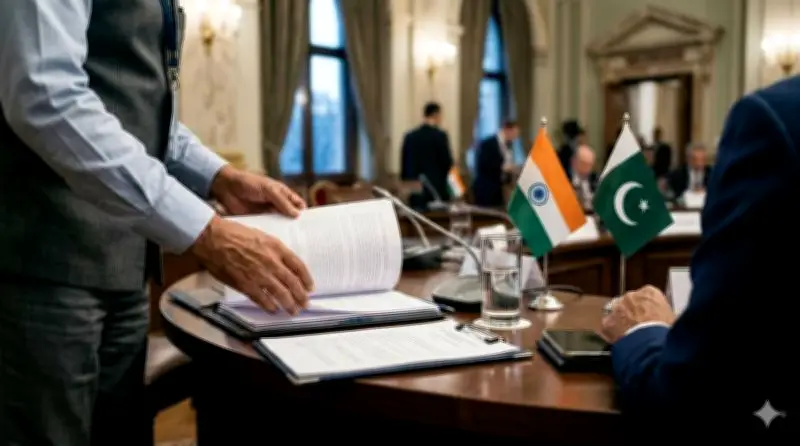
For India, this represents a more complicated regional environment than the one it had sought to shape. For years, New Delhi pursued a strategy aimed at limiting Pakistan’s diplomatic space and reducing its international relevance. However, the outcome has been the opposite: Pakistan has not been marginalised, but instead has reinserted itself into conversations that matter at the global level.
Shifting US-China Dynamics
The implications become even more significant in the context of shifting United States–China relations. A key assumption underpinning India’s strategic alignment with the United States was the expectation of sustained strategic confrontation between Washington and Beijing. This framework positioned India as a natural counterweight to China, increasing its perceived value to the United States and reinforcing the trajectory of United States–India cooperation. However, that assumption is weakening. The relationship between the United States and China has evolved towards a more calibrated balance of competition and coexistence, where confrontation is managed rather than escalated. In such an environment, the strategic premium placed on India as a frontline partner diminishes.

This recalibration also has indirect implications for Pakistan. As the rigid binary framing of the United States–China rivalry softens, Pakistan’s structural advantages become more visible. Its close relationship with China, its geographic positioning across South, Central, and West Asia, and its growing diplomatic utility allow it to operate with greater strategic flexibility. In a less polarised global environment, such flexibility increases its relevance rather than reducing it.
Pakistan’s Strategic Flexibility
Pakistan’s ties with China remain a foundational element of its foreign policy, but what is changing is how those ties are interpreted externally. Instead of being seen solely through the lens of bloc politics, they are increasingly viewed as part of a broader multipolar balancing system in which states maintain multiple channels of engagement. At the same time, Pakistan’s expanding diplomatic engagement with other major actors has reinforced its position as a state that cannot easily be excluded from regional calculations. Its involvement in key diplomatic processes has added a layer of functional relevance that goes beyond traditional alliance structures.
For India, this creates a more constrained strategic environment. The assumption that Pakistan could be diplomatically isolated has not materialised. Instead, Pakistan has adapted to shifting global conditions and expanded its set of external relationships. This has reduced the effectiveness of isolation as a policy tool and limited India’s ability to define regional outcomes unilaterally.
Broader Impact on South Asian Politics
The consequences extend to the broader structure of South Asian politics. For decades, India’s approach to regional leadership has been shaped by the expectation of hierarchical dominance within South Asia. However, the emerging reality is more plural and less predictable. Smaller and mid-sized states in the region are increasingly pursuing diversified foreign policies rather than aligning exclusively with one regional power. In this environment, Pakistan’s increased diplomatic relevance alters the regional balance. It ensures that South Asia remains a contested and multipolar space rather than one defined by a single dominant actor. That shift complicates India’s long-standing strategic objectives and limits the degree of influence it can exercise over regional outcomes.
The restoration of older strategic frameworks in Washington, therefore, reflects not just a shift in American thinking but a broader redistribution of geopolitical attention. It signals a world in which rigid hierarchies are giving way to more fluid arrangements, and where states such as Pakistan can expand their room for manoeuvre.
For India, the implications are increasingly difficult to ignore. For Pakistan, however, the changing environment presents an opportunity to consolidate its role as a relevant diplomatic and strategic actor in a more multipolar regional order. The writing is on the wall—and it reflects a South Asia whose balance of power is no longer as predictable or as one-sided as it once appeared.