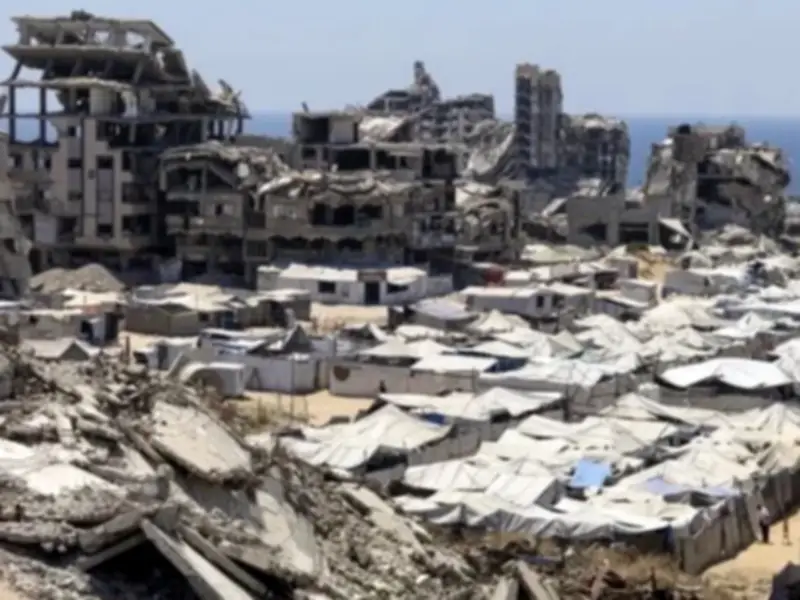
Israel has killed 265 Palestinian journalists, including around 27 women, wounded nearly 500, and detained over 34 during 1,000 days of bombardment on Gaza, according to the Palestinian Journalists Syndicate. The syndicate's deputy head, Tahseen al-Astal, told Anadolu that between 60% and 75% of living journalists in Gaza have lost their homes or been forcibly displaced, forcing them to work from tents, sidewalks, or shelters with mobile phones and unstable internet.
Journalists Targeted Unprecedentedly
Al-Astal said that journalists in Gaza are subjected to unprecedented targeting that has affected their lives, workplaces, and homes, in the context of a conflict that did not stop at silencing the voice but sought to uproot its entire environment. With around 1,200 journalists in Gaza, between 700 and 900 have lost their homes or been forcibly displaced since the start of the conflict. Syndicate estimates indicate that more than 80% of media offices and institutions were fully or partially destroyed, leading to the near-total collapse of infrastructure necessary for journalistic work.
Work Environment Destroyed
Journalists in Gaza no longer work from newsrooms but from tents, sidewalks, or corners in shelters. Mobile phones have become the main production tool, and unstable internet dictates the pace of publication. Amid electricity cuts, fuel shortages, and destruction of roads and buildings, public spaces, areas surrounding hospitals, and shelters have become emergency alternatives to media offices. Journalists continue to report bombardment, displacement, and hunger from areas that offer no or minimum protection.

Bloody Milestones: Key Assassinations
According to Anadolu monitoring, Israeli assassinations of prominent journalists include: On August 25, 2025, airstrikes on Nasser Hospital in Khan Younis killed five journalists: Mariam Abu Daqqa, Hossam al-Masri, Mohammad Salama, Muath Abu Taha, and Ahmad Abu Aziz. Mariam Abu Daqqa had donated a kidney to her father and sent her only child outside Gaza for safety. On August 10, 2025, six journalists were killed, including Al Jazeera correspondents Anas al-Sharif and Mohammad Quraiqa, in an airstrike targeting a tent near Al-Shifa Hospital. Anas al-Sharif, born in 1996 in Jabalia refugee camp, had become a constant presence in international news bulletins. Mohammad Quraiqa, born in 1992 in Shujaiya, earned a journalism degree in 2014 and joined Al Jazeera during the conflict; his mother was killed by the Israeli army in March 2024.
Other Targeted Journalists
In June 2025, the Israeli army killed three journalists in a single strike: Suleiman Hajjaj, Ismail Badah, and Samir al-Rifai. On the same day, journalist Youssef al-Nakhala died from wounds sustained on May 31, 2025. On January 10, 2025, Saed Abu Nabhan, an Anadolu contributor, was killed by Israeli sniper fire in Nuseirat refugee camp. In October 2024, photojournalist Hassan Hamad was killed in northern Gaza; his body arrived at Kamal Adwan Hospital torn into pieces, identified only by his press vest. In January 2024, Hamza al-Dahdouh (Al Jazeera) and Mustafa Thuraya were killed in a strike on a journalists' vehicle west of Khan Younis. Hamza had lost his mother and siblings in an Israeli strike in October 2023. On December 15, 2023, journalist and cameraman Samer Abu Daqqa (Al Jazeera) was killed in Khan Younis after being left bleeding for six hours without rescue. In November 2023, Bilal Jadallah, chairman of Press House, was killed in a direct strike on his vehicle. In early December 2023, Anadolu contributor Muntasir al-Sawaf and his journalist brother Marwan were killed in southern Gaza; two weeks earlier, Muntasir survived a strike on his home that killed his parents and siblings.
Broader Palestinian Suffering
The reality of journalists in Gaza reflects part of the broader suffering of Palestinians in the enclave, where hundreds of thousands continue to live in tents and temporary shelters after their homes were destroyed or damaged in Israel's genocidal campaign. Since Israel launched its offensive on October 8, 2023, nearly 73,000 Palestinians have been killed and more than 173,000 injured, with massive destruction affecting 90% of civilian infrastructure.