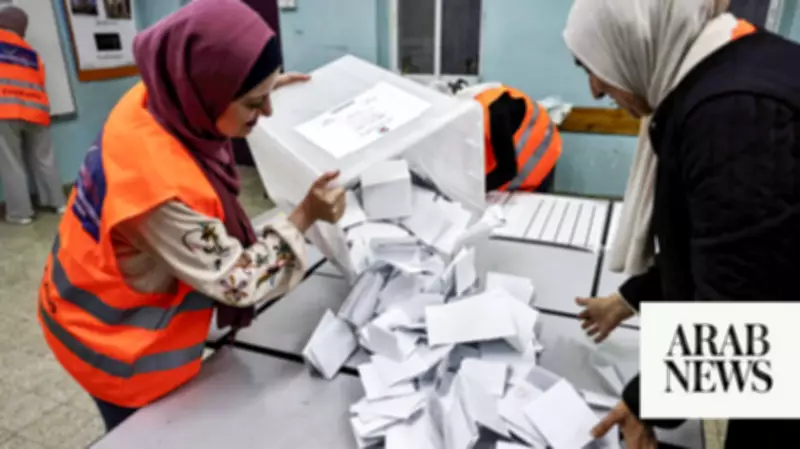
Loyalists of Palestinian President Mahmoud Abbas secured the majority of seats in Palestinian municipal elections, according to election officials on Sunday. The vote, held on Saturday, marked the first time in nearly two decades that a city in the Gaza Strip, controlled by Hamas, participated in such a ballot.
First Gaza Elections Since 2006
The elections were the first of any kind in Gaza since 2006 and the first Palestinian polls since the Gaza war began over two years ago following Hamas' cross-border attack on southern Israel. The inclusion of Deir Al-Balah, a Gaza city that suffered less damage than other areas during the war, was intended by Abbas' West Bank–based Palestinian Authority to demonstrate that Gaza remains an inseparable part of a future Palestinian state.
Palestinian Prime Minister Mohammed Mustafa described the elections as being held at a highly sensitive moment amid complex challenges, but called them an important first step in a broader national process aimed at strengthening democratic life and achieving the unity of the homeland. Voter turnout was low overall, with 23 percent in Gaza and 56 percent in the West Bank, according to Central Elections Commission Chairman Rami Al-Hamdallah.

Fatah Dominance in West Bank
In the West Bank, Abbas loyalists swept the elections, running unchallenged in many seats. Fatah spokesperson Abdul Fattah Dawla noted that turnout was similar to the last municipal elections in 2022, praising voters for participating despite ongoing Israeli violence. The results were widely expected, as Hamas boycotted the race in the West Bank and did not formally nominate candidates in Gaza.
However, some candidates on the Deir Al-Balah Brings Us Together list were perceived by residents and analysts as aligned with Hamas, making the vote a potential indicator of support for the movement. Preliminary results showed this list won only two of the 15 contested seats in Gaza. The Nahdat Deir Al-Balah list, backed by Fatah and the Western-backed PA, secured six seats. The remaining seats were won by two other Gaza-based groups, Future of Deir Al-Balah and Peace and Building, which are not affiliated with either major faction.
Political Implications
Palestinian political analyst Reham Ouda commented that by electing figures linked to Fatah, voters appear to be seeking unrestricted international support for municipal governance and a gradual political shift that could extend beyond the local level. The recent war has left much of Gaza in ruins, with many residents displaced and focused on survival. Israel has continued conducting strikes despite an October ceasefire.
Al-Hamdallah noted that some ballot boxes and voting equipment did not initially reach Gaza due to Israeli security restrictions, but those challenges were overcome. Hamas' Gaza spokesperson, Hazem Qassem, downplayed the election results, stating they had no impact on wider national issues.