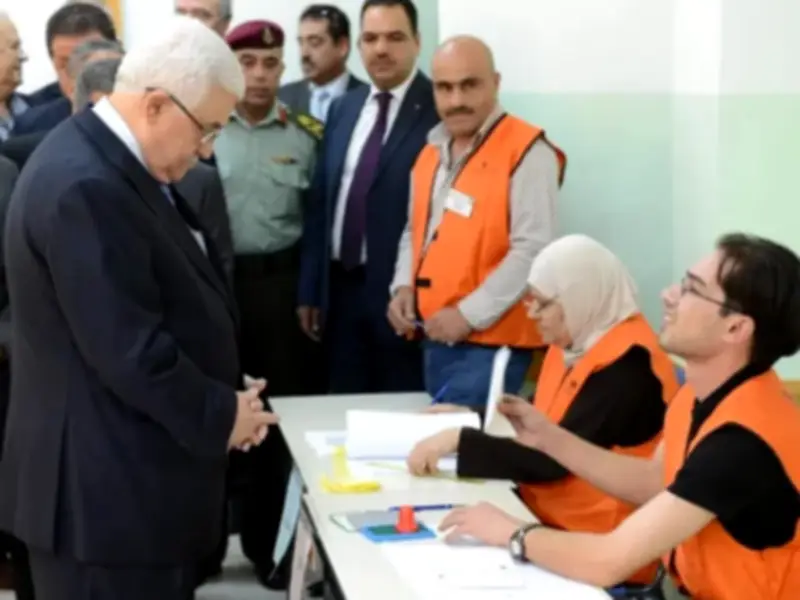
Palestinian President Mahmoud Abbas issued a decree on Thursday setting legislative elections for November 28, which would be the first such vote in two decades if they take place. The decree was reported by the official Wafa news agency, which cited the document calling on Palestinians in Jerusalem, the West Bank, and the Gaza Strip to participate in free and direct elections for the Palestinian Legislative Council.
Background of Palestinian Elections
The last legislative elections in the Palestinian territories were held in 2006, when Hamas won, defeating Abbas’s Fatah party. As a result, the Palestinian Legislative Council, the parliament of the Palestinian Authority (PA), has not met since 2007. Abbas, now 90, won the last presidential election in 2005 with a four-year mandate, meaning his term should have expired in 2009. However, his term was extended, and no presidential election has been held since, with Abbas ruling by decree.
Reforms and International Pressure
Holding elections is part of the reforms demanded by the international community, including the European Union, which provides financial support to the Ramallah-based PA. The PA has faced widespread criticism over corruption, stagnation, and declining legitimacy, with donors increasingly tying support to governance reforms. Ghassan Khatib, a political science professor at Birzeit University, said he believed Abbas was now serious about holding elections for both domestic and international reasons. “There is a feeling among everyone that Palestinian legitimacy has eroded because of how long it has been since elections were held,” Khatib told AFP, describing a “gap between the public and the leadership and a need to ‘renew the blood’” at the top.

Previous Attempts and Obstacles
In 2021, Abbas announced legislative and presidential elections to be held in May and July of that year, respectively. They were then postponed indefinitely due to the absence of guarantees that voting could take place in Israel-annexed east Jerusalem. In April 2025, Palestinians went to the polls to elect municipal council heads in the occupied West Bank, in the first vote since the outbreak of the Gaza war in October 2023. Khatib said the main obstacle for elections would be logistical challenges arising from Israeli measures in the Gaza Strip, east Jerusalem, and the West Bank, which Israel has occupied since 1967.
Ceasefire and Governance
Under the October 2025 US-brokered ceasefire, a technocratic committee has been formed to govern Gaza, but it has yet to enter the Palestinian territory. Khatib added that the international community had a responsibility to “pressure Israel to provide an appropriate environment, or at least to refrain from measures that would hinder these elections.” He said, “Israel seeks to rid itself of the Palestinian Authority, and since elections would restore strength and legitimacy to the Authority, this runs counter to what Israel is aiming for.” He added that he expected Israel “to obstruct the holding of these elections in various ways.”
Outlook and Political Impact
Khatib doubted the legislative elections would produce major political change, considering it unlikely that Hamas would achieve significant gains. In June, Abbas announced that presidential elections would be held in early 2027, without saying if he would run. The absence of a legislative council for such a long time, Khatib noted, “has caused significant damage to the political system.”