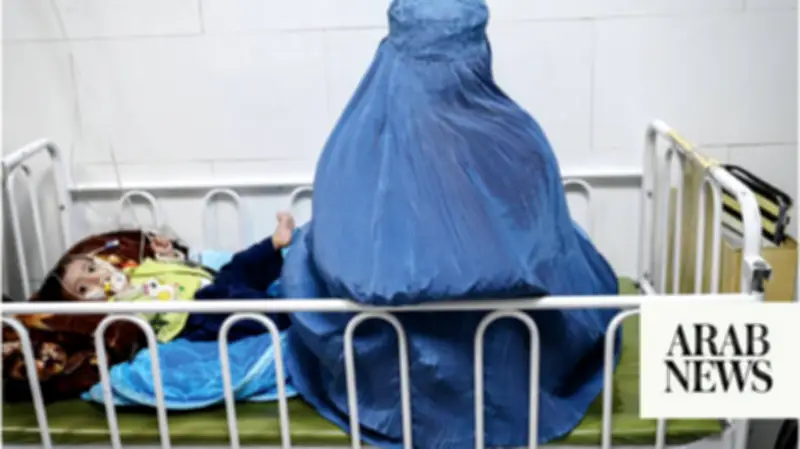
The baby's head had been crowning for hours. The nearest health facility was 40 kilometers from the village, a distance that on broken roads in Badakhshan province translates into a three-hour drive. No vehicles were available. By the time the mother reached the provincial capital Faizabad, the choice facing medical workers was bleak. To save her life, the baby could not be saved.
Kwabena Asante-Ntiamoah, the UN Population Fund representative in Afghanistan, described this as a grim reality. Afghanistan's maternal mortality ratio stands at 521 deaths per 100,000 live births, among the highest globally. According to UNFPA modeling, this figure could triple in the coming year if current funding cuts are not reversed.
Across the Gulf of Aden, Yemen faces a parallel crisis. Three women die every day from pregnancy-related complications. Francesco Galtieri, the UNFPA representative in Yemen, noted that two of those three could survive with access to a skilled midwife and basic medicines.

Both countries have populations where roughly 70 percent are under 30, with health systems near collapse. In Yemen, two-thirds of health facilities are closed. In Afghanistan, a 40-kilometer journey can determine life or death.
The burden falls heavily on women, not only as victims of collapsing maternal health services but also as pillars holding fractured communities together. Galtieri emphasized that when problems persist, they tend to be neglected, and both countries are in similar situations.
In Afghanistan, UNFPA has navigated a precarious path under Taliban rule. Maternal health services are framed as a medical necessity, tolerated begrudgingly. Services are delivered by women through a network of family health houses in remote areas. At its peak, the network employed 3,500 female health workers. Then came funding cuts.
When US foreign assistance programs were cut earlier this year, UNFPA lost roughly $130 million allocated for Afghanistan in 2025. Around 1,000 female service providers were laid off, and clinics stopped functioning.
Asante-Ntiamoah described these women as silent activists. In a country where women's rights are under enormous pressure, a mother or sister going to work is a sign of hope. The act of employment is inseparable from resistance.
UNFPA has launched a $90 million appeal for Afghanistan in 2026 and secured about 70 percent. The shortfall directly affects clinics and women who may not survive their next complicated delivery.
When asked why the UN remains in Afghanistan given Taliban restrictions, Asante-Ntiamoah responded that they cannot abandon Afghans because of the Taliban. Maternal mortality could triple if they leave.
International engagement operates on two tracks: recognition and engagement. UN agencies engage operationally, but formal recognition lies with the Security Council and General Assembly, where geopolitical interests often trump humanitarian needs.
In Yemen, UNFPA needs $70 million for reproductive health services. So far, only 13 percent has been mobilized. Of Yemen's 35 million people, over 600,000 are pregnant. More than 500,000 women are survivors of gender-based violence. The displacement crisis affects 6 million people, half of whom are women-headed households.
Funding collapse is compounded by access constraints. In the north, 73 UN staff remain under arbitrary detention by Houthi militia. Military operations have narrowed humanitarian space, and donor attention has shifted to more immediate crises.
Both representatives argue that protracted crises offer opportunities for building durable systems. UNFPA has trained thousands of midwives in Yemen and established health networks in Afghanistan. These are foundations of a health system.
Sustaining this requires investment in telemedicine, cash programs, and connectivity that outlasts the crisis. Galtieri noted that the international community still views humanitarian assistance philanthropically rather than focusing on empowerment.
Asante-Ntiamoah added that when a crisis becomes normalized, it becomes the political and economic foundation of society. Strategic thinking is needed to build resilience.
In Afghanistan, 1,000 women lost their jobs when $130 million in aid was withdrawn. They dressed in the morning, walked to clinics with no payroll, and turned back. The silent activists were silenced.