China on Thursday issued a strong warning against Japan’s growing military ambitions in space, cautioning that Tokyo’s latest defence reforms risk accelerating the weaponisation of space and fuelling a broader global arms race, according to a report by Xinhua news agency.
China's Defence Ministry criticises Japan's space force
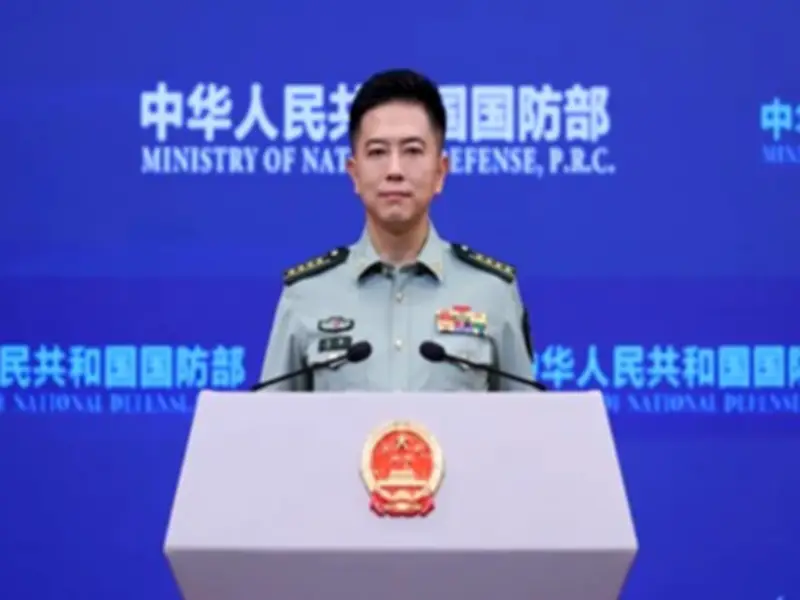
Senior Colonel Chen Xi, spokesperson for China’s Ministry of National Defence, sharply criticised Japan’s recent legislative move to rename its Air Self-Defence Force as the Aerospace Self-Defence Force and establish a specialised Space Operations Wing. Responding to media queries, Xi said that Japan has “openly designated space as an operational domain” and is actively pursuing a military build-up beyond Earth’s atmosphere — a shift that Beijing views with deep concern.
“Over the past five years, Japan’s military spending in relevant fields has increased tenfold, while its operational forces have expanded more than 30-fold,” Xi added. “These moves have accelerated the weaponisation and militarisation of space and fuelled a space arms race.”

Neo-militarism a real threat, says Beijing
Xi described the developments as further evidence that “neo-militarism in Japan has become a real threat”, urging the international community to remain vigilant and take steps to counter what he termed Tokyo’s accelerated remilitarisation. He stressed that space should remain a domain for peaceful use, warning that its militarisation could undermine global security, economic development and technological cooperation.
“The lasting peace and security of space bear on the prosperity of all countries,” he said, calling on “all peace-loving people” to resist destabilising actions.
Japan defends its defence reforms
Japan has defended its evolving security posture, arguing that its reforms are aimed at strengthening deterrence amid a rapidly changing regional security environment. Tokyo maintains that expanding capabilities in space and other domains is necessary to respond to emerging threats and ensure national security.
However, Beijing’s criticism reflects a broader pattern of concern in the region, particularly across Southeast Asia, where Japan’s shifting military stance is being closely watched. Analysts say Japan’s transformation marks a visible departure from its post-World War II pacifist framework, under which it limited its military capabilities and emphasised economic cooperation as the cornerstone of its regional engagement.
Growing defence spending and partnerships
Recent developments — including increased defence spending, expanded security partnerships and the potential deployment of long-range missile systems — have raised questions about Tokyo’s long-term strategic intentions. Japan has accelerated its defence spending to around two per cent of its GDP, signalling a major policy shift that brings it closer to NATO benchmarks. It has also deepened security cooperation with the United States and regional partners, including participation in joint military exercises and enhanced interoperability with allied forces.
Historical memory shapes Southeast Asian views
For many countries in Southeast Asia, these changes are being viewed through the lens of historical experience. Memories of Japanese occupation during World War II remain deeply embedded in the region’s collective consciousness, shaping perceptions of Tokyo’s re-emergence as a military power. Experts say that this historical legacy continues to influence public sentiment and policymaking in countries such as the Philippines, Indonesia, Malaysia, and Singapore, all of which endured wartime occupation.
Geopolitical tensions and regional concerns
Beyond historical sensitivities, there are growing concerns that Japan’s evolving defence posture could contribute to rising geopolitical tensions, particularly in the context of intensifying strategic rivalry between major powers. Some analysts warn that Tokyo’s closer alignment with Washington’s Indo-Pacific strategy could place Southeast Asian nations in a difficult position, forcing them to navigate an increasingly polarised regional landscape.

There is also apprehension that the expansion of military capabilities — particularly in emerging domains such as space — could trigger a competitive dynamic, prompting other countries to enhance their own capabilities in response. Critics argue that while Japan frames its actions as defensive, perceptions across the region may differ. In international relations, they add, the intentions behind military expansion often matter less than how those actions are interpreted by others.
“Perception is critical,” one regional observer said. “Even if Japan sees its moves as stabilising, others may view them as escalatory.”
Outlook: managing rising tensions
The debate over Japan’s military transformation is likely to intensify as it continues to expand its capabilities, particularly in new domains such as cyber and space. For China, the issue is not only about Japan’s capabilities but also about the broader implications for global security architecture. Beijing has repeatedly called for space to remain a peaceful domain and has expressed concern about the potential for conflict to extend beyond Earth.
As competition among major powers increasingly extends into space, the risk of miscalculation and escalation is becoming a growing concern for policymakers worldwide. Against this backdrop, analysts say the challenge for the region will be to manage rising tensions while preserving stability and preventing an arms race that could undermine decades of economic growth and cooperation. Whether Japan’s evolving role ultimately contributes to regional security or exacerbates existing fault lines will depend not only on its policies but also on how they are perceived and responded to by its neighbours.