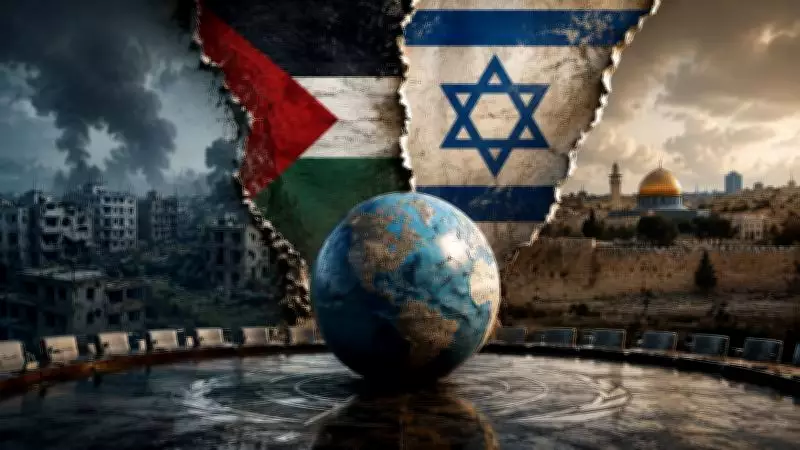
The ongoing crisis in Gaza has reignited discussions around United Nations General Assembly Resolution 3379, a historic resolution that once equated Zionism with racism. Originally adopted in 1975, Resolution 3379 was a deeply controversial measure that polarized global opinion. It was later repealed in 1991 following the end of the Cold War and a shift in geopolitical alignments. However, recent events in Gaza have prompted some nations and political groups to revisit the resolution, arguing that Israeli policies in the occupied territories bear similarities to the practices condemned decades ago.
Historical Context of Resolution 3379
Resolution 3379 was passed by the UN General Assembly on November 10, 1975, with 72 votes in favor, 35 against, and 32 abstentions. The resolution declared that “Zionism is a form of racism and racial discrimination.” It was part of a broader effort by the Soviet bloc and developing countries to criticize Israel’s policies. The resolution was highly divisive, with Western nations, led by the United States, condemning it as anti-Semitic. In 1991, under pressure from the US and Israel, the General Assembly adopted Resolution 46/86, which revoked 3379.
Renewed Relevance in the Current Gaza Conflict
As the war in Gaza intensifies, with thousands of civilian casualties and widespread destruction, several countries have called for a reevaluation of international approaches to the Israeli-Palestinian conflict. Some diplomats and activists argue that the principles underlying Resolution 3379 are still relevant today. They point to Israeli settlement expansion, the blockade of Gaza, and military actions that have drawn accusations of war crimes. In response, Israel and its allies have strongly rejected any comparison, insisting that Resolution 3379 was inherently flawed and anti-Semitic.

Global Reactions and Political Implications
The revival of Resolution 3379 has sparked intense debate in international forums. The United States has reiterated its opposition to any move that would revive the resolution, with Secretary of State stating that such efforts are counterproductive and undermine peace prospects. Meanwhile, countries like Iran, Turkey, and South Africa have expressed support for revisiting the resolution. The European Union has remained cautious, urging all parties to focus on achieving a ceasefire and a two-state solution. The controversy has also affected domestic politics in several countries, with pro-Palestinian and pro-Israel groups mobilizing supporters.
Legal and Ethical Dimensions
Legal experts are divided on the implications of resurrecting Resolution 3379. Some argue that it could set a dangerous precedent by labeling a national movement as inherently racist, while others contend that it is a necessary step to hold Israel accountable under international law. The resolution’s revival also touches on broader issues of anti-Semitism and the definition of racism. The debate has highlighted the deep divisions within the international community over how to address the Israeli-Palestinian conflict.
Future Prospects
It remains unclear whether Resolution 3379 will be formally reintroduced at the UN. Any such move would require significant diplomatic maneuvering and is unlikely to pass given the current balance of power. However, the discourse surrounding the resolution has already influenced public opinion and policy discussions. The Gaza crisis has once again brought to the forefront the unresolved issues of the Israeli-Palestinian conflict, and the revival of Resolution 3379 is a testament to the enduring nature of these disputes.